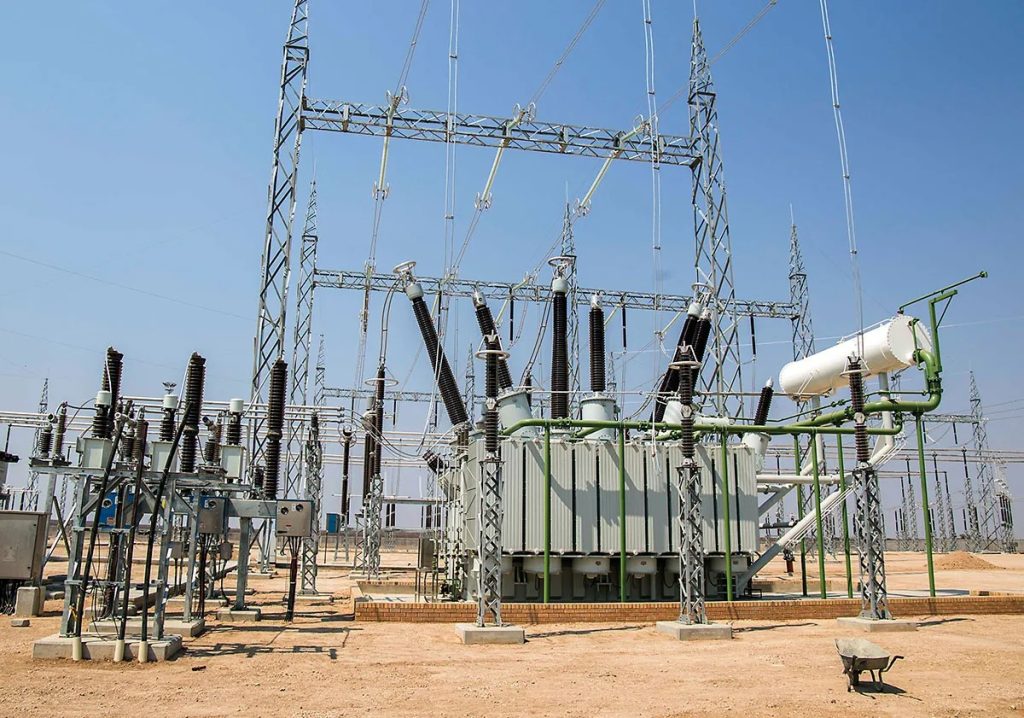
Local electricity generation supplied nearly 58% of Namibia’s power requirements in April 2026, with the Ruacana Hydro Power Station accounting for the overwhelming majority of domestic output, according to the Namibia Statistics Agency (NSA).
The NSA reported that local generation contributed 278,325 MWh, or 57.7%, of the 482,201 MWh supplied to the domestic economy during the month. Electricity imports accounted for the remaining 42.3%, equivalent to 203,877 MWh.
Ruacana Hydro Power Station remained the backbone of Namibia’s electricity generation system, producing 243,581 MWh and accounting for 87.5% of total domestic output.
Independent Power Producers (IPPs) contributed 30,003 MWh, representing 10.8% of local generation, while Omburu PV Solar Power Station generated 4,303 MWh, accounting for 1.5%.
“Anixas 2 Diesel Power Station ranked fourth, supplying 0.2% (438 MWh), while Van Eck Power Station and Anixas 1 Diesel Power Station did not generate electricity during the period under review,” the NSA reported.
Despite the strong contribution from domestic generation, total electricity supplied to the economy declined during the month.
The Electricity Sources Composite Index fell by 5.9% in April, following a 13.7% increase in March. However, on an annual basis, the index rose by 25.4%.
“During the period under review, total electricity supplied to the domestic economy was 482,201 MWh, down from 512,289 MWh in March 2026 but higher than 384,492 MWh in April 2025,” the NSA reported.
Electricity imports declined for a second consecutive month, with the Electricity Import Index falling by 10.8% in April after a 10.9% decrease in March. Nevertheless, imports remained substantially higher than a year earlier, increasing by 81.0% year on year.
“In absolute terms, Namibia imported a total of 203,877 MWh of electricity in April 2026,” the NSA reported.
Zambia’s Zesco remained Namibia’s largest external electricity supplier, accounting for 43.2% of imports. Eskom Aggeneis in South Africa supplied 31.9%, while Zimbabwe Power Company contributed 19.0%. Eskom Orange River and the Southern African Power Pool Day-Ahead Market accounted for 5.5% and 0.4%, respectively.
Electricity sales also declined during the month. The Electricity Sales Composite Index fell by 5.3% in April, following a 4.4% increase in March. Despite the monthly decline, the index was up 29.6% compared to April 2025.
Total electricity sales amounted to 436,896 MWh, down from 461,152 MWh in March but higher than the 337,098 MWh recorded a year earlier.
Domestic electricity sales fell by 5.1% month on month to 308,547 MWh. Redistributors (LPUs) accounted for 68.1% of domestic sales, followed by the mining sector at 23.6% and Eskom Orange River at 3.7%.
Meanwhile, Namibia exported 128,349 MWh of electricity during April, with 98.4% of exports sold through STEM Sales – SAPP. Botswana Power Corporation received 0.9% of exports, while Angola and South Africa’s Rietfontein accounted for 0.37% and 0.36%, respectively.
The Electricity Export Sales Index declined by 5.6% during the month but remained 279.1% higher than the level recorded in April 2025.