The United Nations Economic Commission for Africa (UNECA) has called on Namibia to consider small modular nuclear reactors as a potential source of domestic electricity, citing the country’s uranium resources and growing demand for reliable power to support industrial development.
UNECA representative Oliver Maponga said Namibia’s established uranium mining industry presented an opportunity to explore nuclear power generation for industrial and household consumption.
Speaking during a panel discussion on energy connectivity, information and communication technology (ICT) and regional power market integration in Eastern and Southern Africa, Maponga said emerging modular nuclear technologies could provide an alternative source of electricity as countries seek to diversify their energy mix.
“The third point I wanted to make was maybe to say that we are sitting in Windhoek and we’re talking about nuclear power. It’s Namibia uranium mining. I think it’s a key, it’s a key sector for this economy and it’s a resource maybe that the economy can utilize,” Maponga said.
He said advances in nuclear technology could create opportunities for Namibia to diversify its electricity generation sources.
“I mean there are technologies like colleagues were saying about modular technology that can actually be used to generate energy that could be useful for industrial development or even consumptive purposes as well,” he added.
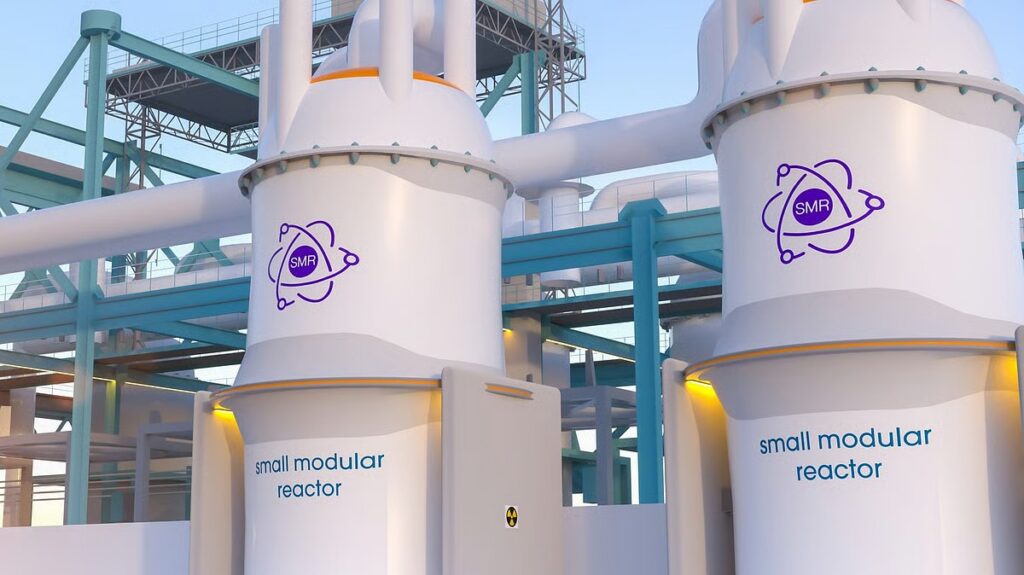
Small modular reactors (SMRs) are nuclear reactors designed to generate electricity at smaller capacities than conventional nuclear power stations. The technology is being explored internationally as a potential source of continuous electricity for industrial facilities and national power grids.
Meanwhile, SADC Centre for Renewable Energy and Energy Efficiency (SACREEE) representative Kudakwashe Ndhlukula said Namibia had expressed interest in developing nuclear energy and had appointed a Nuclear Commissioner to lead the process.
Ndhlukula said nuclear power could play an important role in supplying electricity to energy-intensive industries, particularly data centres, which require uninterrupted power supplies.
He warned that African countries already struggling to meet electricity demand from manufacturing and households would face additional pressure as investment in digital infrastructure expanded.
“I think if we cannot provide power now for our basic manufacturing, for energy access, I think we should then forget about power for data centers because these are power hungry monsters,” Ndhlukula said.
“And I believe nuclear power can play a very significant role in supplying powerful data centers. And because these work 24/7, they will need reliable power,” he added.
The discussion comes amid growing pressure on Southern African countries to diversify their electricity generation sources, particularly as prolonged droughts continue to affect hydropower production across the region.
UNECA identified reliable and affordable electricity as essential for expanding manufacturing, supporting mineral beneficiation and strengthening regional industrial value chains under the African Continental Free Trade Area (AfCFTA).
The commission also highlighted the need for stronger regional electricity interconnections and integrated power markets to improve supply reliability and support industrial growth across Eastern and Southern Africa.
The calls come as NamPower assesses small modular reactor technology capable of generating approximately 120 megawatts (MW) as part of its consideration of nuclear power as a future source of baseload electricity.
Namibia’s established uranium mining industry has also raised the prospect of eventually linking domestic uranium production with nuclear electricity generation.
The country has begun consultations with the International Atomic Energy Agency (IAEA) on plans to develop a nuclear power plant, a process expected to take at least 10 years.