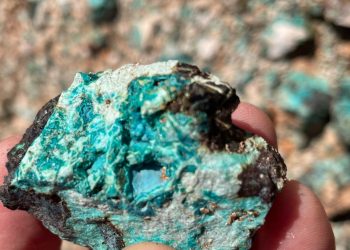
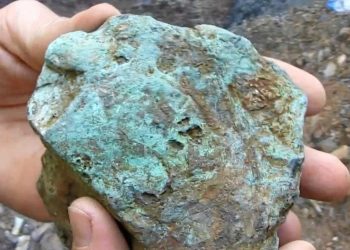
Australian-listed explorer Cazaly Resources Limited has been granted an exclusive prospecting licence over the Abenab North Project, a large-scale copper and rare earth element (REE) property located in Namibia’s Otavi Copper Belt.
The project covers more than 790 square kilometres and is situated approximately 450km by road from Windhoek, near the towns of Tsumeb and Grootfontein.
It lies within the northern carbonate platform of the Pan-African Damara Copper Belt and is dominated by dolomites and sediments of the Otavi Fold Belt — a geological setting known to host several world-class mineral deposits.
Cazaly Managing Director Tara French described the licence award as a significant addition to the company’s exploration portfolio.
“This is a fantastic addition to our diversified portfolio. The project is highly prospective for copper and base metals and has proven REE mineralisation. We believe the project hosts significant potential for new discoveries, with a number of untested magnetic anomalies located within the licence area,” French said.
Previous drilling at Abenab North has confirmed both copper and rare earth potential. Exploration undertaken by Kudu Minerals (Pty) Ltd in 2004 identified several carbonatite pipes. Limited REE sampling from drill hole B6 intersected 45 metres of mineralisation from 55 metres to the end of the hole, grading an average of 0.68% combined CeO₂, La₂O₃ and Nd₂O₃. Within this interval, a higher-grade four-metre section returned 2.36%.
Reported Total Rare Earth Oxide (TREO) values for the same interval averaged 0.73% over 45 metres, including 2.53% over four metres.
Further drilling by Avonlea Minerals Ltd in 2010 tested fresh carbonatite at Anomaly 10 and delivered additional encouraging results.
These included 16.7 metres at 0.66% TREO from 94.6 metres in hole ABD006, including 1.2 metres grading 1.89%; 19.9 metres at 0.48% TREO from 65.5 metres in the same hole; and 39.7 metres at 0.55% TREO from 100.6 metres in hole ABD007, including intervals of 3.6 metres at 1.22% and 3.0 metres at 1.19% TREO from 90.2 metres.
Despite these findings, exploration at the project has remained limited, with several large magnetic anomalies yet to be tested.
Cazaly has since reprocessed regional aeromagnetic data, identifying a prominent 800-metre-diameter magnetic high known as the Cadix anomaly, which the company believes warrants further investigation.
The licence area is located about 20km east of the historic Tsumeb Mine, which produced approximately 30 million tonnes of ore grading 4.3% copper, 3.5% zinc and 10% lead over more than 90 years before closing in 1996.
The deposit also contained arsenic, antimony, silver, cadmium and gold and is internationally recognised for its accumulation of sulphidic germanium.
Cazaly said it is currently assessing additional geophysical work, including magnetic inversions, to refine drill targets. The company is finalising access arrangements and plans to commence ground exploration activities in the coming quarter.