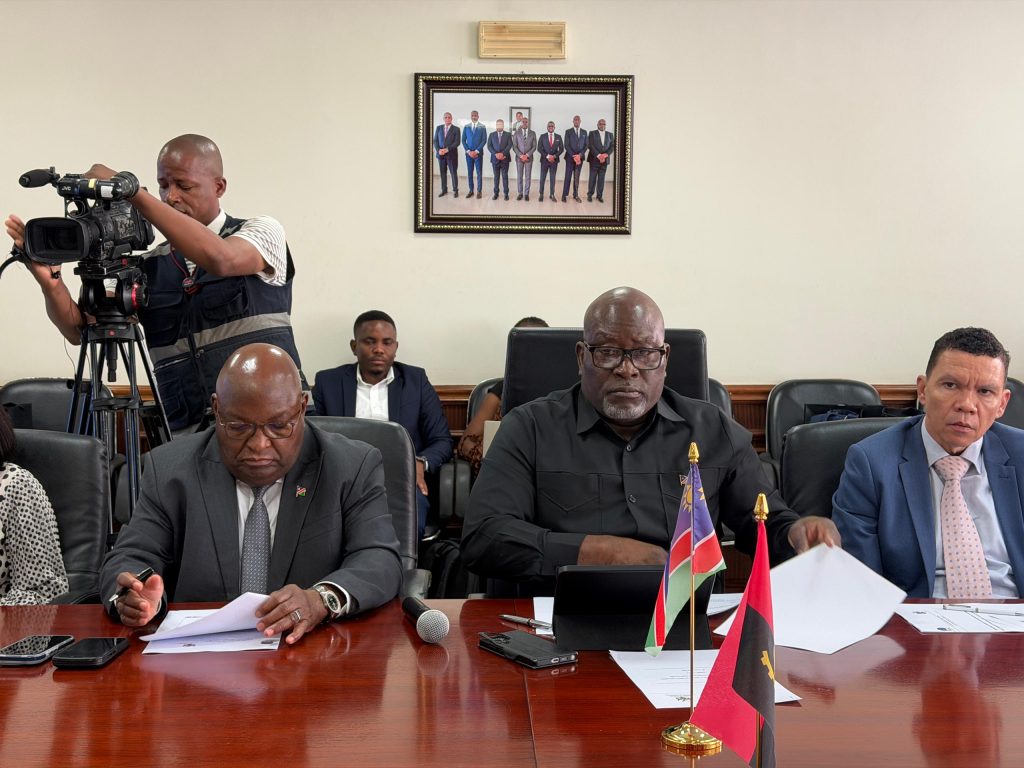
Namibia and Angola are moving to accelerate the long-delayed Baynes Binational Hydropower Project, with Minister of Industries, Mines and Energy Modestus Amutse calling for an end to decades of planning and a shift towards construction.
Speaking at a bilateral meeting in Luanda, Angola, on Friday, Amutse said the project had remained in the development phase for too long and that both governments needed to move towards implementation.
The project, which is expected to strengthen electricity supply in both countries, has been under consideration since the 1990s, when initial studies were conducted at the Epupa site. Feasibility studies for the Baynes site began in 2008.
“It is now time to bring the development phase to a clear conclusion and move towards the construction of this much-needed energy infrastructure project,” Amutse said.
He said Namibia’s continued dependence on electricity imports from neighbouring countries made the project critical to improving energy security and reducing reliance on regional electricity supplies.
Amutse said the two governments had agreed to develop the project through a public implementation model, with financing arrangements designed to ensure electricity generated remains affordable to consumers.
He said the Baynes Project Implementation Unit and its financial advisers had developed a funding strategy that would be submitted to both governments for consideration.
The strategy is expected to guide decisions on how the capital-intensive project will be financed and determine the most suitable funding model.
“Our two Governments have therefore resolved to develop this Project through a public implementation model, under which the required funding will be mobilised in a manner that supports competitive and affordable tariffs for end consumers,” he said.
Amutse said the project was also important to the wider Southern African region, with the Southern African Power Pool supporting its development as a strategic electricity generation investment.
He acknowledged financial and technical support from development partners, including the African Development Bank, the Swedish Fund, the Korean Fund and the African Legal Support Facility.
The minister said cooperation between Namibia and Angola, including their respective electricity utilities, would be essential to advancing the project towards construction.
He also credited his Angolan counterpart, Minister Borges, for supporting efforts to advance the development.
Amutse said the latest bilateral engagement should produce concrete progress towards implementation rather than prolonging the planning process.
“My desire and expectation is that this Project should now move expeditiously from studies to real action. The time has come to translate the many years of preparation into implementation and, ultimately, the commencement of construction,” he said.
Although the two governments have agreed on a public implementation model, the final financing arrangements and construction commencement date have yet to be announced.