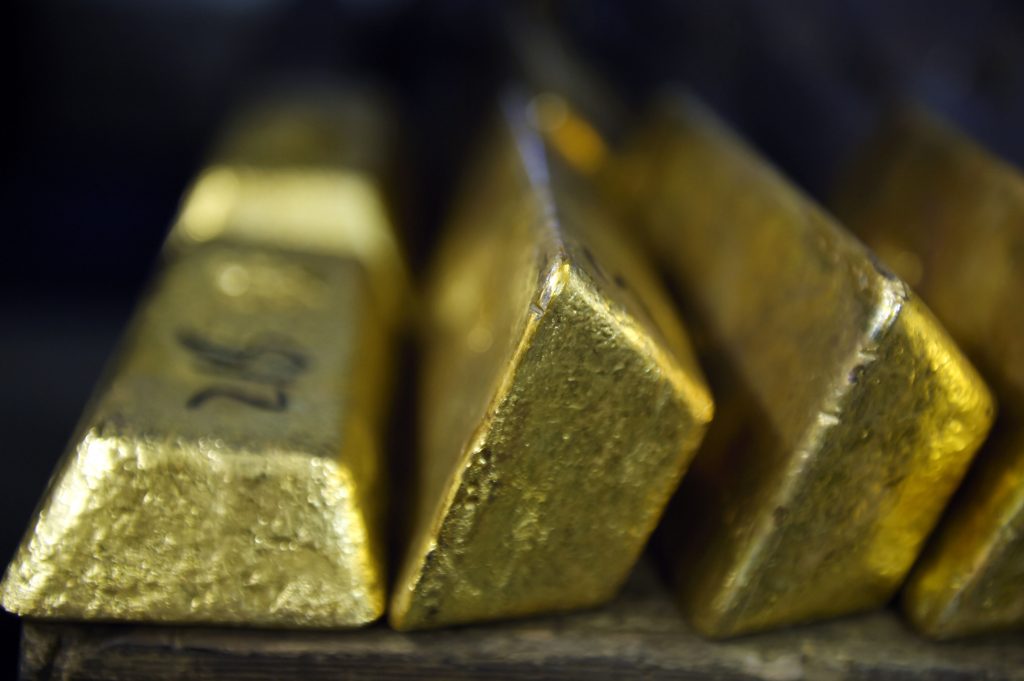
Namibia exported gold worth N$1.91 billion in July 2026, making it the country’s biggest export commodity and accounting for 17.9% of total exports during the month, according to the Namibia Statistics Agency (NSA).
The latest International Merchandise Trade Statistics show that all of Namibia’s non-monetary gold exports during the month were destined for South Africa.
Precious stones, mainly diamonds, generated N$1.48 billion, accounting for 13.8% of total exports, with Botswana, the United Arab Emirates and Belgium among the main destinations.
Mining and mineral commodities continued to account for a significant share of Namibia’s export earnings.
Nickel ores and concentrates generated N$635 million, equivalent to 6% of total exports. The NSA said these were entirely re-exports and were destined for China and Canada.
Uranium exports were valued at N$625 million, accounting for 5.9% of total exports, while petroleum oils generated N$600 million, representing 5.6%.
“Non-monetary gold was Namibia’s largest exported commodity in July 2026, accounting for 17.9 percent of total exports, solely absorbed by South Africa,” the NSA said.
“Precious stones (diamonds), destined mainly for Botswana, United Arab Emirates and Belgium, occupied the third position, accounting for 13.8 percent of total exports.”
Other significant exports included sulphur and unroasted iron pyrites valued at N$496 million, ores and concentrates of base metals at N$437 million, and fresh, chilled or frozen beef at N$326 million.
Other crude minerals contributed a further N$320 million.
Overall, Namibia exported goods worth N$10.67 billion during July, with the top 10 commodities accounting for N$8.32 billion. Other commodities contributed N$2.35 billion, or 22% of total exports.
On the import side, petroleum oils were Namibia’s biggest import commodity at N$2.78 billion, accounting for 16.8% of total imports.
Nickel ores and concentrates followed at N$875 million, or 5.3%, while sulphur and unroasted iron pyrites imports amounted to N$665 million, representing 4%.
Commercial motor vehicle imports were valued at N$636 million, while vehicles for the transportation of persons amounted to N$467 million.
Other major imports included civil engineering and contractors’ equipment valued at N$398 million, mechanical handling equipment and parts at N$371 million, and fertilisers at N$363 million.
Imports of ores and concentrates of base metals amounted to N$315 million, while alcoholic beverages were valued at N$250 million.
By economic region, the Southern African Customs Union (SACU) was Namibia’s largest export market, accounting for 37.8% of total exports.
Organisation for Economic Co-operation and Development (OECD) markets accounted for 21.6%, while Southern African Development Community (SADC) markets outside SACU accounted for 19.8%.
Common Market for Eastern and Southern Africa (COMESA) and BRIC+ markets accounted for 17.9% and 17.5% of exports, respectively.