Namibia is seeking to mobilise green and blended finance to expand renewable energy, mineral processing and manufacturing as the government targets a rise in manufacturing’s contribution to GDP from 10.6% to 18% by 2030.
Minister of Industries, Mines and Energy Modestus Amutse said Namibia’s green economy strategy is aimed at using renewable energy and the country’s mineral resources to develop industries such as green iron and fertiliser production, while supplying cleaner power to mines, factories, farms and small businesses.
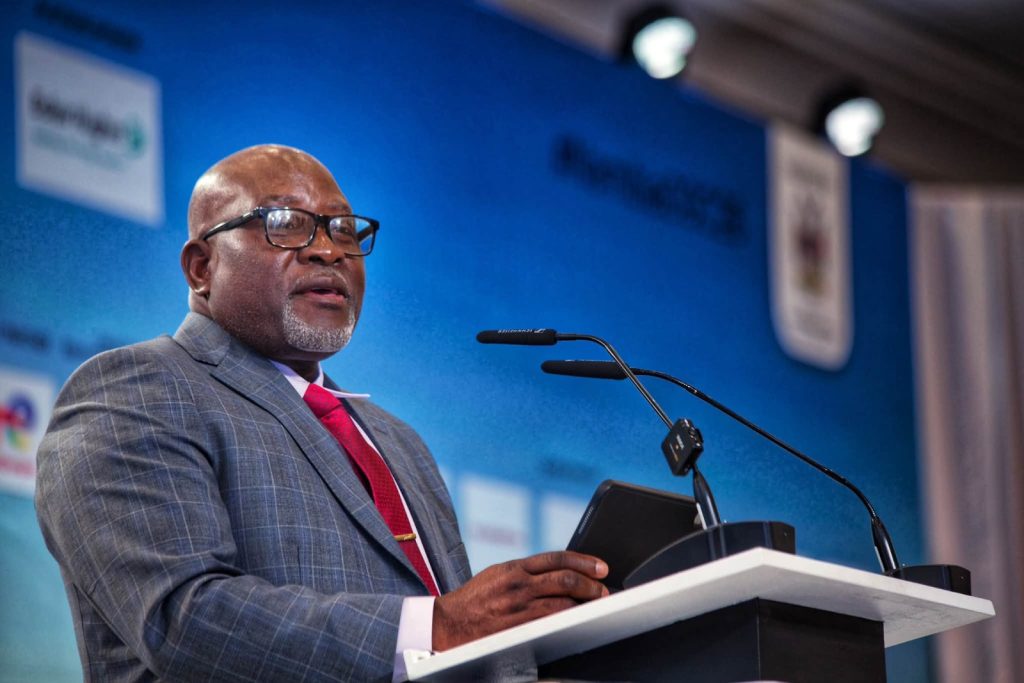
Speaking at the official opening of the Second International Conference on Finance and Sustainable Business (ICFSB 2026) at the Namibia University of Science and Technology (NUST) on Wednesday, Amutse said different stages of industrial development will require different forms of financing.
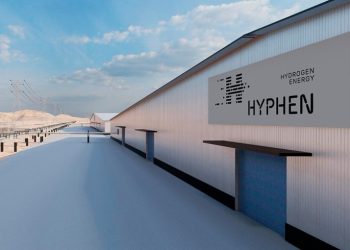
“Our green-economy ambition is therefore industrial, not merely environmental. We want renewable power to support mines, factories, farms and small businesses; green hydrogen to enable products such as green iron and fertiliser; and new industries to create Namibian skills and suppliers,” he said.
Amutse said early-stage studies and first-of-a-kind technologies will require grants, project preparation support and patient capital, while large infrastructure projects will need long-term concessional and blended finance, guarantees and credible offtake arrangements.
Local enterprises, meanwhile, require affordable working capital denominated in the currencies in which they generate revenue.
The financing push comes as Namibia seeks significant investment to meet targets under the Sixth National Development Plan (NDP6), including economic growth of at least 7% by 2030 and an employment rate of 75%.
NDP6 also targets increasing manufacturing’s contribution to GDP from 10.6% to 18%, while raising the share of processed mineral exports from 46.6% to 57%.
Installed electricity generation capacity is targeted to increase from 734 megawatts (MW) to 1,153MW, while electricity access is expected to rise from about 59% to 70%.
Amutse said meeting these targets will require substantial investment in electricity generation and transmission infrastructure, mineral processing, technical education, businesses and household electricity connections.
“As we discussed recently in Norway, capital is global, but risk is local. The public budget cannot do all of this, while private capital will not carry risks it cannot understand or manage. Green finance innovation must bridge those realities,” he said.
The minister also called for financing mechanisms that would extend the benefits of the energy transition to households and businesses unable to meet conventional lending requirements.
He said these could include capital subsidies, pay-as-you-go models, guarantees for underserved borrowers, results-based financing and investable mini-grid models.
On critical minerals, Amutse said Namibia needs to move beyond extracting and exporting resources by using its mineral wealth to support domestic processing, factories, skills development, infrastructure and local businesses.
He said recent engagements in China had reinforced the need for mineral beneficiation projects to be planned alongside the energy, water and infrastructure required to support them.
“Our recent engagements in China reinforced a practical lesson: lithium beneficiation is not a mining project alone. It requires electricity, water, process heat, laboratories, logistics and specialised skills,” Amutse said.
“Mining, energy, water, industrial policy and finance must meet before the investment decision, not after a plant asks for a connection the system was never prepared to supply.”
Amutse said Namibia’s emerging petroleum sector should similarly be used to build long-term national capabilities, including skills, infrastructure, reliable electricity, water security, renewable energy and a more diversified economy.
He said sustainable investment should not be measured solely by financial returns, but also by its contribution to employment, ownership, productive capacity and access to essential services.
Amutse challenged NUST and conference participants to develop practical financing models capable of lowering the cost of capital, expanding access to finance for businesses and households without conventional collateral and combining smaller projects into investable portfolios.
He said the impact of sustainable financing should ultimately be measured through jobs, skills development, local procurement, ownership, energy access and economic resilience.