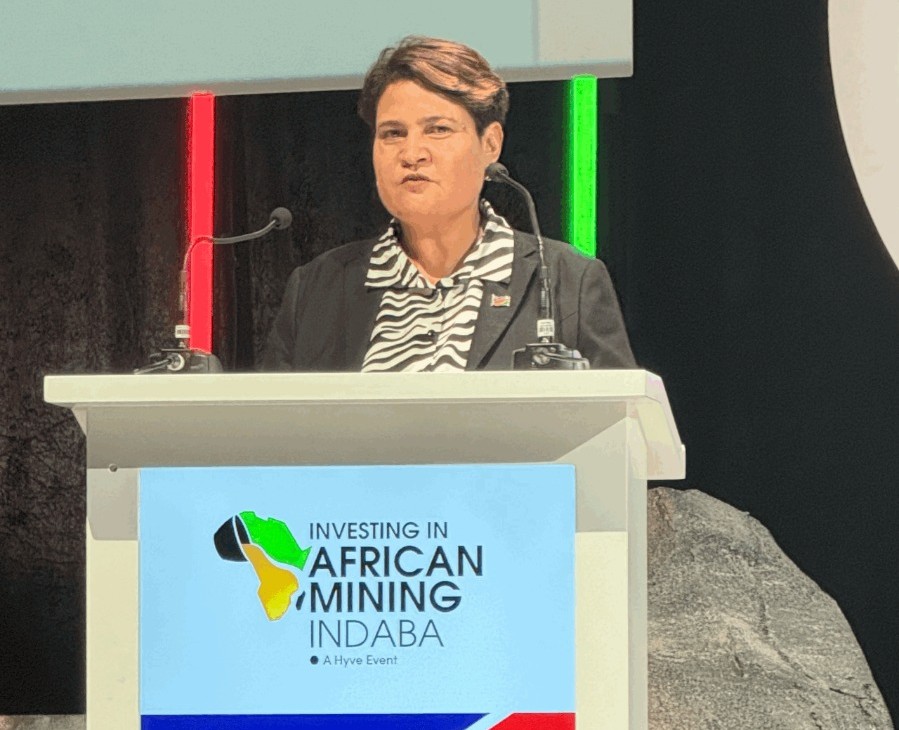
Namibia is placing uranium at the centre of a long-term national energy and industrial strategy as the country advances plans to integrate nuclear energy into a diversified, low-carbon energy mix.
Speaking at the Invest in Namibia session held on the sidelines of the Africa Mining Indaba 2026, Deputy Minister of Mines and Energy Gaudentia Kröhne said uranium is no longer viewed solely as an export commodity, but as a strategic pillar in Namibia’s future energy architecture.
Kröhne said Namibia’s position as the world’s third largest uranium producer places the country in a strong position at a time when global demand for reliable, low-carbon baseload power is increasing.
“As countries seek reliable, low-carbon baseload power, uranium remains central to global energy security. Namibia is therefore not only a supplier of uranium, we are a strategic partner in the global energy transition,” she said.
She noted that Namibia’s uranium strategy forms part of a broader national approach that seeks to integrate nuclear energy with offshore oil and gas developments, renewable energy resources and the country’s green hydrogen programme.
According to Kröhne, linking uranium with other energy resources places it at the core of a coordinated national energy system rather than treating it as a standalone resource.
“By linking uranium to oil, gas, renewables and green hydrogen, Namibia’s energy portfolio can serve both domestic and regional demand. Together, these resources position Namibia as an integrated energy and industrial hub, capable of supporting mineral beneficiation, manufacturing, and long-term energy security, not only for Namibia, but for the region and the world,” she said.
She added that nuclear energy is increasingly being considered as a stabilising component within a diversified, low-carbon energy mix, supporting downstream industries that depend on secure, affordable and reliable power supply.
Kröhne further said Namibia’s strategic vision is supported by policy certainty, regulatory stability and strong institutions, which continue to position the country as an attractive mining investment destination.
Also speaking at the event, Namibia’s High Commissioner to South Africa, Nangula Frieda Ithete, said Africa’s mineral wealth is undergoing a broader reassessment as global supply chains shift and the world transitions towards a new trade and industrial order.
“As the world recalibrates supply chains and transitions towards a new trade and industrial order, Africa’s mineral wealth is no longer viewed only as an extractive resource, but as a strategic lever for industrialisation, energy security and inclusive growth,” Ithete said.
She said Namibia’s approach reflects a deliberate shift towards value creation, industrial development and long-term partnerships that extend beyond extraction.