The mining and quarrying sector generated N$6.6 billion in export earnings during March 2026, accounting for half of Namibia’s total export revenue for the month, driven largely by uranium exports which generated N$3.5 billion, according to the latest International Merchandise Trade Bulletin released by the Namibia Statistics Agency.
The sector recorded a month-on-month increase of N$5.2 billion in export earnings compared to February, underlining the growing contribution of mining to Namibia’s trade performance and foreign exchange inflows.
According to the NSA, mineral products continued to dominate the country’s export basket, with the top five export commodities accounting for 69.1% of total exports during March.
“In terms of the sectoral share of total exports, March 2026 saw the mining and quarrying sector occupying the first position with the largest export value of N$6.6 billion, generating half of the country’s total export revenue, while a month-on-month comparison showed an increase of N$5.2 billion in exports of products from this sector,” the report said.
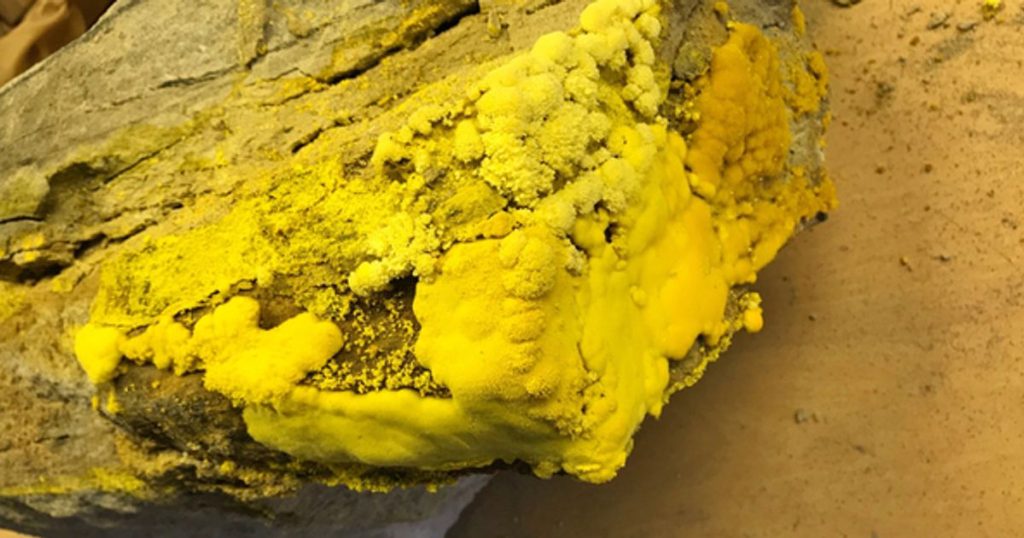
Uranium remained Namibia’s leading export commodity during the month, generating N$3.5 billion and accounting for 26.7% of total exports.
Non-monetary gold followed at N$2.1 billion, representing 16.1% of total exports.
Nickel ores and concentrates ranked fourth among the country’s top export products, contributing N$1.2 billion or 9.5% of total exports, while diamonds and other precious stones generated N$780 million, accounting for 5.9%.
“The top 10 traded commodities highlight the country’s dependence on mineral exports, with uranium and non-monetary gold emerging as top export revenue sources, thereby underscoring the country’s wealth and opportunities in the extractive industry,” the report said.
The mining sector also continued to influence Namibia’s import profile, particularly through raw material imports linked to processing and re-export activities.
Namibia imported N$831 million worth of nickel ores and concentrates during March, accounting for 5.4% of total imports, while ores of base metals amounted to N$275 million or 1.8% of imports.
China emerged as Namibia’s largest export market during the month, absorbing 26.8% of total exports, mainly uranium shipments.
South Africa remained a key trade partner, accounting for 16.2% of Namibia’s exports and serving as the exclusive destination for non-monetary gold exports.
Canada accounted for 9.4% of exports, largely through imports of nickel ores and concentrates, while Botswana represented 8.5% of export demand.
“‘Nickel ores and concentrates’ occupied the fourth position with a share of 9.5 percent of total exports, absorbed by Canada and China,” the report said.
On the import side, Bahrain, Oman and Kuwait remained Namibia’s largest suppliers of petroleum oils, contributing 10.9%, 4.9% and 4.8% of the country’s import bill respectively.
Zambia was the main source of nickel ore imports, while China remained a major supplier of civil engineering and contractors’ equipment.
“Bahrain, Oman and Kuwait were the largest import markets for petroleum oils, while motor vehicles for commercial purposes were sourced mainly from South Africa and India. ‘Nickel ores and concentrates’ were sourced from Zambia,” the report said.