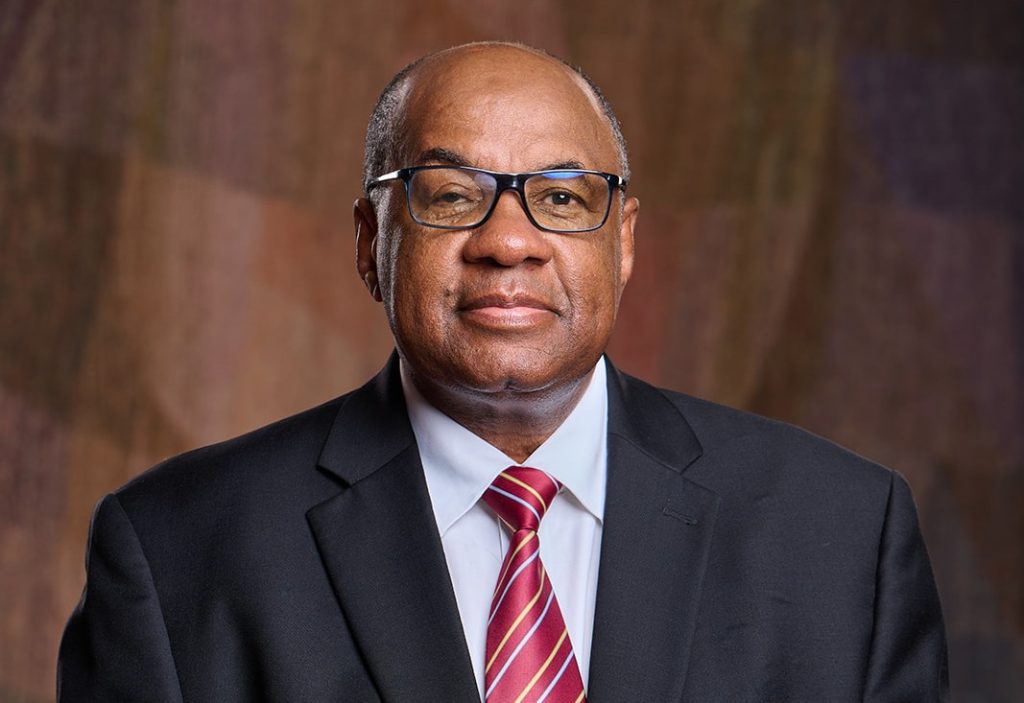
By Dr Johannes !Gawaxab
There are moments in the life of a nation when history accelerates. Namibia is living through such a moment.
The discovery of significant offshore hydrocarbons in the Orange Basin, coupled with renewed momentum in mining through planned uranium and gold developments, has positioned Namibia at the centre of global investor attention.
The country’s transition from frontier exploration destination to a potential energy and resource powerhouse is no longer a distant prospect—it is underway.
With this opportunity comes responsibility.
As Namibia advances negotiations with international oil companies, the challenge is not simply to attract investment or maximise government revenue.
It is to strike a durable balance, a modus vivendi, between the two. As Adam Smith observed, economic actors pursue their own interests, yet when incentives are properly aligned, those interests can create broader societal prosperity.
The task before Namibia is to ensure that the interests of investors and the nation converge rather than collide.
At the heart of this discussion are fiscal terms. These determine how risks, rewards and economic rents are shared between the state and investors over the life of a petroleum project.
They influence whether projects proceed, how quickly investment decisions are taken, and how much value ultimately accrues to citizens.
Around the world, governments typically rely on two broad fiscal models. Under concessionary tax-and-royalty systems, companies own the petroleum they produce and pay royalties and taxes to the state.
Under production-sharing contracts, governments retain ownership of the resource while companies recover costs and share production revenues according to agreed formulas.
Neither model is inherently superior. Success depends on design, implementation and context.
The experience of emerging petroleum producers offers valuable lessons. Guyana’s rapid emergence as a major oil producer has generated substantial economic benefits, but it has also sparked debate over whether the original fiscal terms adequately reflected the country’s long-term interests.
The lesson is not that governments should seek to renegotiate contracts after the fact. Rather, it is that fiscal frameworks must be carefully designed from the outset to ensure they remain fair, competitive and politically sustainable over time.
For Namibia, this means negotiating terms that provide investors with attractive risk-adjusted returns while ensuring that citizens receive an equitable share of the value generated from national resources.
International evidence suggests that well-designed petroleum regimes can simultaneously attract capital, support project development and deliver strong government revenues when projects become profitable.
Equally important are fiscal stability provisions. Oil and gas developments require billions of dollars in upfront investment and often span several decades.
Investors need confidence that agreed rules will not change arbitrarily once capital has been committed. Stability provisions therefore reduce uncertainty, lower financing costs and improve project viability.
At the same time, local content policies must form part of the equation. Resource development should not be measured solely by government revenues or export earnings. Its success should also be judged by the skills transferred, businesses created, jobs supported and economic capabilities developed within Namibia.
The objective should therefore be clear: negotiate fair terms, negotiate them well, and negotiate them without unnecessary delay.
Time matters. Prolonged uncertainty risks postponing final investment decisions, delaying production and deferring the economic benefits that citizens and businesses are anticipating.
Conversely, a transparent, balanced and internationally competitive framework can accelerate investment while safeguarding national interests.
Namibia has a rare opportunity to demonstrate that resource-rich countries do not have to choose between attracting investment and protecting the public interest. The most successful jurisdictions achieve both.
If Namibia can secure a fair, stable and forward-looking agreement, it will not only unlock the value of its petroleum resources—it will establish a reputation as one of the world’s most credible destinations for long-term investment.
As the Nobel laureate Paul Samuelson once observed, “Investing should be more like watching paint dry or watching grass grow.” The same principle applies to resource development.
Sustainable prosperity is built not through haste or confrontation, but through sound institutions, balanced agreements and patient execution. Namibia’s greatest discovery may ultimately prove not to be oil itself, but the wisdom with which it manages it.
*Dr Johannes !Gawaxab, former Governor of the central bank of Namibia, former Chairman of Namibia’s national oil company (NAMCOR) and former Chairman of Rossing Uranium Mine (RUL), writes in his personal capacity.