Rosh Pinah Zinc Corporation (RPZ) has commissioned its new semi-autogenous grinding (SAG) mill, marking a major milestone in the company’s RP2.0 expansion project.
The new mill replaces the existing ball mill and completes the final major processing component of the upgrade. Its commissioning brings the core processing infrastructure of the RP2.0 project into full operation as an integrated system.
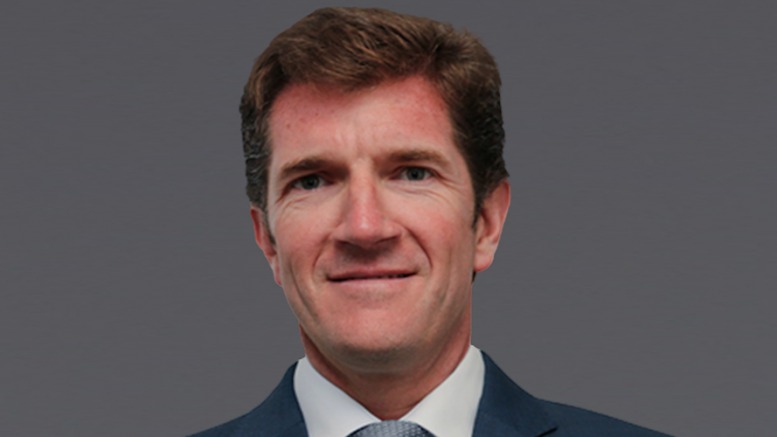
According to Ignacio Bustamante, Chief Executive Officer of Base Metals at Appian Capital Advisory, the majority shareholder in RPZ, commissioning of the SAG mill will enable the company to double processing capacity from 0.7 million tonnes per annum to 1.4 million tonnes per annum once ramp-up is complete.
The increased capacity is expected to significantly boost annual zinc and lead concentrate production.
“Commissioning the SAG mill marks the completion of our core processing infrastructure and reflects the quality of execution by the RPZ team throughout the RP2.0 programme. With the full circuit now operational, the project is positioned to achieve a step change in production output. This milestone demonstrates Appian and RPZ’s commitment to value-accretive, operationally rigorous project delivery, and we look forward to realising the full benefits of RP2.0 as throughput ramps up,” he said.
The expanded processing circuit also includes new paste-fill and water treatment plants, together with enhanced flotation, thickening and filtration capacity.
According to RPZ, the redesigned processing flowsheet improves grinding efficiency, metallurgical recovery and grind-size control while reducing unit operating costs.
The company said ore is now crushed to a coarser size before entering the SAG mill, reducing dust generation in the crushing circuit and improving material handling, environmental performance and working conditions.
RPZ added that the upgraded processing system will improve its ability to treat harder ore as mining progresses, while the SAG mill’s excess capacity provides scope for future production growth.
The RP2.0 expansion project, which includes underground mine development and new surface infrastructure, is now more than 95% complete and remains on schedule and within budget.
The company has also recorded more than two million lost-time injury-free work hours, which it described as an exemplary safety achievement.
RPZ is an underground zinc-lead mine in south-western Namibia and has been in continuous operation since 1969, producing zinc, lead and silver concentrates.