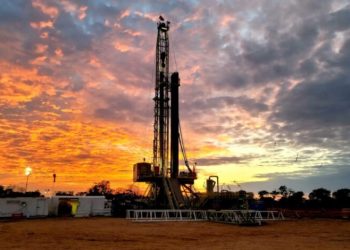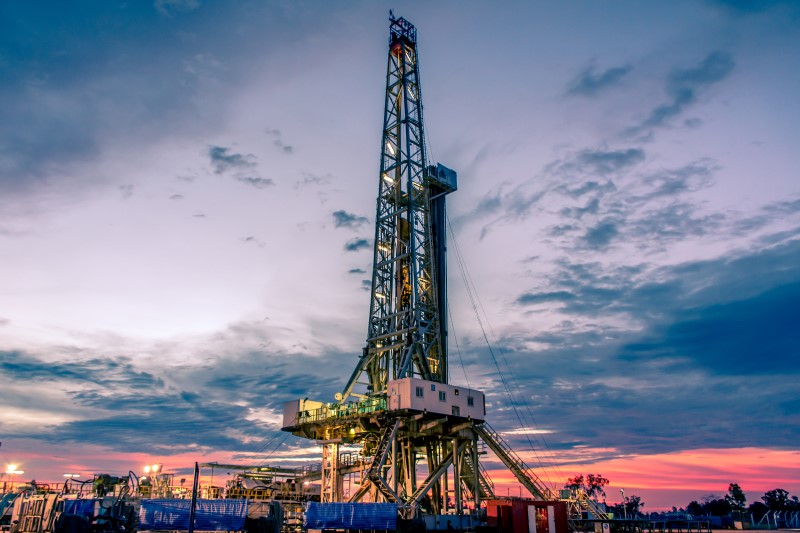
Reconnaissance Energy Africa (ReconAfrica) says natural gas and potential liquids have flowed to the surface from its Kavango West 1X (KW1X) discovery well in Namibia, paving the way for further testing to determine how much the well could potentially produce.
The company said gas and possible liquid hydrocarbons flowed naturally from the upper Huttenberg formation immediately after the section of the well was opened for testing and before any acid treatment was carried out.
The hydrocarbons were brought to the surface and the gas was burned through the site’s flare system.
“We are excited to report another critical milestone of the KW1X production test, which is achieving our primary objective of proving the flow of hydrocarbons to surface, this time from the uppermost zone of the Huttenberg formation,” ReconAfrica President and CEO Brian Reinsborough said.
He said the vertical testing phase had now been completed, giving the company enough information to proceed with a horizontal production test.
ReconAfrica did not measure how much gas or potential liquids flowed during the latest test because of equipment limitations. The company said it has since bought additional equipment and changed its surface operations service provider to address the problem.
Samples of the gas and potential liquids have been sent to laboratories in the United States to determine their composition, with results expected in the coming weeks.
Testing at KW1X has so far found that two of six areas of interest in the well contain hydrocarbons that can flow to the surface.
However, ReconAfrica stressed that the vertical tests were primarily designed to establish whether hydrocarbons could flow, rather than determine commercial production rates.
The company will now move to a horizontal test aimed at establishing a more representative flow rate and providing a clearer indication of the discovery’s production potential.
ReconAfrica plans to drill horizontally for up to 1,000 metres through the upper Huttenberg formation using the Jarvie-1 rig.
The company selected the Huttenberg formation because it produced natural gas and potential liquids during the vertical test and contains about 75 metres of potential hydrocarbon-bearing rock identified from earlier well data.
ReconAfrica said drilling horizontally should expose a much larger section of the reservoir and intersect more of the natural fractures through which hydrocarbons can flow.
The company has also retained the option to conduct another horizontal test in the Elandshoek formation.
The Jarvie-1 rig remains at the site, while two high-pressure pumps, a swabbing unit and other equipment purchased in the United States are being shipped to Namibia.
Drilling will resume once the equipment arrives and the necessary permit amendments are approved.
ReconAfrica has appointed H2OIL to handle surface operations, while Halliburton will continue providing equipment and services underground.
The company is also preparing for the Kavango West 2A appraisal well. After completing the horizontal test at KW1X, the partners plan to drill and test a horizontal well at KW2A to determine how far the reservoir extends and whether different sections are connected.
ReconAfrica said it has identified 22 potential structures from existing seismic data, with further exploration work potentially adding more targets.
“Confirming the KW1X results with a flow rate test on a horizontal sidetrack as soon as possible will ultimately support resource and reserve bookings and a final investment decision on this emerging Damara Fold Belt Play,” Reinsborough said.