Namibia’s external position strengthened significantly in 2025, with the merchandise trade deficit narrowing by 35.4% to N$25.0 billion from N$38.7 billion in 2024, supported by strong export earnings from uranium and gold.
Bank of Namibia Governor Ebson Uanguta said the improvement was driven by higher export volumes and favourable commodity prices, particularly for uranium and gold, which more than offset a modest increase in import payments.
“The annual merchandise trade deficit narrowed by 35.4% to N$25.0 billion in 2025. This improved position reflects robust export earnings, especially from uranium and gold, which outweighed the impact of a modest increase in import payments,” Uanguta said.
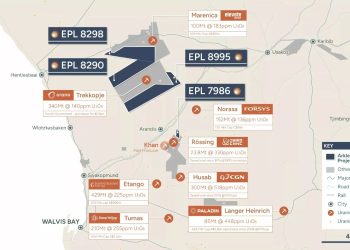
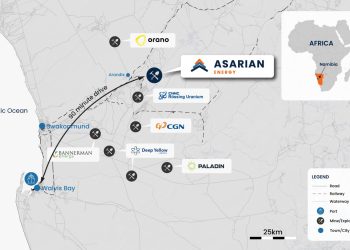
Total exports rose by 18.7% to N$101.2 billion in 2025, underpinned by a near doubling of uranium exports, which increased by 94.3% to N$28.2 billion during the year.
Gold exports also recorded strong growth, rising by 38.1% to N$20.2 billion.
Uanguta said the drivers of growth differed across commodities, with uranium exports benefiting primarily from higher volumes, while gains in gold exports were largely price-driven.
“The data clearly shows that uranium exports benefited significantly from volume growth, whereas gold exports were supported more by price improvements rather than volumes,” he said.
Diamond exports declined by 20.5% to N$10.1 billion, while exports of other mineral products fell by 8.6% to N$4.4 billion. Food and live animal exports contracted by 20.6% to N$3.7 billion, reflecting continued pressures in the sector.
According to Bank of Namibia data, manufactured exports increased by 5.4% to N$26.4 billion, supported by an 8.5% rise in fish exports to N$14.9 billion. Other commodities, mainly electricity, expanded by 9.7% to N$3.3 billion, while re-exports declined by 14.4% to N$5.1 billion.
Imports increased marginally by 1.8% to N$126.2 billion in 2025. Consumer goods imports remained broadly stable at N$37.3 billion, edging down by 0.2%, while mineral fuel imports declined by 9.5% to N$22.1 billion.
In contrast, imports of vehicles, aircraft and vessels rose by 13.4% to N$14.9 billion, while machinery and mechanical appliances increased by 5.5% to N$23.5 billion. Chemical product imports grew by 7.6% to N$12.4 billion, and electricity-related imports rose by 14.0% to N$8.7 billion.
Uanguta noted that the improved external position comes against the backdrop of slowing domestic economic activity during the first three quarters of 2025, with contractions recorded in agriculture, fishing, mining and manufacturing.
“Most high-frequency indicators point to subdued economic activity in 2025 relative to 2024, and growth for 2025 is now expected to be lower than previously projected,” he said, adding that strong export performance nonetheless provided critical support to Namibia’s balance of payments.