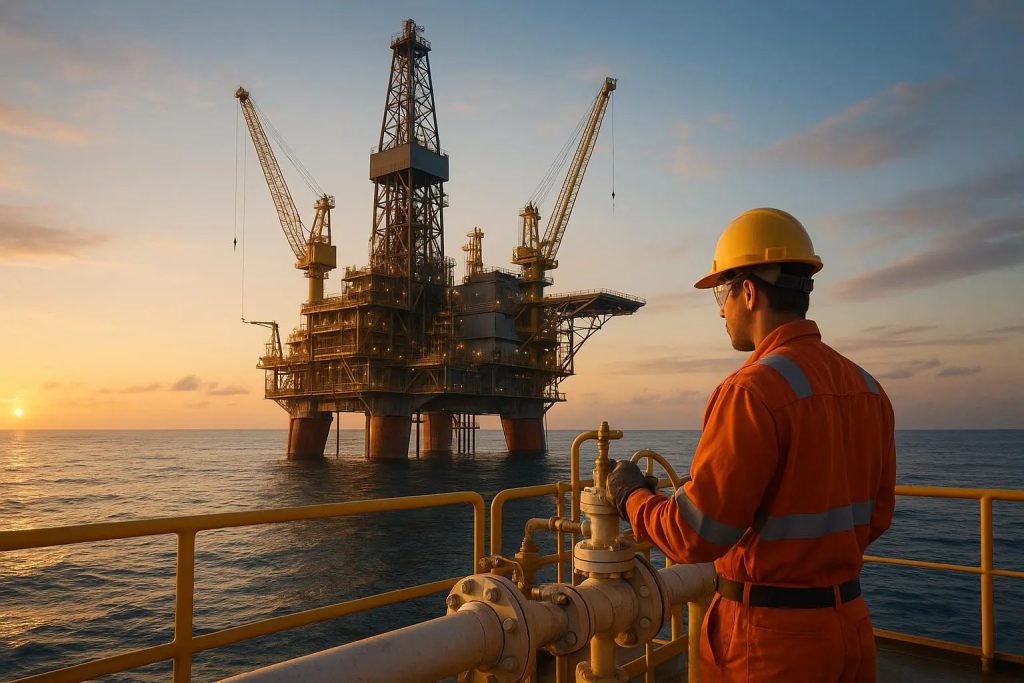
Namibia has spent about N$60 billion on imported oil and gas-related services since 2021, highlighting the scale of foreign expertise and specialised services supporting the country’s offshore exploration activities.
According to the Bank of Namibia (BoN), petroleum-related services accounted for about 36% of Namibia’s total service imports over the period, compared with N$7.7 billion in oil and gas-related goods imports.
BoN Director of Research and Financial Sector Development Dr Emma Haiyambo said the high level of service imports reflected the current exploration phase of Namibia’s emerging petroleum industry.
“We are seeing that the imports that came in are mostly related to services. So imports of services relating to oil and gas have been high, totalling around N$60 billion since 2021 and representing around 36% of total services imports,” Haiyambo said.
She was presenting the paper Namibia’s Readiness for First Oil: Assessing Institutional, Regulatory and Economic Preparedness for Sustainable Resource Development at the central bank’s 27th Annual Symposium on Thursday.
In contrast, oil and gas-related goods imports amounted to approximately N$7.7 billion since 2021, representing about 1.4% of total goods imports over the period.
The figures come as Namibia seeks to increase domestic participation in the petroleum value chain ahead of potential commercial production.
The sector has already attracted significant foreign capital. Between 2021 and 2025, oil and gas attracted more than N$74 billion in foreign direct investment, accounting for about 56% of Namibia’s total FDI inflows over the period.
However, the large investment flows have yet to translate into a comparable contribution to domestic economic output because a significant share of exploration expenditure is spent outside the country.
“However, the contribution of the oil and gas industry to GDP has been low. And that is because not all investment from exploration is spent in the country,” Haiyambo said.
Oil and gas exploration expenditure contributed an average of about 3% to Namibia’s gross fixed capital formation between 2022 and 2025.
BoN expects the composition of petroleum-related imports to shift if offshore discoveries progress from exploration to development.
Haiyambo said imports of equipment and other goods are expected to increase significantly following final investment decisions as operators prepare offshore projects for production.
“Our expectation is that as we move forward, especially after the announcement of the FID, imports of goods should actually pick up as operators prepare for production,” she said.
TotalEnergies’ Venus project and Galp’s Mopane discovery are among the projects identified as frontrunners in Namibia’s potential transition towards oil production.
Haiyambo said the pre-production period gives Namibia an opportunity to expand domestic skills and business capacity so that a greater share of future petroleum expenditure can be captured within the local economy.