By John Giordano
“The AI economy may be digital, but its foundations are physical.”
We are living through a profound reordering of the global economy. Artificial intelligence, quantum computing, advanced manufacturing, and the accelerating demand for reliable energy are reshaping investment, supply chains, and industrial competitiveness.
Behind every breakthrough in these next generation technologies lies something remarkably physical: electricity, data centers, resilient supply chains, and the critical minerals that make them possible.
The AI economy may be digital, but its foundations are physical. Energy demand is accelerating. Supply chains are being reconfigured in real time. And the strategic importance of energy, critical minerals, logistics, and industrial capacity will only continue to grow.
In this environment, the question is no longer simply where resources can be found. Increasingly, it is where governments have built the institutional conditions that allow long-term capital to deploy with confidence.
Capital Follows Trust
Here is the fundamental truth about frontier-market investment that is too often overlooked: the principal constraint on industrial growth is rarely the absence of resources. Nor is it the absence of capital. Global capital is abundant. Investor confidence is not.
A mine takes years to develop. An offshore production platform often requires a decade or more from discovery to first production. A processing facility demands investment horizons measured not in quarters, but in decades.
These are not short term financial decisions. They are generational commitments. Generational commitments require certainty. They require confidence that contracts will be honored, regulations will remain predictable, and institutions will endure.
What ultimately moves private capital in frontier markets is not financing tools alone. It is regulatory predictability. It is disciplined permitting. It is the rule of law.
Sophisticated investors do not gamble on fragile systems. Where regulatory frameworks are transparent and infrastructure is credible, capital moves. Where they are not, capital goes elsewhere – regardless of the financing tools available.
That is why the most important investment any resource-rich country can make today is not in a single mine, port, or pipeline. It is in strengthening the institutional foundation that gives investors the confidence to make long-term decisions.
When governments establish transparent regulatory frameworks, disciplined permitting, and confidence in the rule of law, private capital responds.
Projects move from concept to construction. Processing capacity expands. Industrial ecosystems emerge. Long-term prosperity follows.
Namibia as a Governance Story
This is where Namibia has an opportunity to distinguish itself – not simply as a resource story, but as a governance story.
Namibia possesses many of the resources that will help shape the global economy over the coming decades. It is one of the world’s leading uranium producers.
It possesses significant deposits of lithium and rare earth elements – including dysprosium, neodymium, and terbium – that are increasingly essential to advanced manufacturing and emerging technologies.
Offshore, the Orange Basin is rapidly emerging as one of the world’s most significant new petroleum provinces, attracting sustained investment from leading U.S. and international energy companies.
These are not merely commodities. They are strategic inputs into the technologies, energy systems, and supply chains that will power the decades ahead.
Yet what ultimately determines long-term prosperity is not what lies beneath the ground. It is what a nation chooses to build above it. Political stability.
The rule of law. Transparent regulation. Predictable fiscal frameworks. Disciplined permitting.
Modern infrastructure. These are not accidents of geography. They are the product of deliberate policy choices that earn the confidence of long-term investors.
Only Namibians themselves can build that future. It cannot be imported, and it cannot be imposed from abroad.
It must be built through the consistent demonstration of institutional strength, sound governance, and a long-term commitment to the rule of law. Those are the foundations upon which enduring prosperity is built.
Resources Create Opportunity. Systems Create Prosperity.
Countries do not become industrial powers simply because they possess natural resources.
They become industrial powers because they connect resources to energy, energy to infrastructure, infrastructure to industry, and industry to global markets.
That systems-based approach increasingly distinguishes countries that capture the full value of their natural resources from those that simply export them.
Namibia has an opportunity to think in systems – not simply projects.
Energy production aligned with export capacity. Mineral extraction connected to processing and value addition. Infrastructure designed not as standalone assets, but as integrated logistics corridors. Digital infrastructure developed alongside energy infrastructure. Education and workforce development aligned with the industries of the future.
Each reinforces the others. Together, they create an ecosystem capable of attracting long-term private investment and supporting sustained economic growth.
Standing at the Port of Walvis Bay, one sees far more than cargo moving through a modern logistics gateway. One sees how infrastructure transforms geography into economic advantage.
Resources create opportunity. Systems create prosperity.
As global supply chains continue to evolve, countries that successfully integrate energy production, mining, transportation, logistics, and advanced manufacturing will capture far greater long-term value than those that continue exporting raw materials alone.
This is why infrastructure matters. Infrastructure does not follow growth. It enables it.
The U.S. Partnership
The United States recognizes both the scale of this opportunity and the importance of getting it right.
President Trump has made clear that energy security is national security, that resilient supply chains must be built on trusted partnerships, and that economic growth and local development should go hand in hand.
Those priorities increasingly shape how the United States approaches commercial diplomacy, economic statecraft, and long-term investment partnerships around the world.
America’s competitive advantage has never been resources alone. It has been our ability to organize capital, engineering, technology, entrepreneurship, and innovation at a scale few, if any, nations can match.
American companies bring advanced engineering, world-class technology, disciplined project management, deep capital markets, and decades of experience developing some of the world’s most complex energy, mining, and infrastructure projects.
They also bring a commitment to local hiring, workforce development, resilient supply chains, environmental stewardship, and strong corporate governance.
That combination matters. Long-term investment depends not simply on financing projects. It depends on building confidence—in institutions, in partners, and in the durability of the investment environment itself.
Through institutions such as the Export-Import Bank of the United States, the U.S.
International Development Finance Corporation, and the U.S. Trade and
Development Agency, the United States is well positioned to help mobilize investment, reduce risk, and accelerate commercially viable projects spanning energy, transportation, critical minerals, and digital infrastructure.
These are investments that strengthen supply chains, expand opportunity, and generate lasting value for both the United States and Namibia.
Our objective is straightforward: to foster partnerships that mobilize private capital, encourage innovation, strengthen local capacity, and create long-term economic value.
The strongest partnerships are those that generate enduring benefits for both countries and continue to deliver results long after individual projects are completed.
The Opportunity Before Us
The twenty-first century will not be defined simply by where resources are found.
It will be defined by where confidence is built. Countries that establish trusted institutions, transparent regulation, integrated infrastructure, and long-term policy consistency will attract the capital that builds the industries of the future. Those that earn trust will shape the next generation of global investment.
Namibia has a remarkable opportunity. Its resource base is exceptional. Its emerging offshore energy sector is attracting global attention. Its commitment to political stability, the rule of law, and responsible governance provides a strong foundation upon which long-term prosperity can continue to be built.
The momentum is real. The opportunity is significant. The decisions made today will determine whether today’s discoveries become tomorrow’s industries, tomorrow’s jobs, and tomorrow’s prosperity.
The United States stands ready to partner with Namibia as it continues building the institutions, infrastructure, and investment climate that can transform extraordinary natural resources into enduring economic opportunity.
Because in the end, the world’s most valuable resource is not found beneath the ground. It is trust.
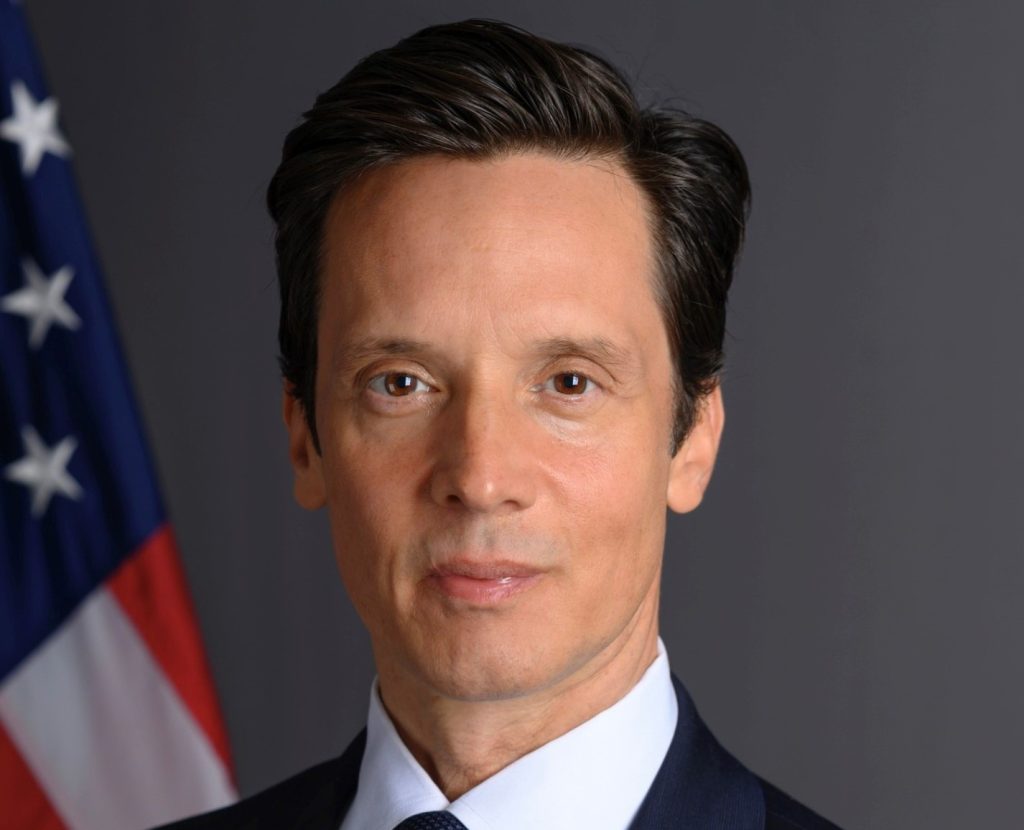
*John Giordano is the United States Ambassador to the Republic of Namibia. He is the first politically appointed U.S. Ambassador to Namibia and the first U.S. Ambassador under President Trump’s second Administration to take up post on the African continent.