Namibia is banking on planned oil and uranium developments to strengthen economic growth, boost exports and eventually reverse its long-standing trade deficit, despite weaker-than-expected economic growth, declining diamond revenues and rising global oil prices.
Bank of Namibia Governor Johannes !Gawaxab Uanguta said several large-scale mining and energy projects are expected to improve the country’s economic outlook over the coming years.
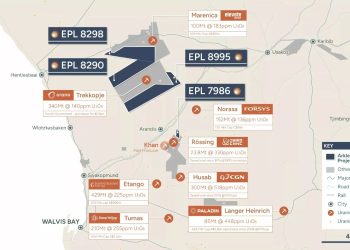
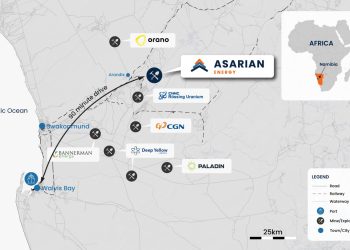
He said a new copper mine currently under construction is expected to begin production around 2027, while three new uranium mines are also expected to come on stream.
Uanguta said the planned oil developments, together with the new mining projects, are expected to increase export earnings, generate foreign exchange and improve Namibia’s external position.
“Globally, countries such as China have maintained trade surpluses because the value of their exports exceeds their imports. We hope that one day Namibia will also achieve a trade surplus, and with the anticipated development of the oil sector, we are confident that this could become a reality,” he said.
He said Namibia’s current account deficit stood at 12.9% of gross domestic product in 2025, reflecting the country’s dependence on imports and foreign capital to finance investment.
However, Uanguta said the deficit is currently being financed largely through significant investment flowing into Namibia’s emerging oil and gas sector.
He also warned that the country’s diamond industry continues to weigh on economic growth as weaker global demand for natural diamonds reduces export earnings and government revenue.
Uanguta said the growing availability of cheaper synthetic diamonds has placed pressure on demand and prices for mined diamonds, reducing Namibia’s earnings from one of its key export commodities.
“These synthetic diamonds are cheaper than natural diamonds when introduced to the market, putting pressure on demand and prices for mined diamonds. As a result, Namibia’s diamond revenues have declined, given the country’s reliance on natural diamond sales as a major source of income. The decline in demand for natural diamonds has negatively affected economic growth and reduced revenue generated for the government,” he said.
He added that recent conflict in the Middle East has further complicated the economic outlook by driving international oil prices close to US$100 a barrel.
As a net importer of fuel, Namibia remains exposed to higher energy costs, which could increase the country’s import bill and place further pressure on the economy.