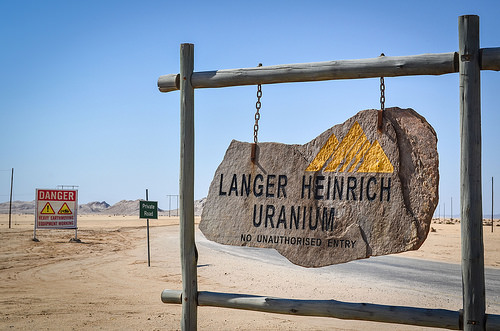
Paladin Energy’s Langer Heinrich uranium mine in Namibia generated N$1.52 billion (US$92.4 million) in revenue during the quarter ended 30 September 2026, representing a 3% decline from the N$1.56 billion (US$95.3 million) recorded in the preceding quarter.
According to Paladin Energy’s latest quarterly financial report, the decline was primarily driven by lower uranium sales volumes, which fell from 1.35 million pounds in the June quarter to 1.16 million pounds in the September quarter.
The mine produced 1 million pounds of uranium oxide (U₃O₈) during the period, with output affected by a planned maintenance shutdown and lower processing plant recovery rates.
“LHM produced 1.00Mlb U3O8 in the quarter, with production reflecting the planned maintenance shutdown and processing plant recovery at the bottom-end of the target range due to ore characteristics associated with the mining sequence,” the company stated.
Despite the decline in sales volumes, the average realised uranium selling price increased by 12.5% to US$79.40 per pound, compared with US$70.60 per pound in the previous quarter.
The increase reflected stronger uranium prices and a higher proportion of sales linked to market prices.
However, the mine’s processing recovery rate declined to 85% from 90%, while production costs increased to US$61.60 per pound from US$51.60 per pound in the preceding quarter.
Paladin said operational performance improved towards the end of the reporting period as mining progressed within the J Pit and processing plant throughput increased.
“During September, production improved as mining advanced in the J Pit with plant performance also strengthened, with throughput improving through the month,” the company stated.
Total mining volumes increased to 7.73 million tonnes during the quarter, compared with 7.45 million tonnes in the previous reporting period.
The company said mining activities remained focused on the J Pit, where stripping of topsoil and waste material continued to provide access to the main uranium orebody.
“Mining activities continued to progress to plan, with 7.73Mt of total material mined during the quarter, exceeding prior quarter volumes. All mining activity was focused on the J Pit, progressing development towards the main orebody whilst stripping topsoil and waste to open up access to primary ore. This will continue to progress throughout FY2027,” the report stated.
Paladin also reported capital expenditure of N$113.2 million (US$6.9 million) during the quarter, alongside N$101.7 million (US$6.2 million) in low-grade ore stockpiling costs and N$103.4 million (US$6.3 million) in capitalised stripping costs.
Exploration and resource development activities continued, with the company completing 15,222 metres of resource drilling within Mining Licence 140.
The drilling programme focused on improving resource estimates in areas scheduled for near-term mining and identifying potential extensions to existing uranium mineralisation.
Looking ahead, Paladin reaffirmed its production guidance of between 5.1 million and 5.6 million pounds of uranium oxide for the 2027 financial year.
The company expects average production costs to range between US$44 and US$48 per pound during the financial year, below the US$61.60 per pound recorded in the September quarter.
Paladin said uranium production was expected to increase during the second half of the financial year as mining advances into higher-grade ore deposits within the J Pit.
Langer Heinrich Mine, in which Paladin holds a 75% ownership interest, resumed commercial uranium production in March 2024 following an extensive refurbishment programme.