Mining projects under the Namibia Public Private Forum (NamPPF) have secured investment commitments of US$1.865 billion (about N$33.8 billion) within the first nine months of implementation, surpassing the US$525 million target set for the period, according to the Chamber of Mines of Namibia.
Presenting an update on the mining sector’s NamPPF commitments during the Chamber of Mines Mining Expo and Conference, Chief Executive Officer Fabian Shaanika said the sector has moved beyond announcing projects to delivering investment across uranium, gold, copper and critical minerals.
The investment commitments represent significant progress towards the industry’s 48-month target of mobilising US$2.865 billion (about N$50.7 billion) in new mining investment.
Shaanika said major projects advancing under the initiative include construction of the Twin Hills Gold Project, early works at the Etango Uranium Project following the conclusion of a water supply agreement, financing progress at the Tumas Uranium Project, and development of the Husab-NamWater desalination plant.
“The next phase of the project pipeline includes the Haib Copper Project, where a pre-feasibility study is targeted by the end of 2026 and an Environmental Clearance Certificate is expected in 2027, alongside continued development at the Uis/Lithium Ridge projects and exploration at the Kokoseb Gold discovery,” Shaanika said.
Despite exceeding investment targets, the sector fell short of its employment objective during the reporting period.
Mining projects created 3,054 jobs during the first nine months, compared with a target of 3,375 jobs, representing a shortfall of 321 jobs, or 9.5%.
The industry’s overall target remains the creation of 18,000 jobs over the 48-month implementation period.
Shaanika said sustaining investment momentum will require greater regulatory certainty and faster approval processes.
He identified the finalisation of the Investment Bill, implementation of investor visa reforms, clarification of beneficial ownership and shareholding policies, and faster licensing and permitting processes as priorities for unlocking further investment.
The Chamber also called for sector-specific regulatory reforms and stronger monitoring of implementation as the Namibia Public Private Forum enters its second phase.
The update comes as the Eighth Administration pursues its target of creating 500,000 jobs during the implementation of the Sixth National Development Plan (NDP6), with mining identified as one of eight priority sectors expected to drive employment and economic growth.
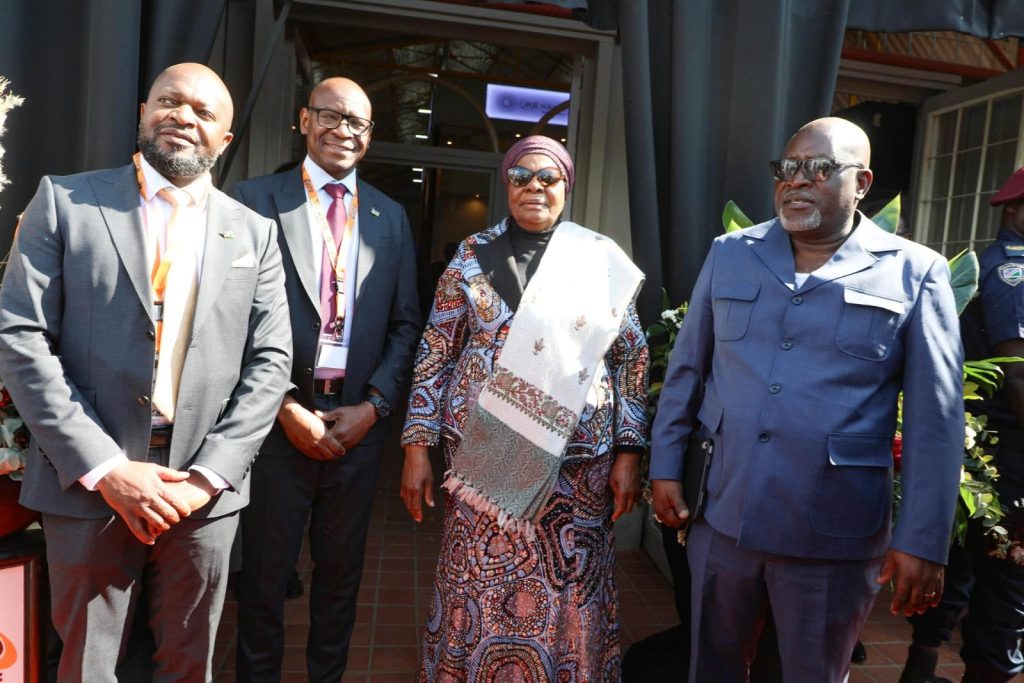
Speaking at the Mining Expo, President Netumbo Nandi-Ndaitwah welcomed the progress made since the launch of the Namibia Public Private Forum but urged the industry to accelerate job creation.
“While the mining sector committed through the Namibia Public-Private Forum to creating over 18,000 direct jobs and facilitating an estimated US$2.865 billion in new investment through the various mining and exploration projects, more can still be done. I am informed that since the Namibia Public-Private Forum, progress has been made in advancing several mining and infrastructure projects,” she said.
The President said projects including Bannerman Energy’s Etango Uranium Project and Deep Yellow’s Tumas Uranium Project have already generated more than 1,000 jobs, with further employment expected as development progresses.
She also called on the mining industry to increase value addition and local beneficiation to ensure Namibians derive greater benefits from the country’s mineral resources.
“Equally, as a government, we are encouraging the mining sector to heed the government’s call for value addition and local beneficiation to ensure shared prosperity with the owners of the resources, the people,” she said.
Nandi-Ndaitwah further urged mining companies to complement their corporate social responsibility programmes by equipping long-serving employees with skills, capital and business opportunities that would enable them to diversify into other sectors of the economy and contribute to long-term job creation and economic diversification.