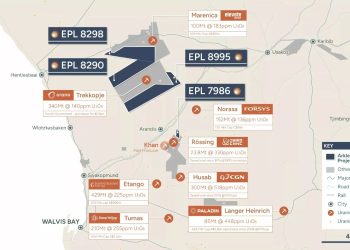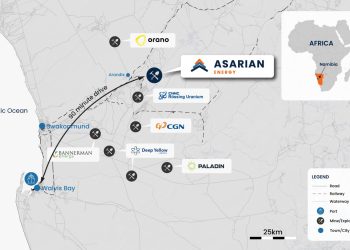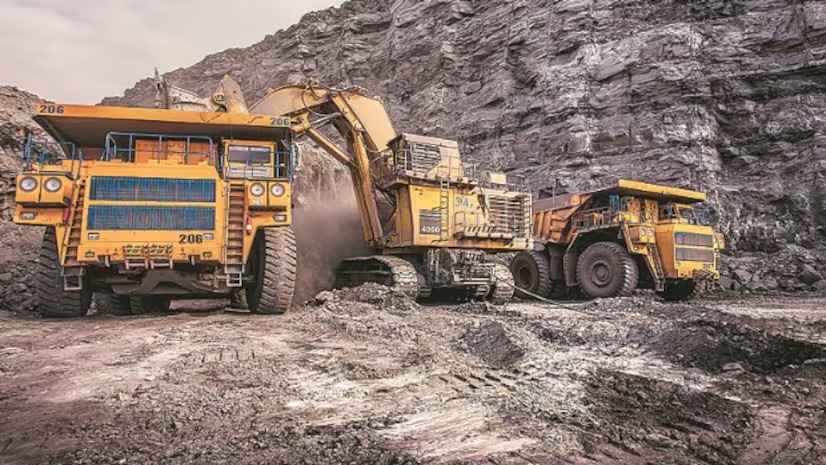
Mining projects account for the largest share of environmental applications currently under review in Namibia, with uranium developments leading submissions amid sustained investor interest in the country’s extractive sector, Environmental Commissioner Timoteus Mufeti has reaveled.
Speaking on the status of environmental approvals, Mufeti noted that while applications span multiple sectors of the economy, mining activity continues to dominate the pipeline in terms of volume.
“Mining remains on top in terms of the number of applications. Uranium projects are leading, followed by agricultural developments, infrastructure projects, and increasingly oil and gas applications,” he said.
He added that, beyond uranium, the ministry is also assessing environmental applications linked to lithium, copper and other mineral projects, reflecting growing exploration activity across Namibia’s diversified mineral resource base.
According to Mufeti, agricultural expansion and infrastructure developments also continue to feature prominently in the environmental approval process as economic activity accelerates across sectors.
Data from the Ministry of Environment, Forestry and Tourism (MEFT) shows that by mid-2025, a total of 412 environmental impact assessments (EIAs) had been processed as part of the ministry’s regulatory oversight of development projects.
During the same period, 187 environmental clearance certificates were issued, while 83 non-compliant mining operations were suspended for failing to meet environmental requirements.
The ministry said enforcement actions form part of broader efforts to safeguard Namibia’s fragile ecosystems while ensuring that increased investment in mining, energy and infrastructure proceeds in line with environmental standards and climate resilience objectives.
Officials noted that rising project activity, particularly in mining and energy, continues to place growing demands on environmental oversight systems as Namibia positions itself as a key destination for resource investment.