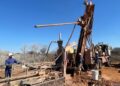
Canadian-listed Ongwe Minerals plans to undertake an expanded drilling programme at its Nguni Gold Discovery in Namibia in the first quarter of 2027, following the completion of its maiden 5,135-metre drilling campaign.
The company completed 3,974 metres of reverse circulation drilling across 37 holes and 1,161 metres of diamond drilling across seven holes at Nguni, which forms part of its Omatjete Gold Project.
Assay results have been received for 35 of the 44 drill holes, representing 4,263 metres of drilling, with results from the remaining nine reverse circulation holes outstanding.
The best drilling intersections include 20 metres at 1.31 grams per tonne (g/t) of gold, including 16 metres at 1.57 g/t, and 12 metres at 1.58 g/t.
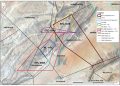
Surface exploration has also extended the Nguni gold-in-soil anomaly by approximately 2.8 kilometres to the northwest, bringing its inferred strike length to more than nine kilometres.
The company has identified three additional gold-in-soil anomalies approximately five kilometres southeast of Nguni along regional fault structures.
Ongwe Minerals CEO Dave Underwood said the company had advanced Nguni from the identification of the initial gold-in-soil anomaly to its maiden drilling programme within six months.
“Nguni is clearly a very large gold system which we are just beginning to understand. We are really excited to get drilling again early in Q1 2027, once we have collected all the assays and compiled all the geological data,” Underwood said.
He said the initial drilling results at Nguni had surpassed those recorded during early exploration programmes at Namibia’s Twin Hills gold deposit.
However, exploration at Nguni has proved more challenging than initially anticipated due to extensive surface cover, including desert sand and calcrete, which has limited the effectiveness of soil sampling in identifying underlying gold mineralisation.
Ahead of the next drilling campaign, Ongwe plans to conduct extensive soil sampling, detailed geological mapping and drone magnetic surveys, alongside a review of existing drilling results to identify priority targets.
The company is also finalising land access agreements to facilitate exploration across the entire Manga-Nguni corridor.
Negotiations with the landowner have largely been concluded, with legal agreements expected to be finalised by early 2027, although the timeline remains uncertain.
Nguni is located 55 kilometres east of Wia Gold’s Kokoseb Gold Deposit and 14 kilometres east of Ongwe’s Manga Gold Discovery, within the Okondeka Fault Zone.
The initial drilling programme covered approximately four kilometres of the fault structure, which extends for at least 60 kilometres within Ongwe’s exploration licences.
The company said the Nguni gold system remains open in all directions and has the potential to host large-scale economic gold mineralisation, although an economically viable deposit has yet to be established.