China is tightening its control over Namibia’s uranium industry, with state-owned nuclear companies now holding major stakes across the country’s largest producing and development-stage uranium mines.
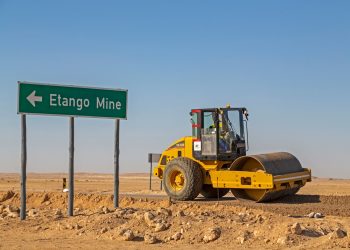
The latest move comes after reports that China National Nuclear Corporation (CNNC) is seeking to acquire a 45% stake in Bannerman Energy’s Etango uranium project, one of Namibia’s largest undeveloped uranium deposits.
The proposed transaction would establish a joint venture between Bannerman and CNOL, a subsidiary of China National Uranium Corporation (CNUC), which forms part of CNNC.
The deal would further deepen Chinese influence in Namibia’s uranium sector, where Chinese firms already control or hold interests in several strategic assets.
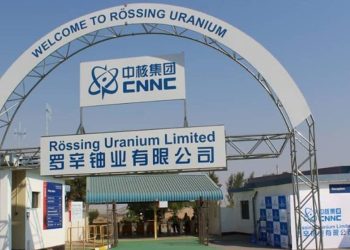
CNNC currently owns a 68.62% majority stake in the Rössing Uranium mine and also holds a 25% interest in the Langer Heinrich Uranium mine.
Meanwhile, Swakop Uranium, which operates the Husab mine, is 90% owned by CGN Global Uranium Ltd, a subsidiary of China General Nuclear Power Corporation. The remaining 10% stake is held by state-owned Epangelo Mining.
The growing Chinese presence highlights the strategic importance of Namibia’s uranium reserves as global demand for nuclear fuel rises amid renewed interest in nuclear energy.
Namibia remains one of the world’s leading uranium producers, with production exceeding 8,000 tonnes in 2025. The country’s output has been driven mainly by the Husab and Rössing mines, while Langer Heinrich recently resumed production after a temporary shutdown.
Data from the Namibia Statistics Agency shows uranium has become Namibia’s largest export commodity.
In March 2026, uranium exports accounted for 26.7% of total exports and were valued at N$3.5 billion, with China remaining a major destination market.
Over the full 2025 calendar year, uranium exports generated an estimated N$41.4 billion, contributing 22.4% of Namibia’s total export earnings.
According to the World Nuclear Association, Namibia possesses some of the world’s largest uranium resources. The Husab mine alone contains measured and indicated resources exceeding 143,000 tonnes of uranium, while Etango and Rössing also rank among globally significant deposits.
Namibia’s uranium industry dates back to 1928 when uranium was first discovered in the Namib Desert. However, large-scale development only gained momentum after extensive exploration in the late 1950s, particularly around the Rössing deposit discovered by Rio Tinto in 1966.