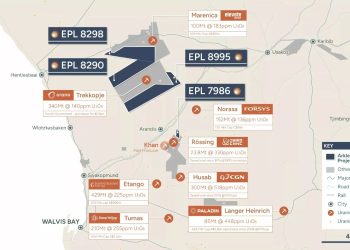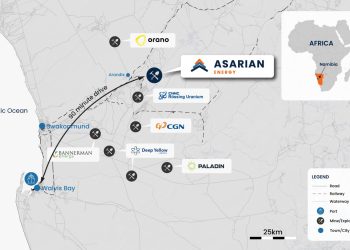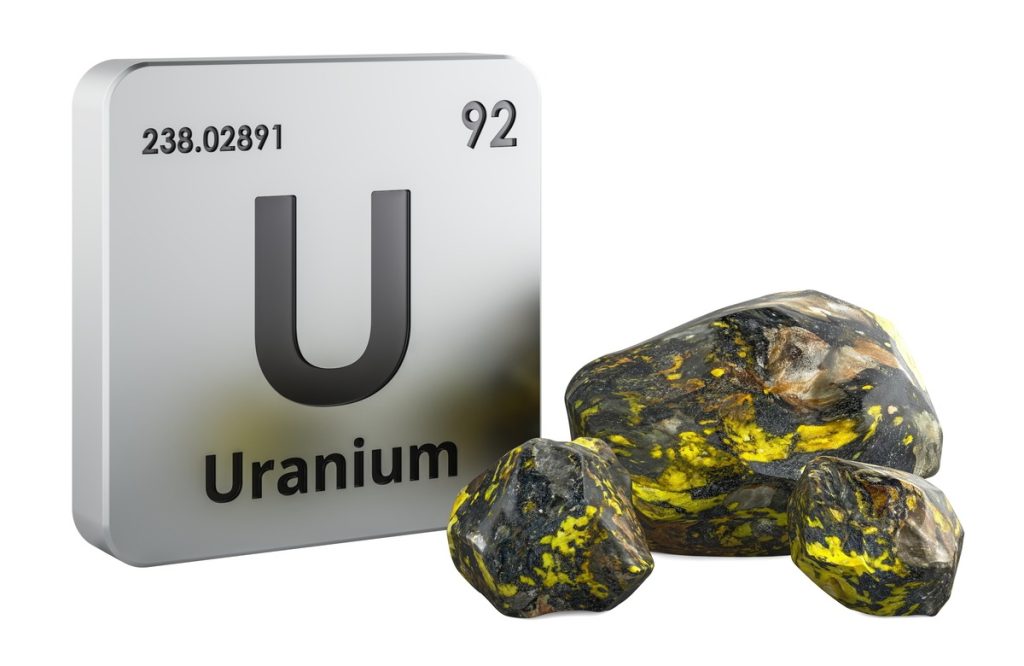
Uranium remained Namibia’s largest export commodity in May 2026, generating N$2.8 billion and accounting for 22.3% of the country’s total exports, with the bulk of shipments destined for China.
According to the Namibia Statistics Agency’s (NSA) latest Merchandise Trade Statistics, Namibia exported goods worth N$12.4 billion during the month, with mining products continuing to dominate export earnings.
Mineral commodities, including uranium, diamonds, gold, nickel ores, base metal ores and sulphur, collectively accounted for about 61% of total export value, underlining the mining sector’s continued importance to the economy.
Diamonds were the second-largest mineral export, generating N$1.35 billion, with shipments mainly destined for Botswana, the United States and Hong Kong.
Non-monetary gold followed closely, contributing N$1.34 billion, with all exports going to South Africa.
Nickel ores and concentrates generated N$952 million, with Canada, China and Finland serving as the main export markets.
“Uranium was Namibia’s largest exported commodity in May 2026, accounting for 22.3% of total exports, mainly absorbed by China. Precious stones (diamonds), destined mainly for Botswana, the USA and Hong Kong, occupied the third position, accounting for 10.8% of total exports. Non-monetary gold occupied the fourth position with a share of 10.8% of total exports, solely absorbed by South Africa,” the report said.
The NSA further reported that exports of base metal ores and concentrates reached N$765 million, with South Africa and Belgium among the main destination markets, while sulphur and unroasted iron pyrites generated N$288 million, with Zambia as the principal export market.
On the import side, petroleum oils remained Namibia’s largest imported commodity, valued at N$3.31 billion and sourced mainly from the United States. Nickel ores and concentrates ranked second at N$1.20 billion, supplied primarily by Zambia, reflecting growing regional trade in mineral products.
Other major imports included commercial motor vehicles worth N$575 million, mainly imported from South Africa and China; sulphur and unroasted iron pyrites valued at N$520 million, sourced from the United States, Norway and South Africa; and passenger vehicles worth N$380 million, imported largely from Japan, South Africa and China.
“The top five commodities imported into the country jointly accounted for 38.5% of total imports. Petroleum oils emerged at the top of the list during the month under review, accounting for 21.3% of total imports. In second and third positions were nickel ores and concentrates and motor vehicles for commercial purposes, accounting for 7.7% and 3.7% of total imports, respectively. Sulphur and unroasted iron pyrites and motor vehicles for the transport of persons ranked fourth and fifth, with shares of 3.4% and 2.4%, respectively,” the report said.
Overall, Namibia recorded imports of N$15.5 billion in May 2026 against exports of N$12.4 billion, resulting in a merchandise trade deficit of N$3.1 billion.
The NSA said the strong performance of mineral exports underscores Namibia’s continued reliance on extractive industries, with uranium, diamonds, gold and other mineral commodities remaining the country’s main sources of foreign exchange earnings.
However, it warned that the concentration of exports in raw commodities highlights the need for greater local beneficiation and value addition.
“However, this reliance poses risks due to the unpredictable price volatility of minerals on the global market and prevailing geopolitical conflicts. Imports were mainly dominated by essential commodities such as petroleum oils and motor vehicles for commercial purposes, reflecting dependency on foreign industrial inputs to support domestic activities. This composition suggests a need for increased industrialisation, particularly in the manufacturing sector, and greater export diversification to reduce import dependency while enhancing economic resilience,” the report said.