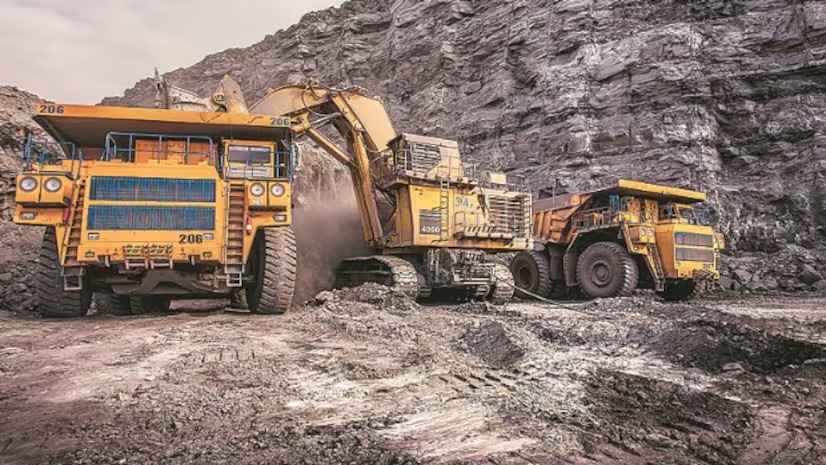
Namibia’s mining sector drove the country’s export performance in September 2025, generating N$3.6 billion and accounting for 48.4% of total exports, according to the latest International Merchandise Trade Statistics report released by the Namibia Statistics Agency (NSA).
The report shows that exports from the mining industry increased by N$1.7 billion month-on-month, supported by strong demand for uranium, diamonds, gold, and nickel ores.
Uranium remained Namibia’s top export commodity, contributing 21.1% of total exports, followed by diamonds (19.8%), fish (13.5%), non-monetary gold (10.7%), and nickel ores and concentrates (5.6%).
Together, these five products accounted for approximately 71% of Namibia’s export earnings.
“In terms of goods, the country’s export composition for September 2025 was mainly concentrated on commodities of the mining sector such as uranium, precious stones (diamonds), non-monetary gold, as well as nickel ores and concentrates,” said NSA CEO and Statistician-General Alex Shimuafeni.
On the import side, Namibia’s demand remained focused on industrial and transport goods. Petroleum oils were the top import item, making up 18.7% of total imports, mainly sourced from Oman, Bahrain, and Israel. Fertilisers (6.2%), motor vehicles for commercial purposes (5.7%), nickel ores (3.0%), and passenger vehicles (2.4%) completed the top five imports, primarily sourced from South Africa, India, Morocco, Zambia, and Japan.
South Africa remained Namibia’s largest trading partner, absorbing 17.8% of exports and supplying 33.3% of imports. Other key export destinations included Botswana (14%), Zambia, China, and the United Arab Emirates, while China, Oman, Morocco, and Bahrain featured prominently among import sources.
“The analysis of Namibia’s top trading partners revealed that South Africa maintained its dominance as the country’s largest market for both imports and exports,” Shimuafeni said.
In terms of logistics, the report noted that sea transport carried 44.3% of Namibia’s exports, led by bulk shipments of minerals and fish. Air transport accounted for 30.8%, largely driven by diamond and gold exports, while road transport handled 24.9%.
On the import side, road transport dominated with 51.3%, followed by sea (46.2%) and air (2.5%).