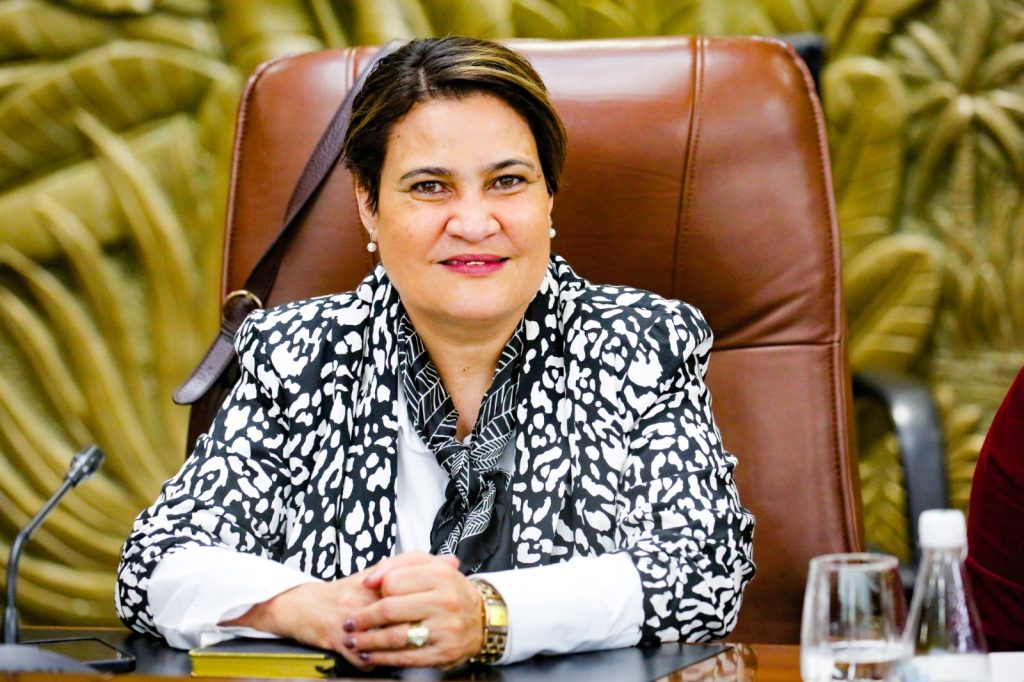
Namibia’s Solar Revolving Fund (SRF) has financed approximately 5,800 renewable energy systems across the country, representing a cumulative investment of about N$177 million, Deputy Minister of Industries, Mines and Energy Gaudentia Kröhne has said.
The systems include solar home installations, solar water pumps and solar water heaters aimed at supporting households, farmers and small businesses, particularly in rural and peri-urban communities.
Kröhne said the initiative demonstrates how innovative financing mechanisms can expand access to renewable energy technologies.
“The Solar Revolving Fund has demonstrated that innovative financing can unlock real opportunity for our people. To date, the SRF has financed approximately 5,800 renewable energy systems across Namibia to a cumulative value of about N$177 million,” she said.
The programme has also expanded to support grid electricity connections through partnerships with regional electricity distributors.
In 2023, the Northern Regional Electricity Distributor (NORED) became the first distributor to sign a Service Level Agreement with the ministry under the scheme. Through the partnership, 149 grid connections were financed at a value of N$9.2 million.
Kröhne said the agreement marked an important step in expanding the scope of the fund beyond off-grid renewable energy solutions.
“Through that partnership, 149 grid connections were financed to the value of N$9.2 million. This milestone marked the beginning of a new chapter for the fund, expanding beyond off-grid renewable systems into structured grid-connection financing,” she said.
She noted that reliable electricity access plays a critical role in enabling economic participation and supporting inclusive growth, particularly in rural areas.
According to the deputy minister, access to grid electricity contributes directly to job creation, the growth of small and medium enterprises, and improvements in living standards.
The Solar Revolving Fund offers loans of up to N$150,000 at a subsidised interest rate of five percent per annum over a five-year period, aimed at helping households and businesses cover the cost of electricity connections.
“Connection costs often include transformers, poles, cables, labour and network contributions. For many rural families and small enterprises this represents a significant barrier. The grid-connection financing mechanism under the Solar Revolving Fund is designed specifically to remove that barrier,” Kröhne said.
She added that the partnership is expected to accelerate electrification efforts in several regions, including Otjozondjupa, Omaheke, Oshikoto and Kunene.
The fund operates on a revolving financing model, where repayments from beneficiaries are recycled to support new projects, ensuring the sustainability of the programme and expanding access to energy infrastructure across the country.