Serval Resources is aiming to launch its first drilling campaign in Namibia’s Kaoko Basin during the second half of 2026, as the AIM-listed explorer advances exploration activities across its projects in Namibia, Botswana and Côte d’Ivoire.
The company has identified the Kaoko Basin as a key priority due to its potential as an extension of the prolific Central African Copper Belt.
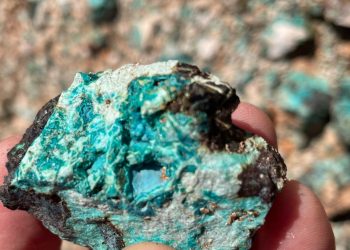
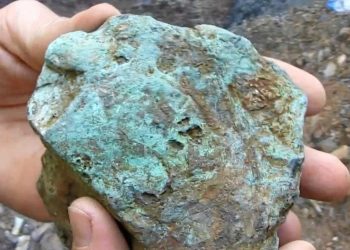
According to Serval Chief Executive Officer Robin Birchall, the company has secured four exploration licences covering 789 square kilometres in the Kaoko Basin, where historical drilling and geochemical surveys have already confirmed copper and silver mineralisation.
Birchall said the company’s highest-priority licences, EPL 7081 and EPL 7082, host several known targets, including Omatapati, Horseshoe and Otjozongombe.
Historical drilling at one of the prospects returned an intercept of 19 metres grading 2.6% copper.
“Further to our recent AIM listing and concurrent fundraise, the focus has been on setting out the most impactful and targeted work programmes possible within our available budget. This has been achieved and we are currently mobilising our teams to complete extensive fieldwork in the coming months,” he said.
The company plans to undertake a phased exploration programme that will include detailed geological mapping, high-resolution ground magnetic surveys, soil sampling and targeted trenching ahead of drilling.
The work is intended to improve understanding of the geology and identify the most prospective drill targets.
Birchall said geological mapping will focus on historical prospects and known mineralised zones associated with the contact between the Nosib and Otavi groups, which are known to host sediment-hosted copper deposits.
Ground magnetic surveys will be used to refine interpretations of the subsurface geology and identify structures that could host mineralisation beneath surface cover.
“The goal, as always, is systematic exploration utilising a combination of geological techniques to build upon our knowledge of the known mineralisation. We are confident that this multi-dataset approach will significantly de-risk future drilling, which we intend to commence at our projects during the second half of 2026,” Birchall said.
A soil sampling campaign will then be conducted in priority areas to identify copper anomalies and support drill targeting. Samples will be analysed using handheld X-ray fluorescence (XRF) technology to rapidly detect copper and other pathfinder elements.
The programme is expected to culminate in Serval’s maiden drilling campaign in Namibia as the company seeks to unlock the copper potential of the underexplored Kaoko Basin.