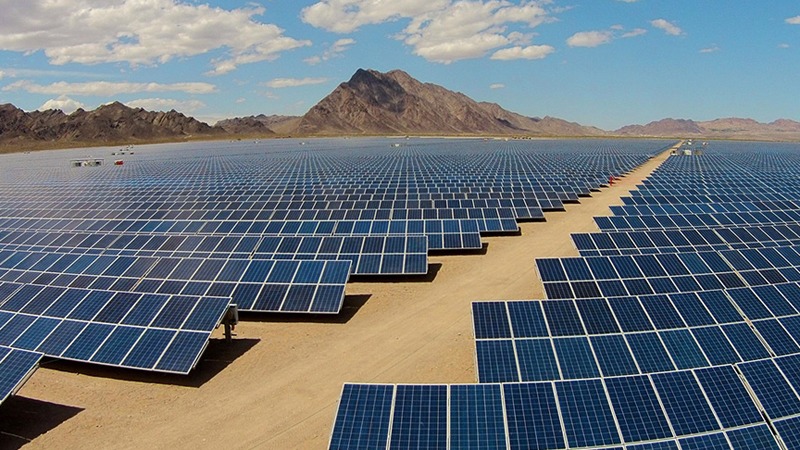
More than 300 MW of new solar power capacity is expected to come online in the ǁKharas Region by 2026 through a series of large-scale developments that are set to reshape Namibia’s energy mix and reduce reliance on imported electricity.
The planned rollout is outlined in a Strategic Environmental and Social Assessment (SESA) Scoping Reportfor the Namibia Green Hydrogen Programme.
The report states that the regional project pipeline includes the 100 MW Witputz Solar Plant, the 100 MW Sores Gaib Solar Station, which is scheduled to be fully operational by the second quarter of 2026, and the 100 MW DanAon Keetmanshoop Solar Park, which remains in pre-construction but has secured its Environmental Clearance Certificate.
These developments build on existing facilities such as the 5.4 MW Rosh Pinah Solar Farm and the 5 MW Aussenkehr photovoltaic project.
“Together, the projects support the country’s National Integrated Resource Plan and National Development Plan 6 through the addition of competitively priced local generation that is expected to ease tariffs over time. The expansion is also positioned to enhance security of supply by reducing exposure to power imports,” the report noted.
According to the report, the Witputz Solar Plant is a 100 MW facility currently under development, with project activities under way.
The Sores Gaib Solar Station, located approximately 33 km north-west of Rosh Pinah, is under construction and, once completed, is expected to be Namibia’s largest solar photovoltaic power station.
The DanAon Keetmanshoop Solar Park, situated about 10 km north of Keetmanshoop, is still in the pre-construction phase but has received environmental approval.
The report highlights that the ǁKharas Region offers some of the strongest solar resources in the country, with global horizontal irradiance levels exceeding 2,200 kWh per square metre and average sunlight of about 10 hours per day throughout the year.
“Annual irradiation of roughly 2,700 kWh per square metre allows local installations to generate nearly twice the electricity produced by similar systems in Germany. Seasonal variation is limited, enabling more than 75 percent of maximum output even in the lowest production months,” the report said.
The SESA forms part of the wider Southern Corridor Development Initiative in Tsau ǁKhaeb National Park, where Namibia plans to anchor its southern hydrogen valley.
The report added that the broader programme aims to position Lüderitz and surrounding areas as a hub capable of producing five million tonnes of green hydrogen equivalent per year by 2050, supported by large-scale solar capacity that can be paired with storage or hydrogen production to manage intermittency.