By Michelle Ngaujake
Across Southern Africa, oil and gas developments are increasingly shaping how capital is allocated across the region, bringing a central question into sharper focus: how will investment be balanced across emerging oil and gas provinces?
With Namibia preparing to host the Namibia International Energy Conference 2026, where a range of topics will be discussed, this question becomes more immediate. Beneath the surface lies a deeper strategic consideration: whether Namibia’s oil-led trajectory and Mozambique’s gas-driven development are competing for the same pool of capital or reflect fundamentally different investment pathways.
Along the region’s coastline, two distinct energy models are taking shape. In Mozambique, vast offshore discoveries in the Rovuma Basin have positioned gas and liquefied natural gas at the centre of the country’s development strategy. In Namibia, the oil potential of the Orange Basin has anchored the country’s upstream narrative, with recent discoveries shaping how Namibia is being positioned within global upstream portfolios as projects move toward final investment decision (FID).
This divergence raises an important question: could the scale of capital required for LNG developments in Mozambique divert investment from Namibia’s offshore oil prospects, or will the two provinces evolve along complementary trajectories?
The answer lies less in resource type and more in how each project is structured. Mozambique’s gas sector is built around large-scale LNG developments that require extensive infrastructure, including liquefaction plants, export terminals, and supporting onshore facilities. These projects are capital-intensive, with long development timelines and complex execution requirements.
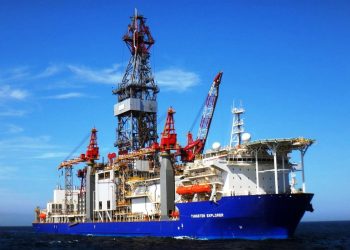
Namibia’s emerging oil sector presents a different profile. Offshore developments in the Orange Basin are technically complex, requiring advanced deep-water production systems and specialised execution capabilities. However, once developed, these projects can be linked to established global export markets. Oil production, supported by these markets, can offer a more direct route to early cash flow once projects reach final investment decision, particularly where development is less dependent on extensive new midstream infrastructure.
The distinction, however, is not simply between oil and gas. It lies in how each resource shapes investment sequencing, risk allocation, and capital deployment strategies, which in turn influence how projects are prioritised within global portfolios.
In Namibia’s case, associated gas is expected to be managed as part of reservoir strategies, supporting pressure maintenance and oil recovery while preserving optionality for future utilisation. This approach is reinforced by Namibia’s regulatory context, where routine flaring is not permitted except under limited operational circumstances, requiring gas to be actively incorporated into project design. The extent and timing of future gas development will therefore depend not only on infrastructure and market conditions, but also on the evolution of regulatory frameworks governing gas production and monetisation.
Beyond upstream development, regional energy demand adds another layer to this dynamic. Much of Southern Africa continues to face persistent electricity deficits that constrain economic activities. In this context, gas-to-power solutions could play a meaningful role in strengthening energy security. Existing frameworks such as the Southern African Power Pool provide a foundation for cross-border electricity trade, and additional generation capacity supported by gas could contribute to greater system stability.
Geography further reinforces the complementary nature of these developments. Namibia’s Atlantic coastline places it within relatively direct maritime reach of European markets, while Mozambique’s Indian Ocean position connects more naturally to Asian demand centres. These geographic orientations shape not only trade flows, but also how each country fits into broader global energy systems.
The question, therefore, is not whether one country’s development comes at the expense of the other. It is whether investors view these opportunities through a portfolio lens, where different resources, timelines, and geographies serve distinct strategic purposes.
As these conversations unfold in the region, the interplay between oil and gas development will continue to shape how Southern Africa positions itself within an evolving global energy landscape. Namibia’s emergence may thus ultimately not be defined by oil alone, but by how effectively it positions itself within this broader regional energy system.
Disclaimer
The opinions expressed in this article are solely those of the author and do not reflect the views of her current employer. They are intended to contribute to constructive dialogue within the industry.
*Michelle Ngaujake is an oil and gas professional based in Namibia. She holds an LLM in Oil and Gas Law from the University of Aberdeen, Scotland, as well as other qualifications. With more than two decades of experience spanning government relations, business strategy, regulatory affairs, and investment policy, she brings a unique cross-sector perspective to the energy sector. Her writing explores the intersection of natural resource governance, investor confidence, and inclusive economic development.