Namibia’s oil, gas and mining sectors are expected to underpin economic growth in 2026 as the economy recovers from a weaker performance in 2025, according to the Economic Association of Namibia (EAN).
The association said overall growth is projected to improve next year, supported by a more stable global environment and stronger performance in selected sectors.
Mining remains a key pillar of the economy and the fiscus, particularly through diamonds. However, EAN cautioned that the sector remains exposed to global market shifts and changing consumer preferences, reinforcing Namibia’s continued reliance on a narrow base of primary industries.
From EAN’s perspective, this leaves the outlook positive on paper but structurally vulnerable, with growth still dependent on a limited number of sectors and external conditions.
“Growth of around 3% is stabilising, but not transformative. It helps keep the economy moving forward, but it is not sufficient on its own to significantly reduce unemployment or poverty,” the association said.
EAN noted that mining-led growth is largely capital-intensive, allowing output to rise without a corresponding increase in employment. As a result, even with stronger growth in 2026, unemployment, particularly among young people, is expected to remain elevated.
The association said this reflects deeper structural challenges, including limited economic diversification and weak job creation, which constrain the broader developmental impact of extractive industries.
Unless growth is deliberately directed towards more labour-absorbing sectors, EAN warned that the economy risks expanding without meaningful improvements in employment outcomes.
“In Namibia’s current economic structure, growth of around 3% is unlikely to generate enough jobs to significantly reduce unemployment, particularly youth unemployment,” it said.
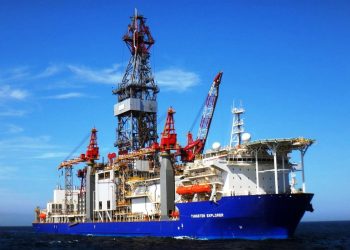
Oil and gas present a potential upside to the 2026 outlook, particularly if a Final Investment Decision (FID) is taken by TotalEnergies in the second half of the year. EAN said such a decision would send an important confidence signal and support preparatory activity across engineering, logistics, professional services and supply chain planning.
The association emphasised that the most substantial economic and employment benefits from oil and gas typically emerge during the construction and development phase, when project activity begins to scale up.
However, EAN stressed that these benefits are not automatic and depend on Namibia’s readiness to translate investment into broader economic participation.
“As is widely understood, the strongest economic and employment effects typically follow in the construction and development phase, where project activity begins to scale up,” it said.
Readiness, EAN added, will be the central issue in 2026. The association said the country must use the year to prepare local firms for realistic participation in supply chains, develop skills pipelines aligned with actual project needs, and establish clear and workable local content frameworks.
EAN also highlighted the need to strengthen institutions responsible for managing oil and gas revenues and long-term investment, warning that weak preparation could limit the sector’s developmental impact.
Without this groundwork, the association said the benefits of oil and gas risk remaining narrow and delayed.
“If Namibia wants oil and gas to contribute meaningfully to employment and development, 2026 must be used to prepare local firms to realistically participate in supply chains,” EAN said.
Overall, the association said oil, gas and mining will continue to support economic growth in 2026, but will not, on their own, resolve unemployment, poverty or inequality. Structural reforms focused on job creation, diversification and skills development remain critical to improving the quality of growth.
“The challenge for 2026 is therefore not only about growing the economy, but about changing the kind of growth Namibia achieves,” EAN said.