By Paulo Coelho
For as long as I can remember, Namibia has been labelled a country of potential, thanks to our resources: uranium, diamonds and, more recently, oil. In industry presentations we appeared under a familiar tag, “frontier”.
It was shorthand for potential without proof, a place worth watching but not yet worth building around.
That label no longer fits. The conversation has shifted from whether Namibia holds commercially attractive petroleum resources to how those resources will be developed. That shift, subtle as it sounds, changes everything.
The clearest evidence is not in the discoveries themselves but in the behaviour of the companies holding them.
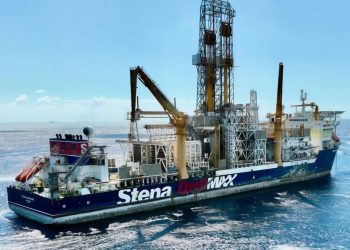
TotalEnergies recently assumed operatorship and a 40 percent interest in the Mopane licence, agreeing to fund half of Galp’s investment requirements through exploration, appraisal and development.
Companies do not make commitments of this scale on sentiment; they make them after exhaustive technical, financial and commercial assessment. Venus tells the same story further along the curve: fully appraised, front-end engineering complete, construction bids received, and a final investment decision targeted for the second half of 2026, with potential first oil around 2030 at approximately 150,000 barrels per day.
This is no longer exploration excitement. It is project maturation, the disciplined work that separates prospects from producing assets. Capital, in this industry, is the most honest commentator.
And the basin keeps answering back. The Mopane partners plan further appraisal wells through 2026 and 2027 to define a first development.
The Capricornus discovery recorded 38 metres of net oil pay and flowed at more than 11,000 barrels per day during testing. Success is being followed by the drilling that determines recoverable volumes and viable development concepts. It is the difference between a headline and a field.
Why “hub” rather than merely “producer-in-waiting”? Because Namibia’s advantages compound. Deep-water acreage in the Orange Basin sits alongside strategic ports, critical minerals, green hydrogen ambitions and political stability that is increasingly rare on the continent.
Government is preparing institutionally through the National Upstream Petroleum Local Content Policy, regulatory reform and skills development. Service companies, logistics providers and financiers are positioning accordingly. Hubs are not declared; they accrete, one commitment, one contract, one trained artisan at a time.
Honesty, however, demands measure. Namibia is not yet an oil-producing country, and nothing is certain until a final investment decision is taken.
Yet within that caution lies real opportunity: local suppliers and SMEs can embed themselves in the supply chain now, building the skills and capacity that will outlast any single field. The risk is not that the oil fails to flow, but that it flows past us.
The next decisive milestone is FID. Once taken, the discussion moves from potential to committed construction, contracting and production, and first oil around 2030 becomes a credible national objective rather than a hopeful one.
The frontier era served its purpose. Namibia has the world’s attention. The hub era demands something harder: that we convert attention into capability, and momentum into value that endures for generations of Namibians. The signals say we can. The question is, will we.
Manager: Marketing, Communications & PR, NAMCOR