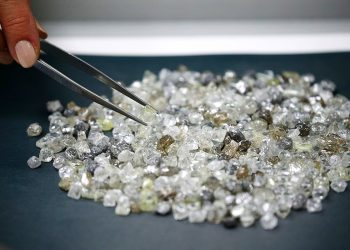
Revenue from Namibia’s diamond sector is expected todecline sharply in the 2025/26 financial year, with diamond royalties projected to fall to N$901 million, according to the Chamber of Mines of Namibia.
The chamber said gains from uranium, gold and other non-diamond minerals are helping to stabilise public finances amid ongoing global market uncertainty.
In its analysis of the Mid-Year Budget Review tabled in October, the chamber noted that the global downturn in the diamond market continues to weigh heavily on government revenue.
“Diamond company tax fell to N$239 million in FY2024/25, far below the budgeted N$1.48 billion, while diamond royalties dropped to N$1.16 billion against a budgeted N$1.79 billion,” the chamber said.
The decline is expected to continue into FY2025/26, with mid-year estimates indicating that diamond company tax will fall further to N$115 million, while royalties are projected to decline to N$901 million, confirming sustained pressure on what has historically been Namibia’s dominant mineral revenue stream.
In contrast, the chamber said non-diamond minerals are playing an increasingly important role in revenue resilience. Other mining company tax nearly doubled in FY2024/25, rising to N$2.89 billion from a budgeted N$1.48 billion.
Projections for FY2025/26 place other mining company tax at N$3.54 billion, the highest level on record, while non-diamond mineral royalties are expected to remain strong at N$1.03 billion, up from a budgeted N$748 million.
The chamber said the figures point to a structural shift in Namibia’s mineral revenue composition, with uranium, gold and emerging commodities becoming increasingly critical in offsetting diamond-related shortfalls and supporting fiscal stability.
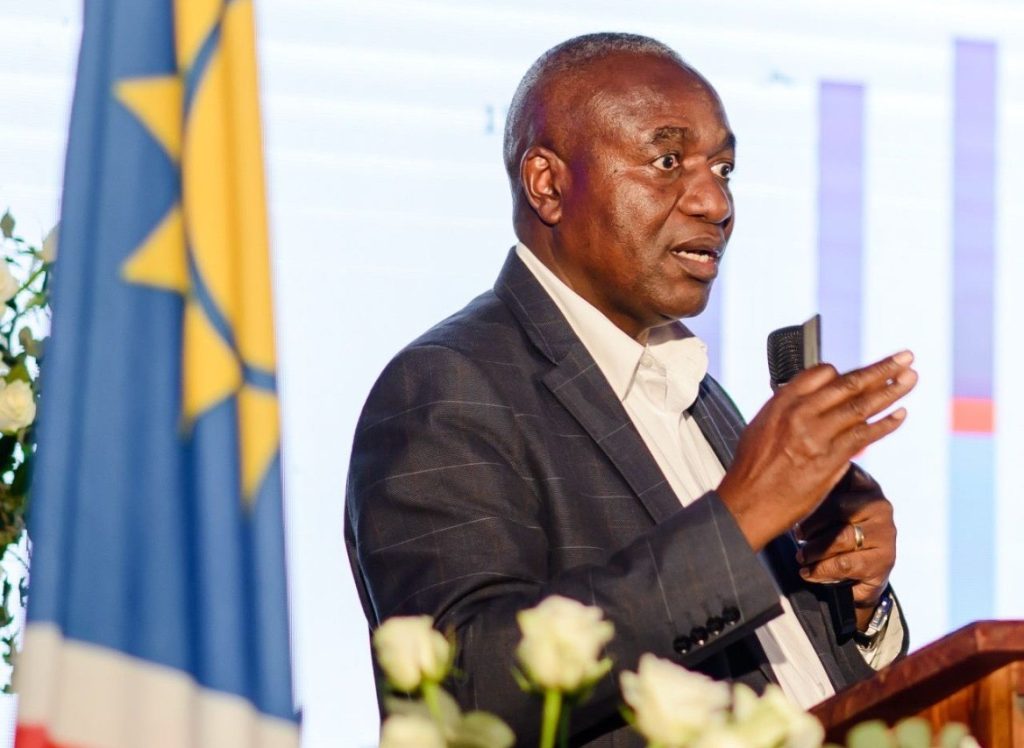
Veston Malango, Chief Executive Officer of the Chamber of Mines of Namibia, said record gold prices and strong uranium output continue to cushion the sector against global weakness in diamonds and base metals.
“As we deepen investor engagement and work with government to clarify the policy environment, the sector remains well positioned to drive growth, sustain jobs and support Namibia’s long-term economic transformation,” Malango said.