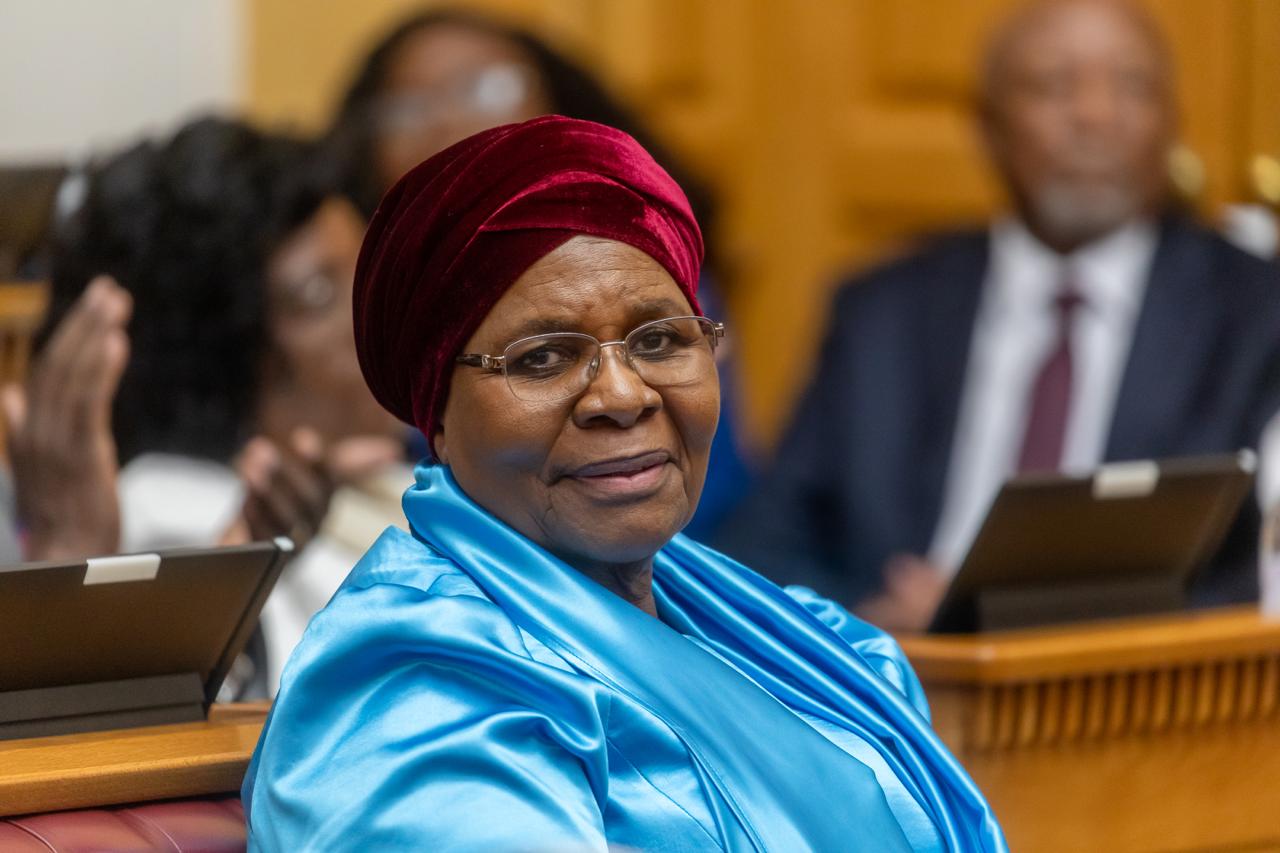
Namibia’s President Netumbo Nandi-Ndaitwah has called for a decisive shift in the management of Namibia’s natural resources, urging Parliament to prioritise local beneficiation to ensure that mineral wealth delivers broad-based economic benefits.
Addressing the official opening of the country’s Third Session of the Eighth Parliament, Nandi-Ndaitwah said the current parliamentary session presents an opportunity to deepen inclusive development and strengthen participatory democracy.
“Adding value to our products should be one of our core principles to stimulate and grow our economy. It should be our future strategic goal to gradually stop extracting our resources without local beneficiation,” the President said.
She stressed that economic transformation must be anchored in sustainable resource use and value addition, warning that continued reliance on raw resource extraction undermines inclusive development.
“We must ensure that Namibia’s natural resources are used responsibly and sustainably, and that adding value to our products becomes a core principle of economic growth,” Nandi-Ndaitwah said.
The President said that when the Eighth Administration assumed office in March 2025, it inherited deep and persistent economic challenges, including unemployment, inequality and poverty. She said government’s initial focus was on stabilisation, restoring confidence and reigniting growth through expanded production and broader economic participation.
According to Nandi-Ndaitwah, Namibia’s development strategy must ensure that citizens are active participants in the economy rather than passive observers, with the benefits of resource wealth shared widely.
“The wealth generated in this country should benefit many of our people, not just a few,” she said. “As Parliament continues to pass legislation, it must ensure that Namibia’s natural resources are used responsibly and sustainably.”
She said social and economic pressures continue to strain the country’s social fabric, a situation exacerbated by global economic uncertainty, climate-related risks and geopolitical instability. These challenges, she added, underline the need for responsive and inclusive legislation.
Nandi-Ndaitwah reiterated her long-standing view that Namibia’s challenges stem not from a lack of resources, but from how those resources are managed and distributed.
“We are too few to be poor, and the resilience of our people must be matched by laws that are forward-looking and protective,” she said.
The President said public submissions on proposed amendments to existing legislation have highlighted the need to secure meaningful national benefits from resource extraction. She urged Parliament to treat such amendments with urgency once they are tabled.
She added that government will continue to prioritise agriculture, manufacturing and the digital economy as key drivers of job creation, particularly for young people, while maintaining fiscal discipline and strengthening revenue collection.
“Parliament has a critical role to play in ensuring that legislation supports economic participation, value addition and job creation, especially for our youth,” Nandi-Ndaitwah said.
She also highlighted Namibia’s participation in regional and global parliamentary forums, saying lessons drawn from these platforms should inform domestic lawmaking. Alignment with international standards and a rules-based global system, she said, remains essential to economic transformation.
The President called on Parliament to translate these insights into concrete legislative outcomes that promote inclusive growth and ensure Namibia’s natural wealth becomes a foundation for long-term prosperity.