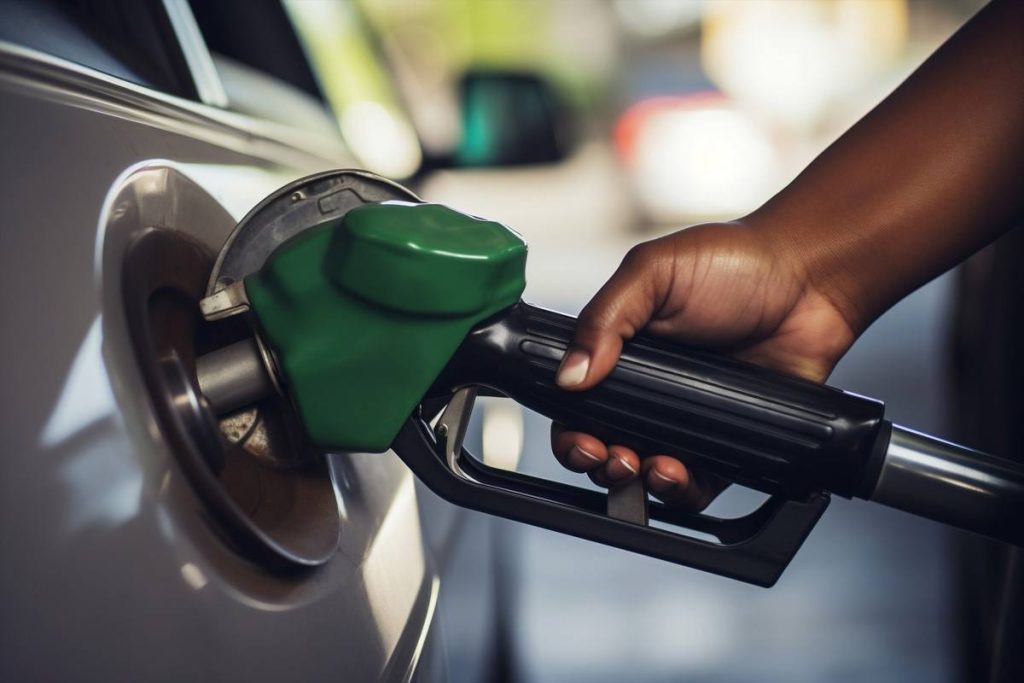
Namibia’s petrol price will rise to N$26.58 per litre from 7 October, making it more expensive than in Botswana, Zambia, Lesotho and Eswatini as higher international petroleum prices and a weaker Namibia dollar push up the country’s fuel import costs.
The Ministry of Industries, Mines and Energy has approved a N$1.50 per litre increase in unleaded petrol 95, while keeping both grades of diesel unchanged despite significant under-recoveries.
In Walvis Bay, petrol will increase to N$26.58 per litre, while diesel 50ppm will remain at N$27.86 and diesel 10ppm at N$27.96. Prices elsewhere will be adjusted according to the existing pricing structure.
The increase leaves Namibia’s petrol price just 34 cents below South Africa’s N$26.92 per litre, based on regional prices as at 30 September. Zimbabwe remains the most expensive of the seven markets included in the government comparison at N$33.90 per litre.
By comparison, petrol costs N$21.71 per litre in Botswana, N$21.16 in Zambia, N$25.97 in Lesotho and N$24.80 in Eswatini. Namibia will therefore be N$5.42 per litre more expensive than Zambia and N$4.87 above Botswana.
The price adjustment comes after a sharp increase in international refined petroleum product prices during September.
The average international price of Petrol 95 jumped 19.27% to US$148.364 per barrel between 1 and 25 September, from US$124.390 per barrel in August.
Diesel prices also rose sharply. Diesel 50ppm increased 13.60% to US$182.413 per barrel, while diesel 10ppm climbed 13.52% to US$183.311 per barrel.
The Ministry attributed the increase to geopolitical tensions and supply disruptions in the Middle East, including attacks on oil infrastructure and constrained flows through the Strait of Hormuz. Higher shipping costs, a weaker Namibia dollar and diesel export restrictions by some major countries added to the pressure on import costs.
Despite the N$1.50 petrol increase, motorists will not absorb the full cost pressure reflected in the fuel pricing mechanism.
As at 25 September, petrol recorded an under-recovery of about N$3.80 per litre, while diesel 50ppm and diesel 10ppm recorded under-recoveries of about N$3.58 per litre each.
The government nevertheless opted to increase petrol by N$1.50 and leave diesel prices unchanged, effectively cushioning consumers from the full adjustment indicated by the under-recoveries.
Namibia turns to bulk imports to contain fuel costs
The price pressure comes as the government changes the way Namibia procures bulk petroleum products in an attempt to reduce import costs.
The government said emergency arrangements with Vitol, introduced in July, eliminated premiums above the Basic Fuel Price (BFP) that would otherwise have been charged on fuel imports.
The Ministry estimates the arrangement avoided between N$400 million and N$700 million in additional premiums between July and October 2026.
For the November 2026 to January 2027 supply period, TotalEnergies Marketing Namibia and its trading partner TOTSA secured the bulk fuel supply tender at a weighted net discount of 63.85 cents per litre to the BFP.
The government estimates the discount will generate approximately N$220.5 million in savings over the three-month supply period.
However, the Ministry cautioned that the discount does not guarantee lower pump prices because the BFP remains exposed to international petroleum prices, shipping costs and the Namibia dollar-US dollar exchange rate.
Namibia remains particularly exposed to external fuel market shocks because it imports all of its petroleum products, leaving domestic prices sensitive to global product prices, freight costs and currency movements.
Despite current international supply pressures, the Ministry said Namibia has adequate fuel stocks and faces no immediate shortage risk, with oil marketing companies maintaining sufficient inventories to meet national demand.