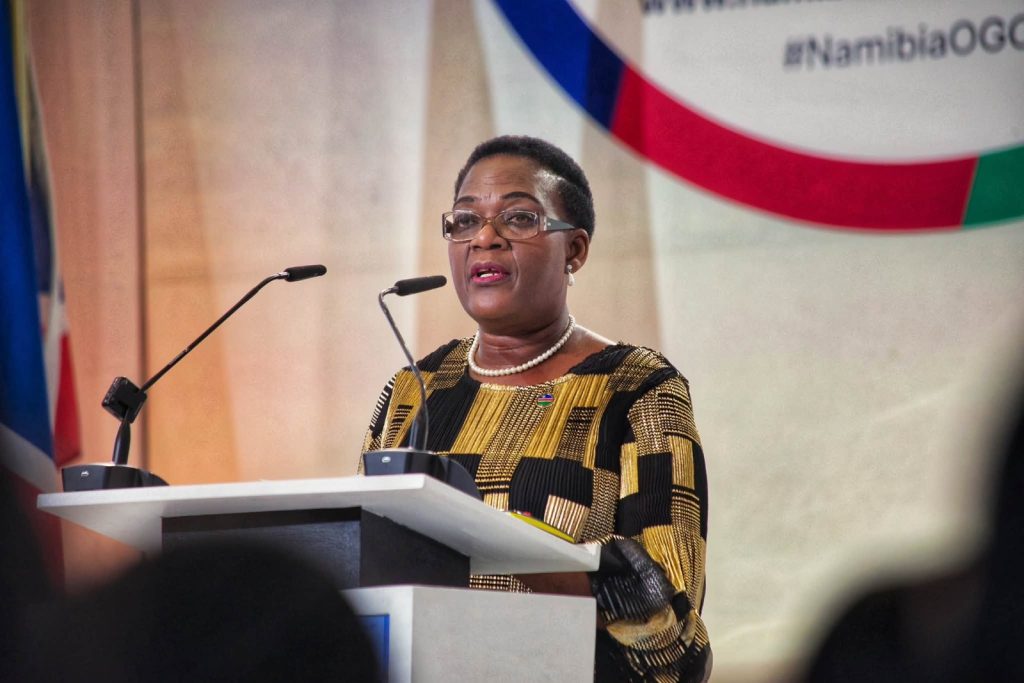
Namibia is moving to overhaul key petroleum licensing, legal and fiscal rules as major offshore discoveries advance towards potential commercial development, with government seeking to ensure its regulatory framework can handle the transition from exploration to production.
Speaking at the Namibia Oil and Gas Conference in Windhoek, Kornelia Shilunga, Special Advisor and Head of the Upstream Petroleum Unit in the Presidency, said the scale and complexity of Namibia’s emerging petroleum industry require the country’s regulatory framework to evolve alongside developments in the sector.
Government is reviewing the petroleum licensing regime as well as the broader legal and fiscal framework, with the reforms expected to influence how future exploration opportunities are allocated and how investors develop petroleum resources.
The changes come as government engages operators and investors on major discoveries, including discussions around a final investment decision for TotalEnergies’ Venus development.
“These engagements are important because project development requires capital, technology, infrastructure, skills, regulatory certainty and strong partnerships between Government and industry,” Shilunga said.
She said Namibia needs to maintain an investment environment in which petroleum companies have certainty over the rules governing multibillion-dollar, long-term projects.
“We want Namibia to be viewed as a jurisdiction where investors understand the rules, where those rules are applied consistently and where investment decisions can be made with confidence,” Shilunga said.
At the same time, government wants the revised framework to protect Namibia’s national interests and ensure the country captures greater economic benefits from the development of its petroleum resources.
Cabinet has already approved the National Upstream Petroleum Local Content Policy, which seeks to increase Namibian participation through employment, procurement, business ownership, skills development and technology transfer.
“Local content must, however, go beyond participation for its own sake. We want to see Namibian companies developing the capacity, expertise and financial strength to compete within the petroleum industry and, ultimately, beyond it,” Shilunga said.
Government is also looking beyond crude oil production, targeting opportunities in refining, petrochemicals, gas-to-power, logistics, fabrication, marine services, storage and engineering.
Walvis Bay and Lüderitz have been identified as potential service and logistics hubs for offshore petroleum developments, placing greater focus on investment in ports, supply bases, roads and airports.
Shilunga said Namibia’s geological discoveries alone would not guarantee investment, particularly as operators decide whether to commit billions of dollars to development projects.
Regulatory certainty, fiscal stability, efficient institutions, infrastructure and access to skilled workers will also influence investment decisions.
“As we look towards first oil, we must also look beyond first oil. The first barrel will be an important milestone, but it cannot be the destination,” Shilunga said.
“The real dividend must be reflected in jobs, stronger Namibian businesses, improved infrastructure, technology transfer, skills development, increased government revenues, industrial growth and improved opportunities for future generations.”
She said Namibia ultimately wants to build an industry in which citizens participate beyond employment alone.
“We must ensure that Namibians are not merely observers of the petroleum industry, but participants, owners, employees, entrepreneurs, professionals and beneficiaries,” Shilunga said.