Namibia’s Electricity Control Board (ECB) is set to transition into a fully empowered energy regulator, pending the promulgation of two key pieces of legislation aimed at reshaping oversight across the country’s energy value chain.
The Electricity Bill and the NEPRAB Bill have been finalised between the Ministry of Industries, Mines and Energy and legal drafters and are now awaiting ministerial approval before being enacted into law.
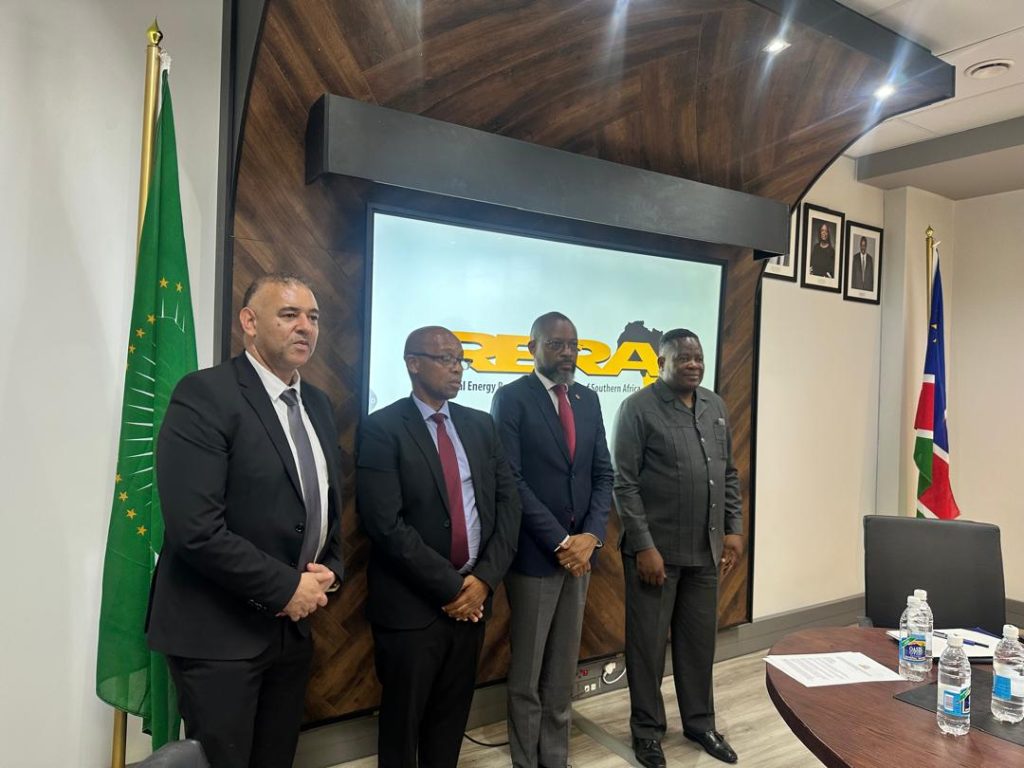
Speaking at the official handover of the chairmanship of the Regional Energy Regulators Association of Southern Africa (RERA), ECB Chief Executive Officer Robert Kahimise said the legislative reforms would provide greater clarity on institutional mandates within the sector.
He explained that under the proposed framework, upstream activities, particularly in hydrocarbons, are still under discussion and are expected to be housed within the Presidency. Midstream functions would remain under the relevant line ministry, while downstream regulatory responsibilities would be assigned to the energy regulator once the new laws come into force.
“Currently, two key bills, the Electricity Bill and the NEPRAB Bill, have been finalised among the three relevant parties and are awaiting the minister’s decision. There are a few outstanding issues, particularly around the tribunal provisions. Once these are resolved between the ECB and the Ministry of Mines and Energy, the bills will be submitted for promulgation. Once enacted, these laws will give us a much stronger legislative foundation to regulate Namibia’s energy sector effectively,” Kahimise said.
The restructuring is expected to enhance regulatory certainty at a time when Namibia is positioning itself as a growing player in electricity generation, renewable energy development and hydrocarbons exploration.
At the same event, RERA Executive Director Francois Robinson said regional efforts were also underway to harmonise regulatory systems across Southern Africa to support cross-border electricity trade.
He said the Southern African Regional Energy Regulators Association (SARERA) is working to standardise tariff methodologies for wheeling and transmission, establish clear dispute resolution mechanisms and strengthen enforcement coordination among member states.
A draft SARERA charter has already been approved by regional energy ministers and is currently in the consultation phase. The framework is expected to be finalised by June and submitted to the upcoming SADC Energy Ministers’ Meeting in the last quarter of the year.
Implementation will take place in phases, beginning with the establishment of institutional structures. The first phase is expected to take effect in the second quarter of next year.
“The draft SARERA charter has been approved by energy ministers and is currently in the consultation phase. It is expected to be finalised by June this year and will be submitted to the upcoming SADC Energy Ministers’ Meeting in the last quarter. Implementation will take place in phases, beginning with the establishment of institutional bodies, with the first phase expected in the second quarter of next year,” Robinson said.
The reforms, both domestically and regionally, signal a shift towards stronger regulatory coordination as Southern Africa seeks to deepen energy market integration and improve power security.