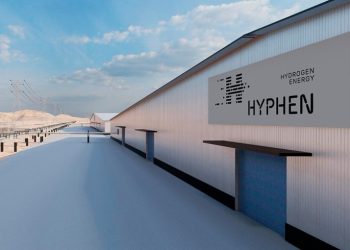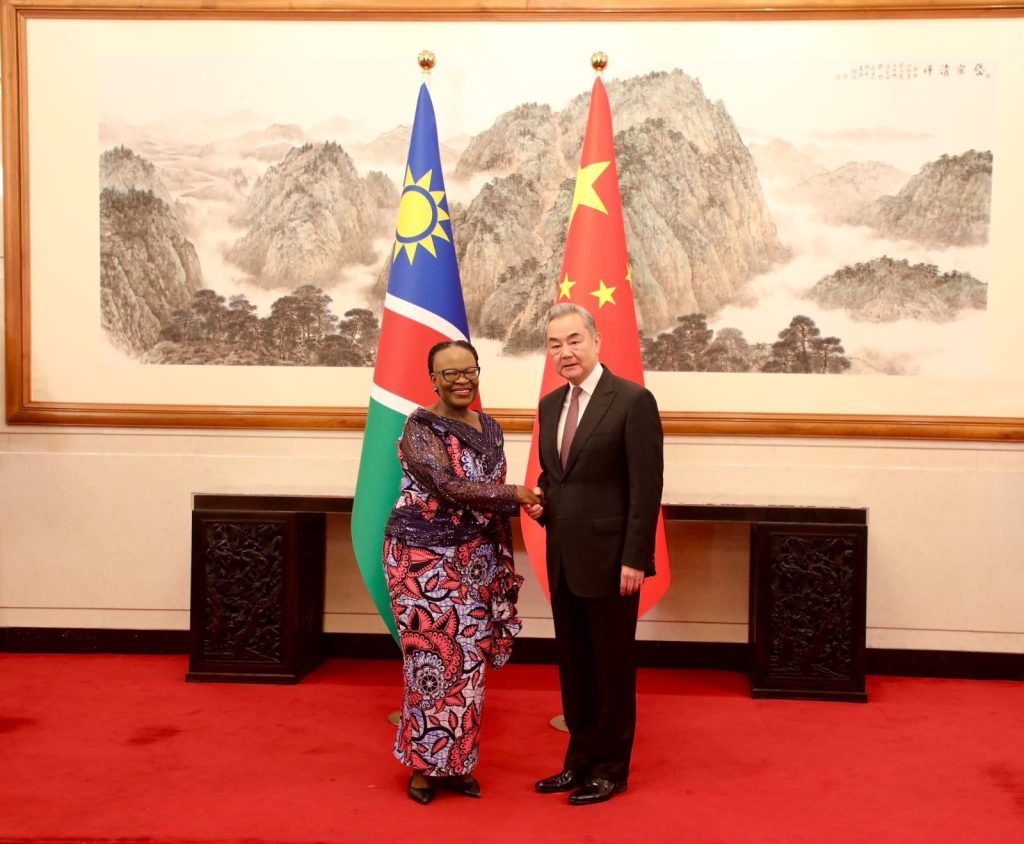
Namibia is intensifying efforts to attract Chinese investment into its emerging green hydrogen and renewable energy sector as it positions its vast solar and wind resources as key drivers of future industrialisation.
During an official visit to China, Minister of International Relations and Trade Selma Ashipala-Musavyi said a stable and diversified energy mix is critical to supporting long-term economic growth, with renewable energy projects expected to play a central role.
“In terms of the green economy, we are becoming a major player in green energy and green hydrogen. I also see that Chinese companies are taking an interest and, in fact, we have been encouraging them to come to Namibia to explore opportunities. This is because Namibia’s topography and climatic conditions are highly suitable for renewable energy development. We have abundant sunshine and strong wind resources, which are key sources of energy,” she said.
Ashipala-Musavyi said Namibia is also seeking to reshape its economic relationship with China by focusing on local value addition of its mineral resources.
She said the country wants to move away from exporting raw materials and instead process minerals domestically to capture more value from its natural resources.
The minister identified diamonds, copper and lithium as key minerals targeted for local beneficiation.
While Chinese companies are already active in Namibia’s mining sector, she said the country wants a mutually beneficial partnership in which Namibia supplies mineral resources while China provides the technology needed for industrialisation.
“We are endowed with resources, but we do not want to remain merely a source of raw materials. We want to add value to our products, whether minerals or agricultural goods, so that we can become more relevant to both the Chinese economy and the global economy. We are approaching this from that perspective, and I believe it is a very welcome measure,” she said.
She added that Namibia is also pushing for more modern mining practices through the use of geoscience, artificial intelligence and digital technologies to improve production efficiency.
To support its industrial ambitions, Namibia is leveraging its logistics infrastructure and energy potential.
Port of Walvis Bay and Port of Lüderitz are expected to play a critical role in facilitating mineral exports from Namibia and neighbouring landlocked countries.
“In that sense, we consider ourselves a gateway to the rest of Africa and to the global economy. Within the Southern African region, Namibia plays a key role in facilitating trade flows. In terms of intra-African trade, we also serve as a gateway into the continent. When we invite Chinese companies to establish industries in Namibia, they can access the broader SADC region, the wider Southern African market and the African Continental Free Trade Area,” Ashipala-Musavyi said.