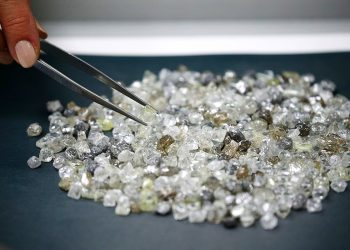
Namibia is assessing the growing impact of lab-grown diamonds on its diamond industry amid mounting pressure on natural diamond prices and weakening global demand for mined stones.
Mines, Industry and Energy Minister Modestus Amutse told the National Assembly that the government, together with industry stakeholders, has been evaluating the implications of synthetic diamonds for Namibia’s diamond sector as laboratory-produced stones gain market share in the global jewellery industry.
The assessment has involved consultations with key industry bodies, including De Beers, the African Diamond Producers Association and the Kimberley Process Certification Scheme.
“Yes, the Ministry, together with partners such as the De Beers Group, the African Diamond Producers Association and the Kimberley Process Certification Scheme, has consulted on the potential impact of synthetic diamonds on Namibia’s diamond sector,” Amutse said.
While acknowledging the growing popularity of lab-grown diamonds, Amutse said demand for Namibia’s high-quality natural diamonds remains relatively resilient.
“The findings suggest that while synthetic diamonds are gaining traction globally, the demand for natural diamonds, particularly high-quality, ethically sourced stones such as those from Namibia, remains resilient,” he said.
However, he warned that the rapid expansion of synthetic diamonds has contributed to a downturn in the natural diamond market, resulting in lower prices, weaker consumer confidence and softer demand.
“We are aware of this impact,” Amutse said.
In response, Namibia has joined other diamond-producing countries in efforts to promote natural diamonds and strengthen consumer demand.
The country participated in discussions that led to the signing of the Rwanda Accord, a collective initiative by African diamond-producing nations to support the natural diamond industry.
Namibia has also taken part in engagements in South Africa and recent promotional activities in the United States aimed at encouraging consumers to choose natural diamonds over synthetic alternatives.
“Together with partners, including the De Beers Group, we are focusing on category marketing for natural diamonds, as evidenced by our participation in the Rwanda roundtable discussions, followed by the signing of the Rwanda Accord,” Amutse said.
Despite the challenging market conditions, Namibia continues to sell all of its diamond production through its long-standing diamond sorting, valuing, sales and marketing agreement with De Beers.
Amutse said the arrangement ensures that Namibia does not accumulate unsold diamond inventories.
“This means that Namibia does not stockpile any diamonds; all production is sold,” he said.
However, he acknowledged that Namibia has not been immune to the global downturn in prices.
“The average price per carat is being affected by factors beyond our control, factors that affect the entire global diamond industry and are not unique to Namibia,” Amutse said.