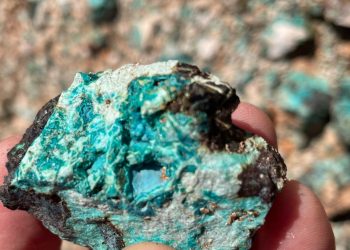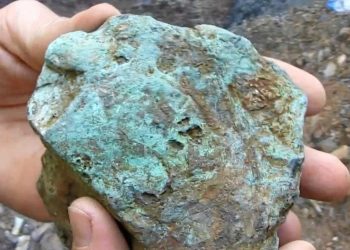
Koryx Copper has reported a record 8.01% copper intersection from near surface at its wholly owned Haib Copper Project in southern Namibia, as drilling continues to identify broad mineralised zones and potential extensions beyond the current resource model.
The latest results cover 15 drill holes totalling 6,825 metres from the company’s recently completed infill and expansion drilling programme.
The standout result came from hole HMRC008, which intersected 12 metres grading 2.39% copper from surface, including two metres at 8.01% copper from a depth of four metres.
Koryx said the 8.01% intersection represents the highest copper grade recorded at Haib to date.
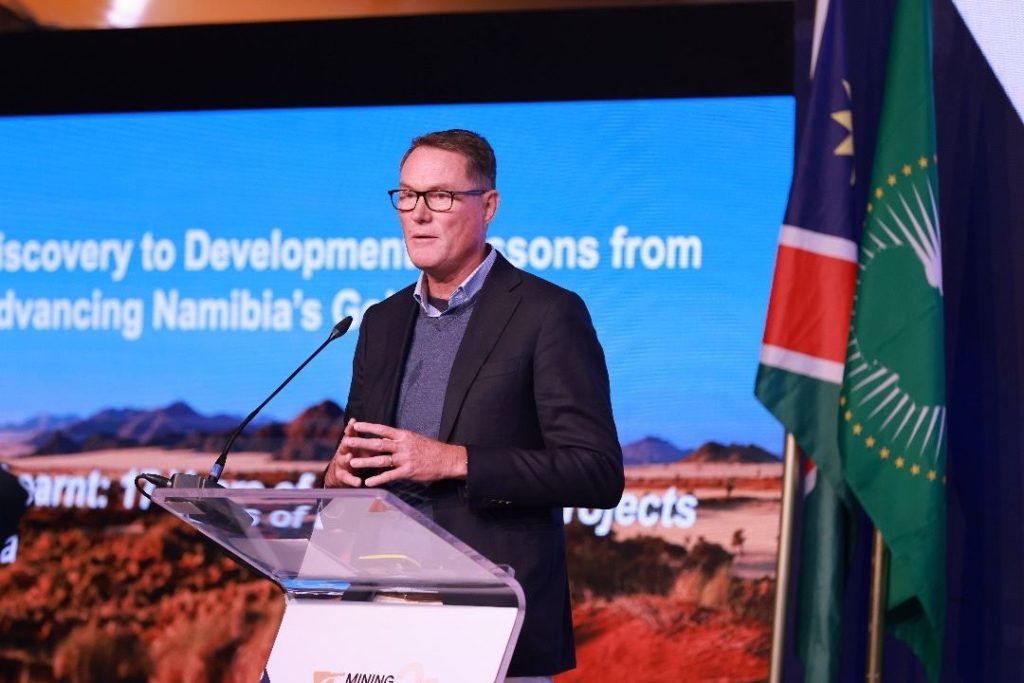
“We continue to receive excellent drill assay results from our PFS infill drill programme which has recently concluded. Once again, most of the drill results display very wide intercepts, including some high grades from surface,” Koryx President and Chief Executive Officer Heye Daun said.
“Whilst drilling has completed, assay results are still coming in and further results are expected in the next few weeks.”
The drilling also returned several broad copper-equivalent intersections, including 669 metres grading 0.33% copper equivalent in hole HM178, which contained 318 metres at 0.49%.
Hole HM180 returned 732 metres at 0.30% copper equivalent, including 286 metres at 0.37%.
Other results included 642 metres at 0.30% copper equivalent in HMRC009, 558 metres at 0.29% in HMRC008 and 609 metres at 0.29% in HM158.
Hole HM179 returned 32 metres grading 0.96% copper, including a 10-metre section at 1.65%.
Koryx said the HM179 intersection is located approximately 70 metres south of the current copper mineralisation model and could indicate a previously undetected extension of the deposit.
The company said the broader drilling results continue to demonstrate the width and continuity of mineralisation at Haib, while some intersections could extend mineralisation beyond the existing model.
Haib is a large porphyry copper-molybdenum-gold deposit that Koryx plans to develop through large-scale open-pit mining and conventional sulphide milling and flotation.
The company is also assessing the potential to recover additional copper through oxide heap leaching.
Koryx has started geological modelling and estimation work for an updated Mineral Resource Estimate (MRE) and Pre-Feasibility Study (PFS), with both targeted for completion before the end of 2026.
“The geological modelling and estimation for the updated MRE and PFS has commenced and we are on track to publish an MRE update and PFS study results before the end of 2026,” Daun said.
He said the company expects the PFS to outline an optimised project scope and improvements to Haib’s technical and economic metrics.
The latest results build on drilling reported in August, when Koryx also highlighted the 8.01% copper intersection as the highest grade recorded at Haib, alongside broad mineralised intervals extending up to 831 metres.