ASX-listed explorer Kaoko Metals has announced a new copper discovery at its Chalkos Project in north-western Namibia, identifying a previously unrecognised zone of outcropping copper mineralisation that could significantly expand the project’s exploration potential.
The newly identified Bootless prospect lies within a 2.2-kilometre mineralised corridor between the company’s two flagship targets, Otniel and Donkey Hill, strengthening evidence of a large-scale copper system across the project.
Managing Director Gerard O’Donovan described the discovery as a major milestone early in the company’s maiden field programme.
“Discovering a new zone of outcropping copper mineralisation so early in our maiden fieldwork campaign is a very exciting development for Kaoko. This reinforces the enormous prospectivity of our large land package and particularly the ground which sits between the high-grade Donkey Hill and Otniel prospects, which are located approximately 2.2km apart,” he said.
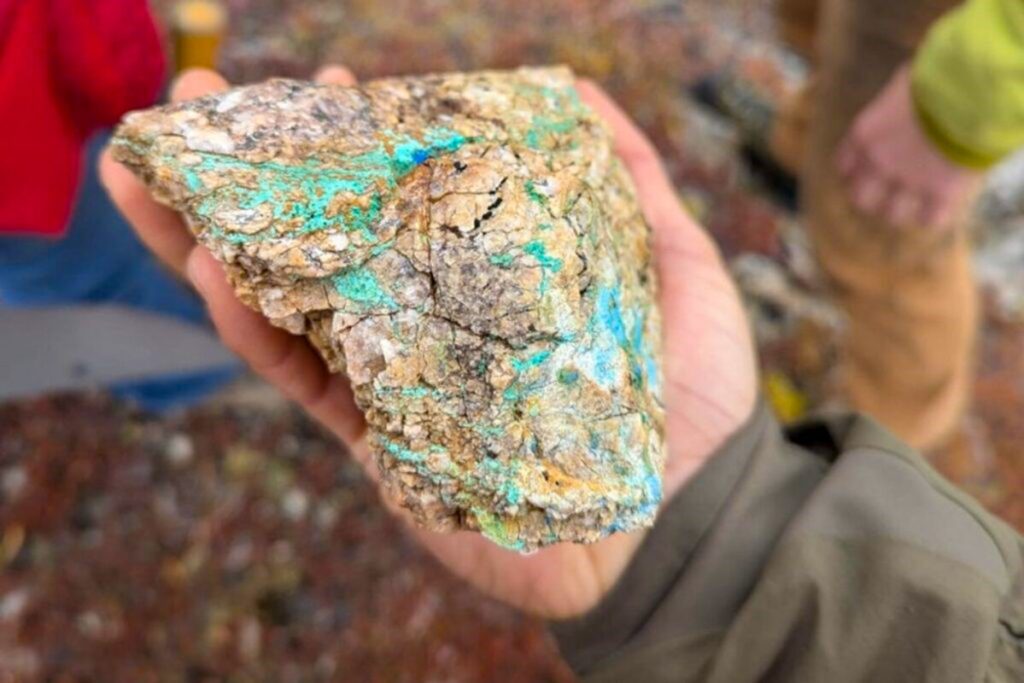
According to the company, the discovery also changes its geological understanding of the project. While copper mineralisation at Otniel and Donkey Hill is predominantly hosted within quartzite, Bootless is characterised by vein-style and disseminated mineralisation within carbonate rocks (dolomite).
Kaoko Metals said the finding indicates that structural controls, rather than rock type alone, are responsible for mineralisation across the project, significantly broadening the number of exploration targets.
The company also reported encouraging results from ongoing field mapping at its existing prospects.
At the Otniel Prospect, visible copper mineralisation has been extended by up to 200 metres to the south, increasing the mapped strike length to more than 600 metres. Geological teams also identified new hanging-wall mineralisation, suggesting the potential for multiple stacked mineralised zones at depth.
Meanwhile, mapping at the Donkey Hill Prospect extended the Donkey Hill East mineralised trend by 60 metres, increasing the combined surface footprint to more than 800 metres across three separate mineralised trends.
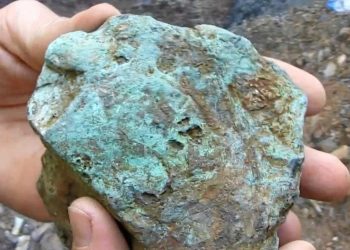
Across all three prospects, field teams identified visible copper minerals including chalcocite, malachite, azurite and chrysocolla, minerals commonly associated with high-grade copper systems.
“The identification of visible copper mineralisation up to 200 metres beyond the previously known outcrops at Otniel, as well as extensions at Donkey Hill East, is also an encouraging outcome from our maiden fieldwork programme. Importantly, the field team has observed chalcocite within newly mapped in-situ outcrops, providing further evidence of the high-grade potential of these prospects,” O’Donovan said.
Kaoko Metals has submitted nine surface grab samples from the new discovery and the expanded mineralised zones to Scientific Services in South Africa for laboratory analysis.
The company expects assay results within the next six to eight weeks, after which the data will be integrated with geological mapping and structural interpretations to finalise drill targets for the project’s maiden drilling programme.
“Samples from the newly identified extensions are now at the laboratory. These newly identified mineralised areas will be assessed alongside our geological mapping and structural interpretations and incorporated into the ranking of targets and final drill-hole locations,” O’Donovan said.
The latest discovery adds to growing exploration momentum at the Chalkos Project as Kaoko Metals advances efforts to define a potentially significant new copper district in Namibia.