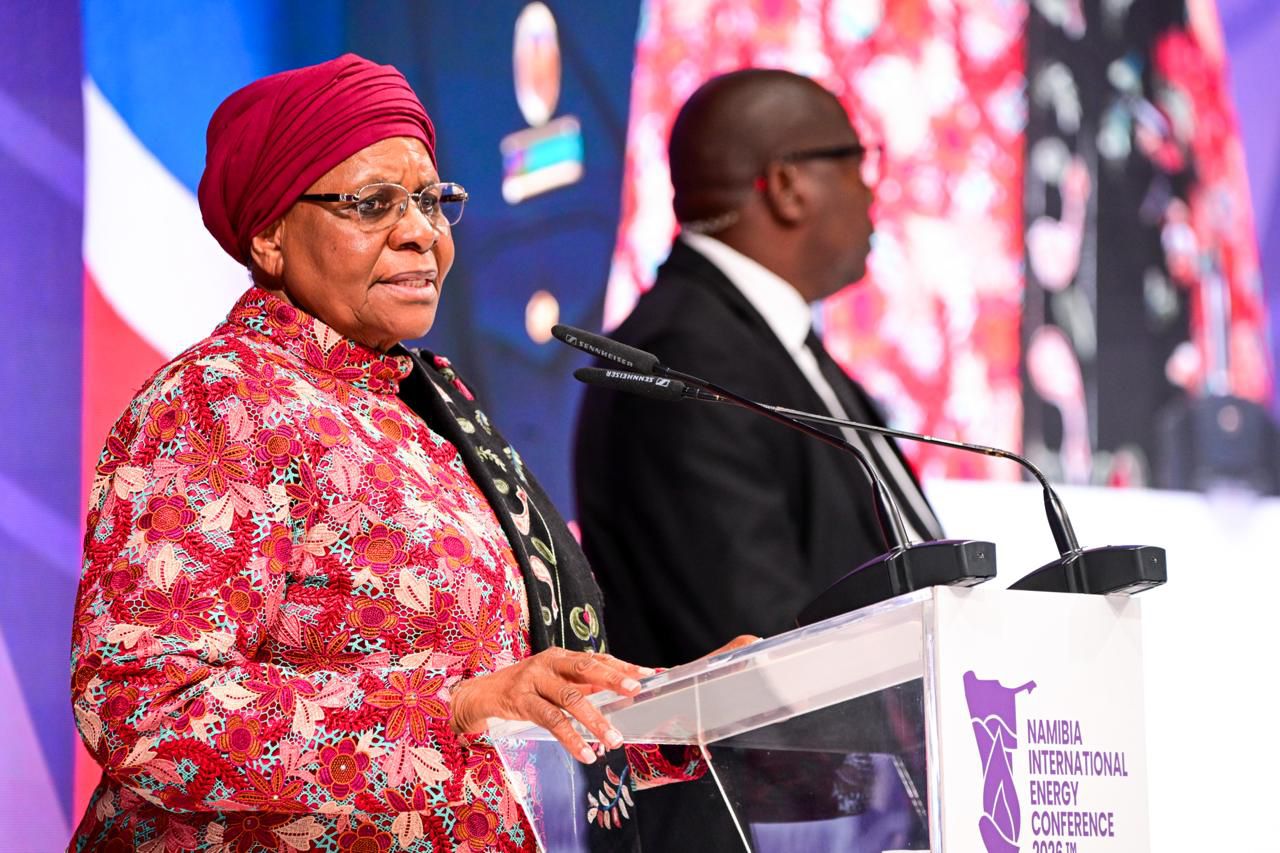
Namibia’s Cabinet has, in principle, approved the upstream oil and gas local content policy, President Netumbo Nandi-Ndaitwah has announced.
Speaking during her keynote address at the Namibia International Energy Conference 2026, the President said the policy follows extensive nationwide consultations and is aimed at promoting meaningful local participation through skills development, job creation and enterprise growth.
She said the policy is designed to ensure that Namibia’s petroleum resources translate into tangible socio-economic benefits for all citizens, in line with government’s broader agenda of inclusive growth and shared prosperity.
“Cabinet has approved, in principle, the Upstream Local Content Policy following extensive consultations nationwide. This policy ensures that Namibians participate meaningfully in the sector through skills development, employment creation, and enterprise growth. It is designed to ensure that the development of our petroleum resources translates into tangible socio-economic benefits for all Namibians,” she said.
The policy is expected to promote local participation across the oil and gas value chain, from exploration and production to refining and distribution.
According to previous government communications, the policy, which is mandatory, outlines a pathway for Namibian citizens and companies to benefit from natural resources by increasing their participation across the entire industry value chain.
Former Minister of Mines and Energy Tom Alweendo previously said the policy is designed to ensure that the benefits of oil and gas development are distributed fairly among Namibians, with particular focus on previously disadvantaged communities.
The framework also emphasises sustainable resource management, environmental protection and social responsibility, while establishing a clear and transparent regulatory environment for the sector.
Nandi-Ndaitwah said the policy builds on Namibia’s long-standing legislative foundations, including the Petroleum Act of 1991 and the establishment of PetroFund in 1992, but stressed the need to modernise these frameworks to keep pace with evolving technologies and industry standards.
She highlighted the Petroleum Exploration and Production Amendment Bill currently before Parliament as a key reform aimed at strengthening governance, improving transparency and providing regulatory clarity to investors while safeguarding national interests.
A central element of the reform is the placement of the Upstream Petroleum Unit under the Presidency to improve coordination and accountability.
“A key reform is the placement of the Upstream Petroleum Unit under the Presidency. This reflects the strategic importance of the sector and ensures policy coherence, faster decision-making, improved coordination, and strengthened accountability and shared prosperity,” she said.
The President also addressed concerns around the so-called “resource curse”, saying Namibia must define its own path by managing its resources with discipline and foresight to secure long-term national development.