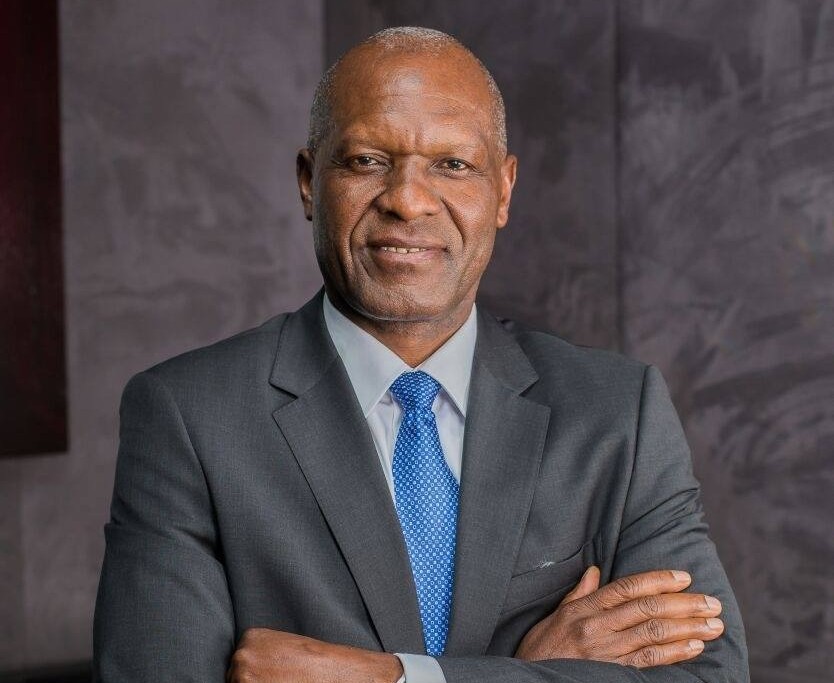
Namibia risks turning its Orange Basin oil potential into a national distraction rather than a durable economic asset if fiscal, regulatory and governance discipline is not firmly enforced as the offshore sector enters a more demanding execution phase, former Mines and Energy Minister Tom Alweendo has warned.
Alweendo, now Chief Executive Officer of Alvenco Advisory, said Namibia is closing the year with its offshore oil narrative shifting beyond discovery headlines, as major international operators consolidate their positions in the Orange Basin.
He said this marks a transition from early exploration success to more deliberate positioning for potential development.
According to Alweendo, the central policy question facing Namibia is no longer whether oil exists, but how the country converts discoveries into disciplined delivery that benefits citizens, remains bankable for investors and is viewed as legitimate by regional and international stakeholders.
He cautioned that deep-water oil projects, if mismanaged, could undermine economic expectations rather than strengthen the economy.
“A deep-water province can be a national asset or a national distraction. The difference is discipline: in project execution, in fiscal choices and in governance,” Alweendo said.
He said the Orange Basin’s appeal lies in its scale and clustering potential, where neighbouring discoveries could share logistics and services, lowering unit costs and improving competitiveness. However, he stressed that Namibia has not yet produced oil and that first production remains several years away.
Alweendo said project timelines are likely to continue shifting as engineering design, regulatory approvals, gas-handling solutions and financing structures are resolved, noting that deep-water developments are capital intensive, technically complex and globally recognised for long lead times.
He warned policymakers against spending or borrowing against revenues that have not yet materialised, adding that early volume estimates and revenue projections should be treated as scenarios rather than guarantees.
“The safest stance is to plan for scenarios, but not justify irreversible fiscal decisions with revenues that have not arrived,” he said.
Turning to investors, Alweendo said the greatest risks are often above-ground rather than geological. He said predictable fiscal rules, permitting processes, contract practices and dispute-resolution mechanisms are critical to supporting multi-decade deep-water investments.
He warned that uncertainty in these areas is priced into the cost of capital, raising project costs and weakening competitiveness.
“Stable and credible governance frameworks are central to advancing projects from discovery to development. To manage these risks, three guardrails need to be put in place in 2026, beginning with a stable and predictable fiscal framework backed by sufficient institutional capacity,” he said.
Alweendo cautioned against surprise tax measures, opaque special deals and rushed legislative amendments that could trigger disputes.
“A fair government take is not the same as an unpredictable take. Investors can price rules-based regimes, but they struggle with repeated reopening of terms,” he said.
He said the second guardrail should be treating local content as a capability-building programme rather than a set of aspirational targets. While local content is essential for domestic legitimacy, he warned that poorly designed requirements could exceed existing capacity, inflate costs and erode trust.
Alweendo said the draft Local Content Policy provides a foundation but must be translated into a practical implementation plan “with baseline assessments, phased targets linked to training and certification, and transparent procurement reporting”. He said priority areas should include safety skills, marine services and environmental monitoring.
The third guardrail, he said, is locking in revenue governance before petroleum revenues begin to flow.
He cited International Monetary Fund guidance that resource management frameworks and sovereign wealth fund arrangements should be strengthened ahead of production.
“Strong governance is easiest to build before money flows. Once revenues are large, politics hardens and reform becomes harder. Namibia’s Welwitschia Sovereign Wealth Fund already exists but needs a clearer petroleum mandate focused on stabilisation and long-term savings,” Alweendo said.
He added that early normalisation of transparency measures, including disclosure of contracts and payments, would help protect public legitimacy and reduce long-term governance risks.