By Martin Amunue
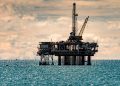
At the start of October, Namibia got news that most people read as a disappointment. TotalEnergies missed its own 2026 deadline for a final investment decision on Venus, its big offshore oil project, and gave no new date.
I read it a bit differently. When you look at an oil and gas project the way people in freight and logisHcs do, as a quesHon of how things physically get moved, a delay is not only a setback. It is Hme. The quesHon is whether we use it.
First oil had been pencilled in for 2029 or 2030. That sounds far away unHl you think about what has to happen before a single barrel is shipped.
An offshore rig needs a base on land, somewhere pipes, drilling fluids, cement, food and crew are received, stored and sent out to sea.
It needs heavy trucks for oversized equipment, warehouses, customs clearance and people who can coordinate all of it without losing a container along the way. Oil is mostly a story about ships and supply bases.
Gas is a different story, because gas has to come ashore. The proposed Kudu development would use a floaHng producHon unit and an export pipeline to feed a power staHon on land, with a substaHon connecHng it to the naHonal grid.
That means steel pipe, turbines and transformers moving along our roads, and a lot of construcHon logisHcs that most people never think about. Kudu was discovered in 1974, and several companies have tried and failed to develop it since.
Late last year, BW Energy confirmed light oil and condensate in deeper formaHons at the field, which could help the economics. I would not bet on a date, but I would not ignore it either.
Some of the groundwork is already done. Namport deepened the Walvis Bay entrance channel from 14 to 16.5 metres in mid 2025 and set up the country’s first drilling fluid supplyfacilitythere.
Lüderitz is being shaped into the main offshore supply base, with a N$4 billion expansion whose first phase is meant to be commissioned by mid 2027.
Even global events have helped ships rerouHng around the Cape to avoid Red Sea tensions have brought extra traffic to both ports.
SHll, Lüderitz is about 685 kilometres from Windhoek, and that distance ma_ers. Every container, truck and worker has to cover it. Trade press has already reported growing pressure on the port’s infrastructure as investment decisions approach. The African Energy Chamber has said logisHcs readiness is now a core consideraHon for investors. But simply, energy companies will look at our roads, rail and ports before they decide where to spend their money.
The part I think we talk about least is people. A supply base is only as good as the freight coordinators, customs officers, procurement staff and transport planners who run it. Many young graduates will be applying for those jobs in the next few years. Whether those jobs exist for us, and whether we are trained well enough to fill them, depends on choices made now.
So what should Namibia do with the extra Hme? Finish Lüderitz on schedule, first of all, so the port is ready whenever the green light comes.
Then fix the road and rail links behind it, because a modern port at the end of a weak corridor is just a bo_leneck with a nice quay. Plan for gas as well as oil, which means working out heavy haul routes and storage yards beforethefirstturbinearrives.
And make sure placements, graduate programmes and local content rules reach logisHcs workers and small transport companies, not only engineers and big contractors.
The oil may be late, and the gas has been late for ficy years. The jobs, contracts and skills will go to whoever is ready on the day. I would like that to be us.
* Martin Amunue is am a transport, procurement and supply chain analyst. In 2025, he served as a student executive member of the Transport and Logistics Group at the Namibia University of Science and Technology (NUST).