The Namibian government says its opposition to plans to privatise the country’s electricity transmission and distribution infrastructure is driven by concerns that private ownership could lead to higher electricity tariffs and weaken its ability to regulate prices.
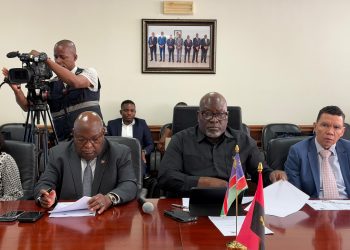
Minister of Industries, Mines and Energy Modestus Amutse said electricity infrastructure must remain under state control to protect consumers from rising costs, safeguard national energy security and ensure that transmission infrastructure is developed alongside electricity generation capacity.
“The government’s position on the privatisation of electricity is that we are not going to privatise the sector. As you have probably read in the media, we regard electricity as a national security asset that cannot be placed in the hands of private players,” Amutse said.
His remarks follow questions over an Electricity Control Board (ECB) advertisement seeking private sector input on a proposed framework for the potential privatisation of national electricity distribution infrastructure. The debate comes amid BW Kudu’s plans to build a 400-kilovolt (kV) electricity transmission line for its proposed 420-megawatt (MW) gas-to-power plant near Lüderitz.
Amutse said transferring control of the electricity network to private operators could make it more difficult for the government to manage tariffs, oversee electricity distribution and coordinate investments in generation and transmission infrastructure.
He maintained that NamPower must continue managing electricity transmission in accordance with its legislative mandate.
“The transmission of electricity is mandated by the Act that established NamPower. Therefore, as far as the government is concerned, this is an activity that NamPower must continue to undertake,” he said.
Amutse acknowledged that the ECB could explore alternative approaches to addressing electricity generation and supply challenges but said the government’s position against privatisation remained unchanged.
“The ECB is a regulator and can consider different regulatory approaches. I cannot speak on its behalf, but I would assume that it may be exploring different options for addressing challenges related to electricity generation and supply,” he said.
The government and the ECB are engaging to resolve differences over the future management of electricity infrastructure.
The debate comes as Namibia faces pressure to expand domestic power generation, strengthen its transmission network and contain electricity costs amid continued reliance on imported electricity.
NamPower has invested more than N$21.8 billion in electricity infrastructure over the past 30 years, increasing its installed generation capacity from 394.6MW in 1996 to 563.5MW in 2026.
Major investments include the 22.5MW Anixas Power Station, commissioned in 2011, an additional 92MW turbine at Ruacana in 2012, the 20MW Omburu Solar Power Station in 2022 and the 54MW Anixas II Power Station in 2024.
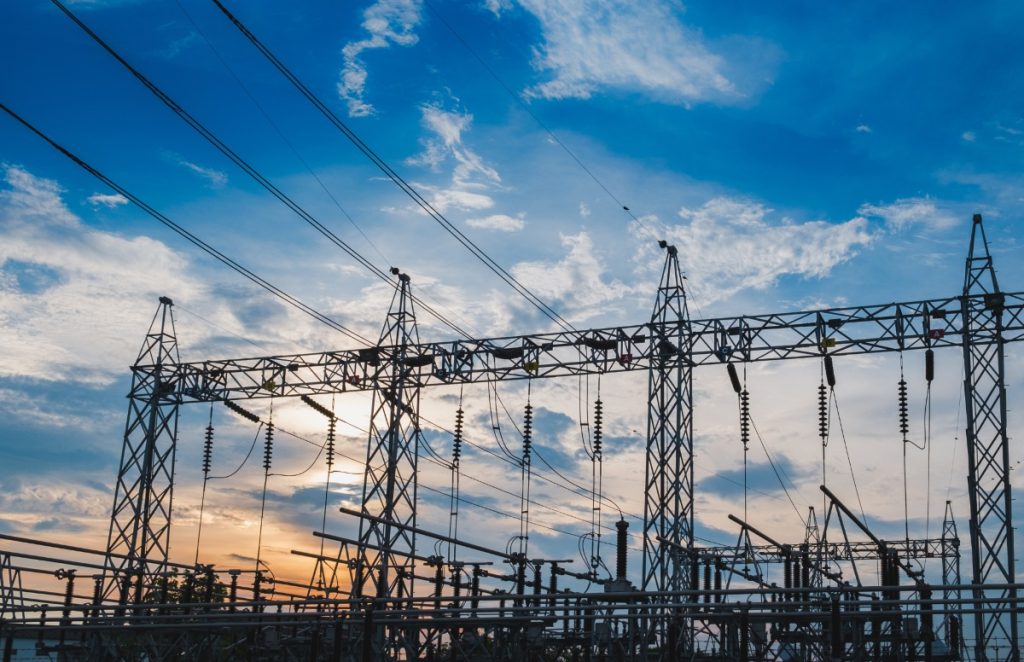
The utility has also expanded its high-voltage transmission network from approximately 3,100 kilometres in 1998 to nearly 8,500 kilometres, including almost 1,500 kilometres of 400kV transmission infrastructure linking Namibia to the South African electricity grid.
Despite these investments, Namibia continues to import approximately 50% of its annual electricity requirements, with dependence rising to as much as 70% during dry years when domestic hydropower generation declines.
The reliance on imports exposes the country to regional electricity supply constraints and pricing pressures, while NamPower faces the challenge of maintaining cost-reflective tariffs without placing additional financial pressure on households and businesses.
NamPower’s Integrated Strategic Business Plan for 2026 to 2030 is expected to guide further investment in generation and transmission infrastructure, with energy security, electricity affordability and financial sustainability remaining key priorities.