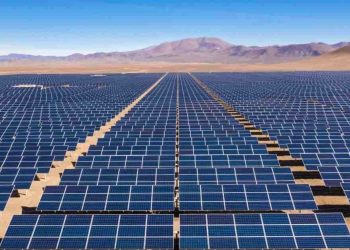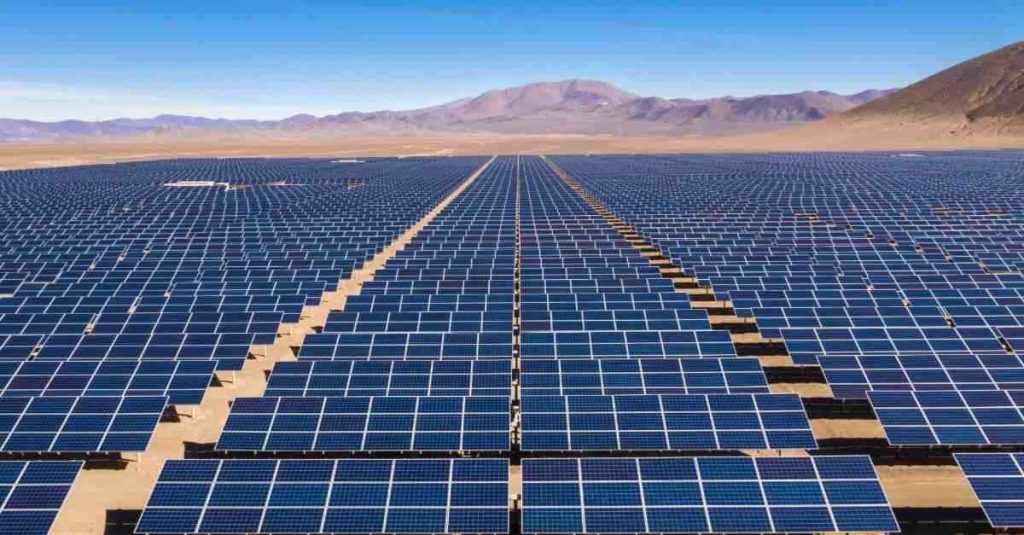
Namibia has increased solar power from virtually zero to more than one-third of its domestic electricity generation within a decade, positioning the country among the world’s fastest-growing renewable energy markets.
According to an updated analysis by the World Resources Institute (WRI), the rapid expansion has placed Namibia second among countries recording the strongest growth in renewable energy, with solar emerging as an increasingly important part of the country’s electricity mix.
WRI said Namibia, Uruguay, the Netherlands and Denmark have come closest to achieving the pace of solar and wind expansion required globally between 2025 and 2030.
“However, countries like Uruguay, Namibia, the Netherlands and Denmark have come very close, achieving about three-quarters of the annual global growth rate required from 2025 to 2030,” the report said.
“Other countries like Lithuania, Chile and Jordan have also expanded solar and wind generation at remarkable rates, growing multiple times faster than the historical global average.”
Namibia’s growth has been driven by a combination of strong solar resources and efforts to reduce the country’s dependence on imported electricity.
The country receives an average of about 10 hours of strong sunlight per day for approximately 300 days a year, which WRI said gives Namibia the highest practical solar photovoltaic potential globally.
The institute estimates that a solar panel in Namibia receives about twice as much usable solar energy annually as one installed in Ireland.
“The majority of Namibia’s power is imported from neighbouring countries such as South Africa. This is expensive, and it became even more so after South Africa started experiencing supply shortages in 2008. A desire for energy security led political decision-makers in Namibia to turn to solar energy,” the report said.
WRI also pointed to the competitiveness of Namibia’s solar market, saying projects have been developed without large financial subsidies, while competitive auctions have produced some of the lowest solar power prices in Africa.
Requirements for Namibian ownership in independent power projects have also contributed to local participation in the sector, according to the analysis.
Despite solar now accounting for more than a third of domestic electricity generation, WRI cautioned that Namibia’s overall installed generation capacity remains relatively small and will need to expand as electricity demand grows.
“Namibia’s renewable energy potential is large, and the progress so far has been very promising. However, even though solar makes up a large share of Namibia’s power mix, it’s still a low amount of capacity in total, given that power demand is not that high,” the report said.
“The country will need to maintain rapid growth in solar generation to keep up with increases in power demand in the future.”
Globally, solar and wind accounted for 17.4% of electricity generation in 2025. WRI said their combined share needs to increase to between 57% and 78% by 2030 to maintain a pathway towards net-zero emissions.