By Shakwa Nyambe
Africa does not lack energy resources. It lacks the statecraft needed to turn them into power, jobs and industrial depth.
For decades, African governments have placed large energy projects at the centre of their development plans. Oilfields, gas schemes, power plants, pipelines and refineries have all been sold as levers of sovereignty. Too often, they have remained monuments to delay. The problem has not only been finance, technology or foreign pressure. It has also been a failure of coordination.
Across the continent, discoveries have been slowed by rigid institutions, fragmented mandates and a habit of treating energy projects as political trophies rather than industrial systems. Ministries pull in different directions. Regulators trail behind innovation. Contracts are left to age in markets that have moved on. Communities are consulted late, if at all. Investors are asked to wait while governments debate questions that should have been settled before bids were launched.
The result is familiar: timelines stretch, costs rise, citizens lose patience and projects lose credibility. Sovereignty is weakened, not strengthened. A country may own the resource. But if it cannot take decisions, manage trade-offs and hold a coalition together over many years, it does not control the outcome.
An agile state
That is why agility should be at the centre of Africa’s energy debate. Not agility as a slogan borrowed from consultants, but as a test of political leadership. An agile state is not one that changes direction whenever pressure builds. It is one that can make hard choices early, adjust rules when facts change and stay the course when the rewards are years away.
This matters because energy projects are no longer simple contests between governments and investors. They sit at the junction of capital, climate politics, technology, local jobs, regional power markets and public trust. A government that wants to build an energy economy must therefore do several things at once. It must remain attractive to capital while defending the public interest. It must demand local content without turning it into a protectionist slogan. It must listen to communities without allowing every dispute to become a veto. It must negotiate firmly, but from reality rather than rhetoric.
The Namibia testcase
Namibia now offers one of the clearest tests of this approach. The country’s offshore discoveries have put it on the global energy map. Yet discovery is only the beginning. The real question is whether Namibia can turn geological promise into lasting economic value.
Windhoek has some advantages. It built a petroleum legal framework early. It has invested in skills through PetroFund. It is updating its regime through the Petroleum Exploration and Production Amendment Bill. It has placed the Upstream Petroleum Unit under the presidency, a move designed to speed up coordination. Its ambitions are also linked to a wider development agenda, including Vision 2030 and the Sixth National Development Plan. In principle, oil and gas are not being treated as ends in themselves, but as tools for industrialisation, infrastructure, jobs and diversification.
That is the right starting point. But it is only a starting point. Namibia’s petroleum framework was designed before the scale and complexity of today’s deepwater discoveries were clear. The projects now emerging will test the machinery of the state: its ability to regulate, tax, negotiate, train, monitor and communicate. It would be premature to call Namibia a model. It is better described as a country at a crossroads.
Building for the long term
President Netumbo Nandi-Ndaitwah has framed first oil not as the destination, but as a step towards structural change, inclusive growth and long-term prosperity. That distinction matters. Many resource-rich countries have reached first oil and still failed to build broad-based wealth. The harder task comes before and after production: deciding how value will be shared, how local companies will enter the supply chain, how skills will be built and how public expectations will be managed.
That is where Namibia’s “business unusual” approach must become more than a phrase. It will be judged by regulatory choices made in the coming months. It will be judged by the balance struck between near-term revenues and long-term value. It will be judged by the state’s willingness to reject weak deals, revisit outdated assumptions and insist on real local participation without frightening off the capital and technology it still needs.
The wider lesson for Africa is clear. Energy sovereignty will not be built through declarations, national plans or conference communiqués. It will come from governance systems that make the rules clear, keep institutions aligned and give citizens visible proof that resource wealth is not disappearing into spreadsheets, offshore accounts or elite bargains.
Can Africa interconnect?
That also means thinking beyond national borders. Africa’s energy future will depend on power interconnections, shared infrastructure, regional value chains and better links between producing and importing countries. No state can build energy security in isolation. A gas discovery in one country, a transmission line in another and an industrial zone in a third should be seen as parts of the same strategic map.
The continent’s problem is not a shortage of ambition. It is a shortage of execution discipline. The next phase of African energy will reward governments that can move quickly without being reckless, negotiate hard without posturing and adapt without losing sight of the public interest.
Africa’s resources are real. So are its opportunities. But geology does not create sovereignty. Decisions do. The countries that understand that will turn discoveries into power, jobs and industrial strength. Those that do not will be left, once again, with promise beneath the ground and frustration above it.
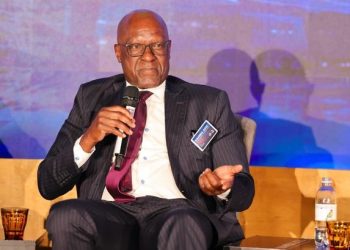
Shakwa Nyambe is Managing Partner – SNC Incorporated, Namibia,
Former president – Association of International Energy Negotiators (AIEN)