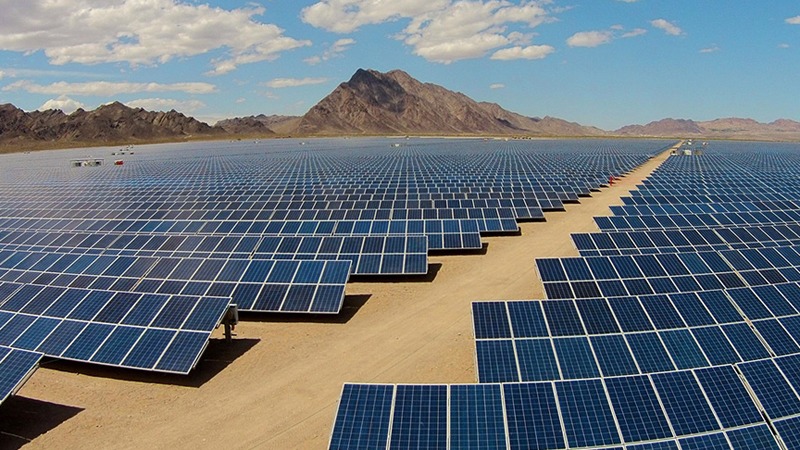
Namibia’s Government Institutions Pension Fund (GIPF) has invested N$2.7 billion in renewable energy projects, adding 162.75 megawatts of clean power to the national grid and avoiding more than 325,000 tonnes of carbon dioxide emissions.
Speaking at the launch of the fund’s 2026–2029 Strategic Plan, Chairperson of the Investment Committee Petrus Nevonga said the renewable energy investments form part of GIPF’s broader impact investment strategy, which has seen more than N$6.5 billion deployed into Namibia’s real economy.
“With regard to environmental sustainability and renewable energy, we have invested N$2.7 billion for clean energy purposes. By adopting global responsible investment standards for ESG, we have invested in 162.75 megawatts of green power, avoiding approximately 325,054 tonnes of carbon dioxide emissions,” he said.
The fund currently has total exposure of N$100 billion in Namibia, with investments supporting housing, infrastructure, healthcare, agriculture, education and enterprise development across all 14 regions.
Nevonga further explained that GIPF aligns its investment approach with global Environmental, Social and Governance (ESG) standards and has contributed to advancing nine of the 17 United Nations Sustainable Development Goals.
Looking ahead, GIPF plans to deepen its impact-driven investment strategy through its new three-year strategic plan.
The fund intends to undertake a comprehensive sectoral study to identify areas where future investments can generate the greatest economic and social returns, with energy, agriculture, mining and value addition among the sectors expected to receive increased attention.
“When we deploy assets, we want them invested in sectors where they will make the most meaningful impact on the economy. To ensure this, a deliberate sectoral study of Namibia’s economy will be completed to identify exactly where the fund’s next dollar of impact capital will do the most good while earning the returns our members deserve.
“This study will feed directly into a refreshed approach, pinpointing high-impact investable sectors, from mining and value addition to agriculture, energy and beyond,” he said.