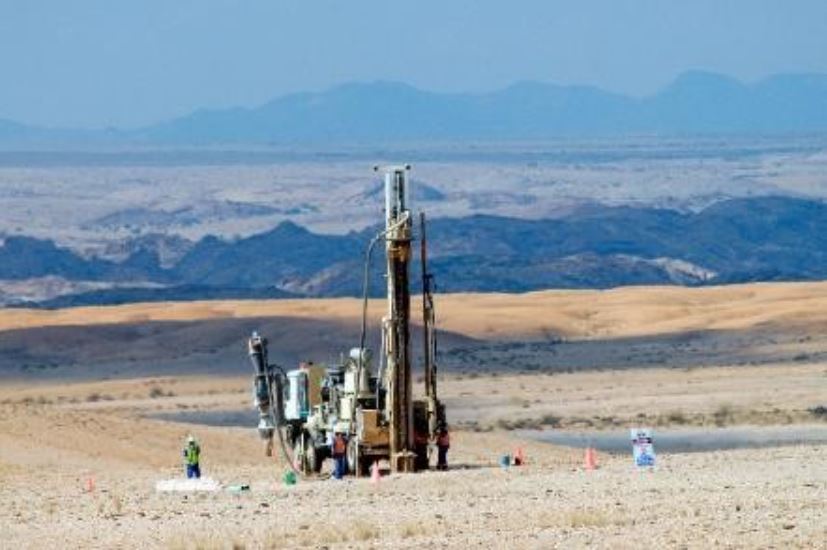
Namibia Critical Metals has launched an extensive drilling programme at its Lofdal Heavy Rare Earths Project aimed at expanding resources, extending mine life and advancing studies for a potential underground mining operation.
The programme, which began on 3 June, will see 83 reverse circulation drill holes completed over the next five months, totalling approximately 13,000 metres of drilling across the project.
Company President Darrin Campbell said the campaign is designed to increase measured and indicated resources at the project’s Area 4 and Area 2B deposits, while also establishing a maiden resource at Area 5, a 1.5-kilometre-long xenotime-mineralised system located between the two planned open pits.
“We are excited about the potential impact of this drilling campaign, not only in expanding resources at deposits with existing mine plans, but also in advancing potential additional satellite resources at Area 5,” Campbell said.
A key component of the programme is the first deep drill hole at Area 4, which will test whether mineralisation extends to a depth of approximately 800 metres below the surface. The company said the results could support future underground mining opportunities and significantly enhance the project’s long-term economics.
“Testing the extension of the Area 4 deposit to a depth of about 800 metres has the greatest potential impact on extending mine life or increasing throughput,” Campbell said.
“Our experts in underground mine design are on standby to potentially guide the project towards a significant expansion of the mine.”
The drilling programme includes resource infill and expansion drilling at Area 2B and Area 4, alongside 5,670 metres of exploration drilling at Area 5. Core drilling will be used to test the deeper extension of the Area 4 deposit.
The latest work forms part of ongoing efforts to advance Lofdal, one of the world’s most significant heavy rare earth projects. The deposit is particularly prospective for dysprosium and terbium, two critical rare earth elements used in permanent magnets for electric vehicles, wind turbines and other advanced technologies.
The project is fully permitted under a 25-year mining licence and is being developed with support from Japan Organization for Metals and Energy Security, which has earned a 40% interest in the project after meeting a C$10 million expenditure commitment.
Namibia Critical Metals currently holds a 95% interest in Lofdal, while the remaining 5% is reserved for historically disadvantaged Namibians.