Koryx Copper S.A. has increased the mineral resource at its wholly owned Haib Copper Project in southern Namibia, lifting total contained copper to 3.5 million tonnes from 2.6 million tonnes as grades and operating parameters improve.
The updated Mineral Resource Estimate (MRE), effective 16 March 2026, also saw the grade of the high-grade portion rise to 0.40% copper equivalent, up from 0.34%, reflecting revised geological modelling and additional drilling data.
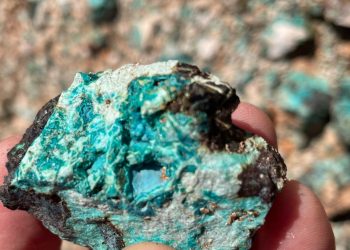
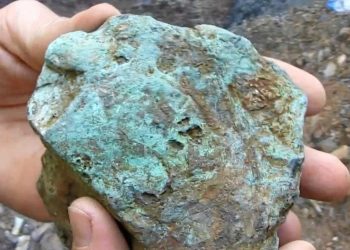
The Haib project is a large-scale open-pit sulphide copper deposit with by-products including molybdenum and gold. The project has an envisaged average production rate of 92,000 tonnes per annum over an initial 24-year mine life.
Koryx Copper President and Chief Executive Officer Heye Daun said the updated resource reflects both improved grades and a reclassification of material previously treated as waste.
“We are very pleased with the large improvement and refinement of the Haib MRE, particularly the grade increase of the high-grade portion to 0.40% CuEq from 0.34% CuEq, coupled with the conversion of a large volume of material previously modelled as waste into lower-grade mineralised material,” Daun said.
The revised model reduced the expected stripping ratio from 1.74 times to 0.92 times, improving the project’s mining profile. It also incorporates updated geological interpretation, a revised pit shell and new drilling results.
The inclusion of gold and molybdenum as by-products, supported by metallurgical test work and assay results, contributed to the improved copper equivalent grade.
Daun said the high-grade portion of the resource is expected to sustain production for more than 15 years, with further extensions anticipated.
“That high-grade portion in the Indicated and Inferred category now represents over 15 years of life-of-mine, and with the addition of the substantially larger lower-grade halo, the life-of-mine of the Haib project is expected to increase significantly from its current 24 years to more than 35 years,” he said.
Koryx Copper plans to deploy 14 drill rigs to complete approximately 50,000 metres of additional infill and growth drilling before mid-2026, with results to feed into a further resource update and a planned pre-feasibility study.
“We will soon have 14 drill rigs on site aiming to complete 50,000 metres of additional infill and growth drilling before the middle of 2026. The results will be incorporated into another MRE update, which will serve as the basis for the pre-feasibility study,” Daun said.
The company expects further improvements in grade, stripping ratio and processing, including potential ore sorting, to be reflected in updated project economics as part of the pre-feasibility study scheduled for the fourth quarter of 2026.