Namibia Critical Metals Inc. (NCMI) says the results from its Pre-Feasibility Study (PFS) for the Lofdal Heavy Rare Earths Project value the development at up to N$21.3 billion (US$1.25 billion) under its upside pricing scenario.
The company said this confirms Lofdal as one of the world’s few advanced dysprosium-, terbium- and yttrium-dominant deposits outside China.
Under the Base Case scenario, the project carries a pre-tax NPV of N$6.62 billion (US$389.2 million) and an after-tax NPV of N$4.69 billion (US$275.5 million).
The Divergent Case, reflecting prolonged export controls and higher ex-China pricing, shows a pre-tax NPV of N$21.17 billion (US$1.245 billion) and an after-tax NPV of N$12.72 billion (US$747.9 million).
The study indicates rapid capital recovery, with a payback period of 4.2 years under the Base Case and 2.75 years under the Divergent Case.
“Lofdal is well positioned as one of very few advanced major Dy/Tb- and Y projects outside China, with a supportive jurisdiction, a mining licence, fully environmentally permitted, an excellent relationship with the communities and a key strategic JV partner (JOGMEC),” said Darrin Campbell, President of Namibia Critical Metals.
Pre-production capital expenditure is estimated at N$4.65 billion (US$273.4 million), with total capital costs reaching N$5.91 billion (US$347.9 million). Operating costs over the life of mine are projected at N$28.6 billion (US$1.68 billion).
Under both pricing models, the project is expected to deliver strong early cash flow, with Base Case cumulative after-tax cash flow of N$8.73 billion (US$513.1 million) and Divergent Case cumulative after-tax cash flow of N$21.1 billion (US$1.24 billion).
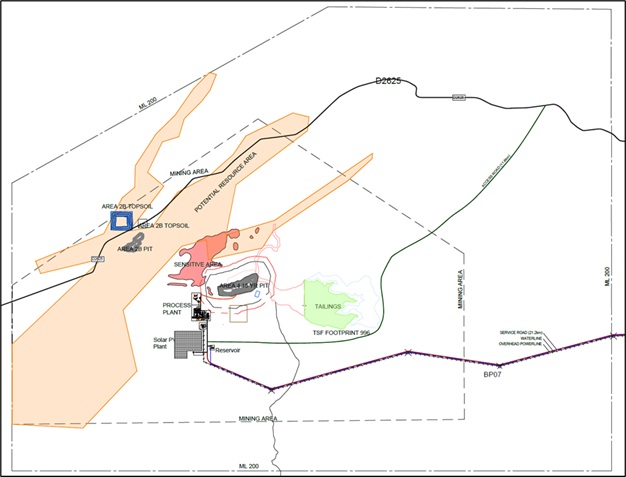
The PFS confirms a 13-year mine life, supported by 32 million tonnes of Proven and Probable Reserves grading 0.176% TREO. Annual production is forecast at 1,478 tonnes of total rare earth oxides, including high-value dysprosium, terbium and yttrium, which are critical for electric vehicles, wind turbines, aerospace technology and advanced electronics.
The company said that Lofdal’s economics are strengthened by the global shift towards secure, non-Chinese supply sources of heavy rare earths, with export controls widening price differentials and increasing demand.
Yttrium, expected to form nearly half of Lofdal’s rare earth oxide basket, has experienced a European spot price surge of more than 4,000% in 2025, reinforcing the long-term market outlook.
“The Project’s economic case is now underpinned by three value pillars: Dy/Tb high-temperature magnet demand, Yttrium demand from aerospace, semiconductors and the turbine industry, and Nd/Pr magnet demand. This diversified critical material exposure increases the strategic attractiveness of Lofdal for OEMs and governments,” Campbell added.
Developed under a joint venture with the Japan Organization for Metals and Energy Security (JOGMEC), the fully permitted Lofdal project is strategically positioned to supply Japan and other markets. JOGMEC has invested more than C$10 million, securing a 40% stake in the development.