The European Union (EU) has urged Namibia to reduce its reliance on raw mineral exports and expand local processing and manufacturing to create jobs, attract investment and retain more value from its mineral resources.
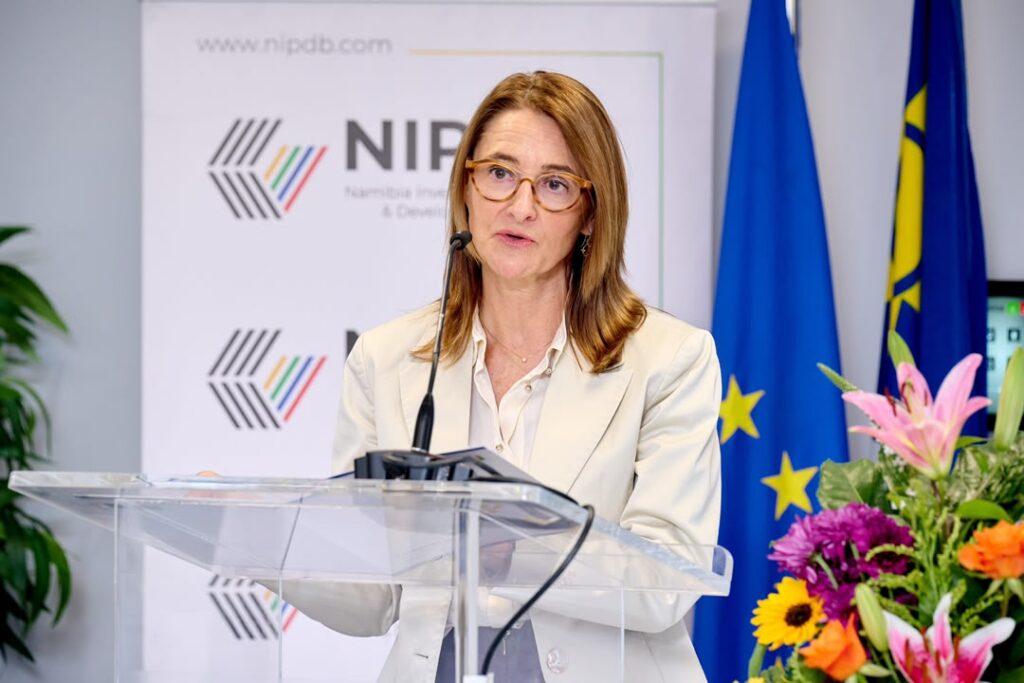
EU Ambassador to Namibia Ana Beatriz Martins said the country needed to move beyond mineral extraction and establish industries capable of producing higher-value products for international markets.
Speaking at the EU–Namibia Trade Relations Stakeholder Workshop in Windhoek, Martins said Namibia’s mineral wealth presented an opportunity to strengthen domestic industries and increase participation in global supply chains.
“The challenge, and the opportunity, is to move up the value chain: from extraction to processing, from raw materials to industrial products, and from resource endowments to sustainable economic transformation,” she said.
Martins said Namibia possessed significant mineral resources, including critical minerals that were becoming increasingly important to the global energy transition and industrial development.
She said the EU–Namibia Strategic Partnership on Sustainable Raw Materials Value Chains and Renewable Hydrogen, launched in 2022, provided a framework for attracting investment into mineral processing, renewable energy and related industrial activities.
“This is about supporting Namibia’s ambition to industrialise, attract investment, develop skills, create quality jobs and capture more value domestically,” Martins said.
The ambassador said the partnership should enable Namibia to develop sustainable mineral value chains while ensuring that the transition to cleaner energy translated into tangible economic benefits for the country.
She stressed that Namibia should position itself not only as a supplier of raw materials to international markets but also as a producer, processor and exporter of higher-value industrial products.
Her remarks come as Namibia seeks to increase local beneficiation of its mineral resources and expand downstream industries to strengthen economic diversification and employment creation.
Trade figures show that Namibia exported goods worth N$17.6 billion to the EU in 2025, up from approximately N$15 billion in 2024, with the bloc accounting for about 19% of Namibia’s total exports.
Martins said the existing trade relationship should be used to attract industrial investment and expand domestic production, rather than focus solely on access to European markets.
She said linking trade opportunities with investment, skills development and industrialisation would help Namibia retain a greater share of the economic value generated by its natural resources.
The workshop brought together stakeholders to assess EU–Namibia trade relations, with a dedicated mining session examining opportunities to expand local mineral processing and increase the participation of Namibian businesses in international supply chai