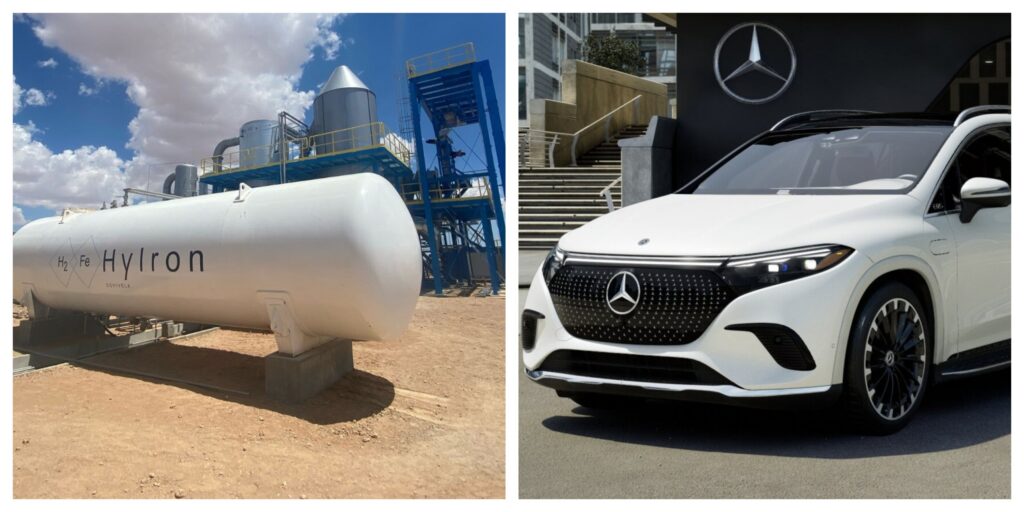
Mercedes-Benz has signed an agreement with German-Namibian company Hylron to develop industrial-scale green hydrogen-based iron production in Namibia, with the aim of potentially sourcing low-carbon steel materials for its vehicle manufacturing operations.
The Memorandum of Understanding (MoU), signed on 10 November 2026 at the Mercedes-Benz Sustainability Dialogue 2026, will see the companies assess the commercial and technical feasibility of scaling up production at Hylron’s Oshivela plant.
The agreement follows a pilot project involving mining company Anglo American and Hylron, which successfully produced iron from South African iron ore fines using green hydrogen instead of coal.
The iron produced during the pilot was subsequently processed into a demonstrator component for the all-electric Mercedes-Benz EQS, demonstrating its potential application in automotive manufacturing.
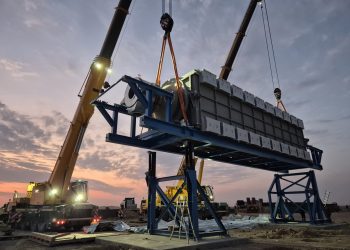
Hylron’s Oshivela plant in Namibia uses a rotary kiln process in which green hydrogen replaces coal as the reducing agent in iron production.
According to the company, the process can reduce carbon dioxide emissions by approximately 1.8 tonnes for every tonne of iron produced compared with conventional production methods.
The new agreement will focus on validating the technology for industrial mass production and determining whether the resulting iron can meet the requirements of Mercedes-Benz’s automotive steel supply chain.
The companies will also examine how low-carbon iron production can be integrated into a supply chain covering raw material extraction, processing and the manufacture of finished vehicle components.
Mercedes-Benz said the partnership forms part of its efforts to reduce emissions associated with steel production while improving transparency and responsible sourcing across its supply chain.
The collaboration could open a new market for Namibia’s emerging green hydrogen industry by linking local iron production to international automotive manufacturing.
However, the agreement remains at the technical validation stage, with no confirmed investment amount, commercial production capacity or timeline for industrial-scale operations.
The companies have also not announced a binding supply agreement for Namibia-produced iron.