Namibia wants Bannerman Energy’s Etango uranium mine to begin production ahead of its late-2028 target, as the southern African country seeks to increase uranium output and strengthen its position in the global nuclear fuel supply chain.
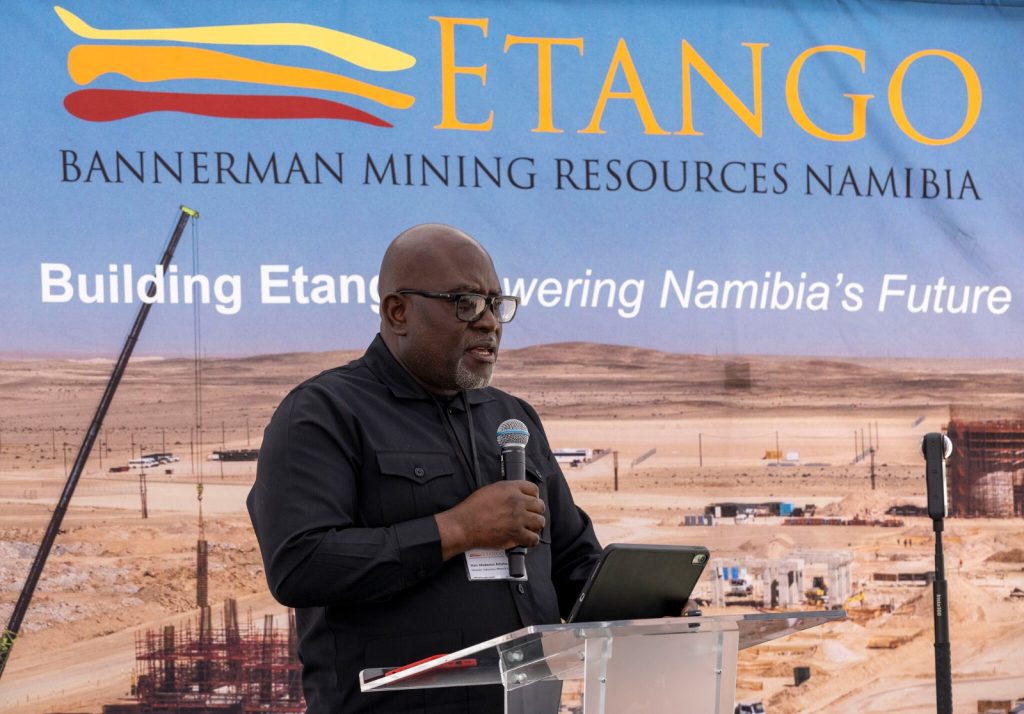
Minister of Industries, Mines and Energy Modestus Amutse said the government was encouraged by progress at the project but hoped commissioning and the first production of yellowcake could be brought forward.
Speaking at the official launch and progress update of Etango in Namibia’s Erongo Region on Friday, Amutse said the mine was expected to produce approximately 3.5 million pounds of uranium oxide annually once operational.
“We also acknowledge the current development schedule, which targets commissioning and first yellowcake production towards the end of 2028, but I would like it to be sooner,” Amutse said.
The comments come as Bannerman advances Etango towards full-scale construction following its final investment decision on the project.
The mine is being developed in partnership with CNNC Overseas Limited, with planned production expected to increase Namibia’s uranium output once operations begin.
Despite the government’s preference for an earlier production date, no revised commissioning schedule has been announced.
Amutse also called on Bannerman to ensure that the development of Etango delivers wider economic benefits through employment, skills development and procurement opportunities for Namibian businesses.
He said mining investment should not be measured solely by capital expenditure and production volumes, but also by its contribution to domestic economic development.
“One of the Government’s most important priorities is to ensure that the development of our natural resources creates meaningful opportunities for Namibians,” he said.
“We must move beyond a narrow understanding of investment that focuses only on capital expenditure and production volumes. We must also consider employment, skills development, local procurement, enterprise growth and the broader economic opportunities created along the value chain.”
According to Amutse, Namibians account for 99% of the 629 workers currently employed at the Etango project site.
He said the figures demonstrated the capacity of local professionals, technicians and skilled workers to participate in major mining developments.
The minister also welcomed the involvement of Namibian contractors in construction and infrastructure activities, urging the company to expand local procurement as development progresses.
“It is equally encouraging to see Namibian contractors and businesses participating in the construction and infrastructure activities associated with the mine. This is precisely the direction in which we want our mining industry to move,” he said.
“Local content must not be treated as an administrative requirement or a box to be ticked. It must be recognised as a strategic investment in Namibia’s economic future.”
Amutse said developing local suppliers and technical expertise would help ensure that the benefits of mining investments extend beyond individual projects.
He also acknowledged the partnership between Bannerman Energy and CNNC Overseas Limited, emphasising that Etango’s success would depend on responsible construction, sustainable operations and meaningful economic opportunities for Namibia.
Etango is currently targeting commissioning and first yellowcake production towards the end of 2028, with planned annual output of approximately 3.5 million pounds of uranium oxide.